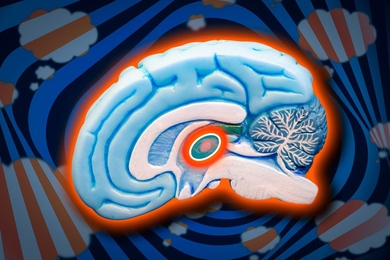
Study reveals a basis for attention deficits
New findings could help scientists develop treatments for ADHD and other disorders.
New findings could help scientists develop treatments for ADHD and other disorders.
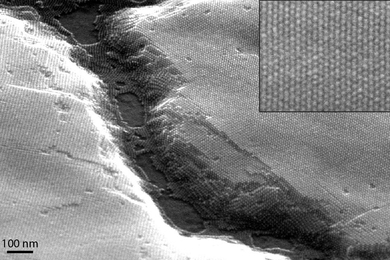
A new approach gives a real-time look at how the complex structures form.
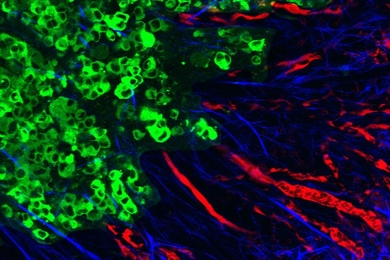
Cancer cells remodel their environment to make it easier to reach nearby blood vessels.
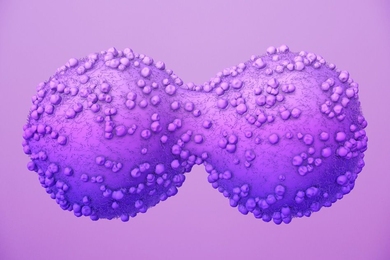
Scientists surprised to find amino acids, not sugar, supply most building blocks for tumor cells.
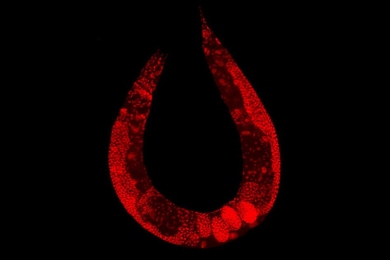
!["[W]e hope that our studies of vps-50 will provide insights into human neuropsychiatric disorders,” H. Robert Horvitz says.](/sites/default/files/styles/term_page__news_article/public/images/201603/MIT-BehavorialStates.jpg?itok=0Jejll8C)
Gene required for the control of behavioral state is also found in humans, may be linked to autism.
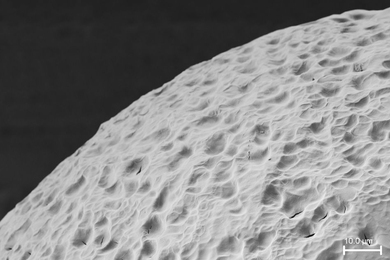

Researchers discover how some organisms process oxalate, a molecule that can harm humans.
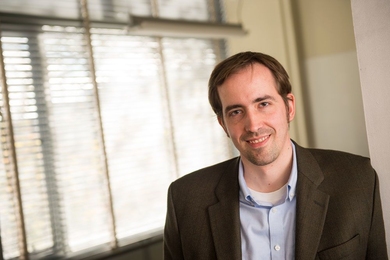
Seventy-eight grants awarded to scientists proposing highly innovative approaches to major contemporary challenges in biomedical research.
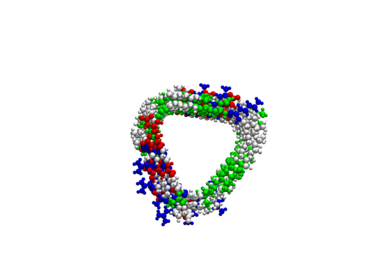
New programming tool could help engineers build biologically inspired materials.
Tweaks to the R&D pipeline could create new drugs and greater social benefit.
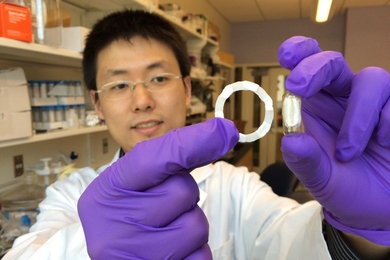
A pH-responsive polymer gel could create swallowable devices, including capsules for ultra-long drug delivery.
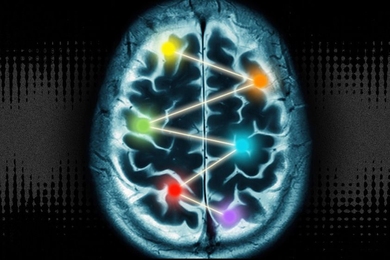
Neuroscientists show that multiple cortical regions are needed to process information.
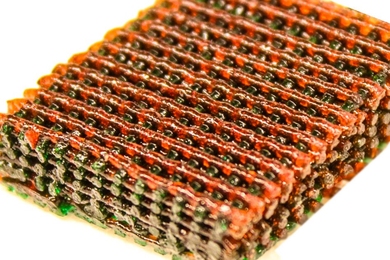
Stretchable, biocompatible hydrogels with complex patterning could be used in tissue engineering.
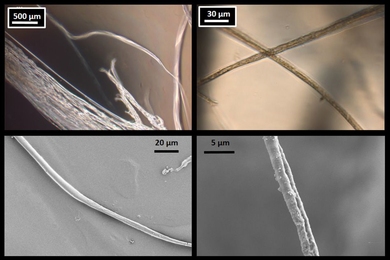
Simulations and experiments aim to improve on spiders in creating strong, resilient fibers.