
‘Invisibility’ could be a key to better electronics
MIT team applies technology developed for visual ‘cloaking’ to enable more efficient transfer of electrons.
MIT team applies technology developed for visual ‘cloaking’ to enable more efficient transfer of electrons.
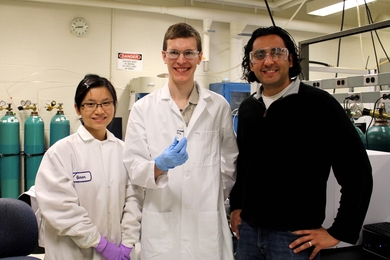
MIT team discovers an inorganic catalyst that could pave the way to a more robust synthesis of valuable rare sugars.
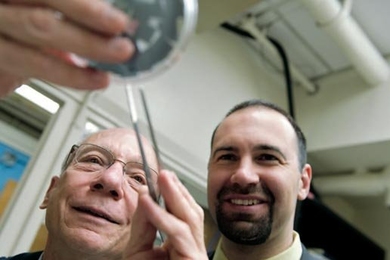
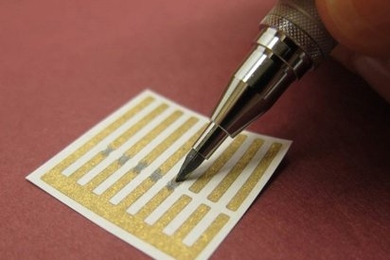
New low-cost, durable carbon nanotube sensors can be etched with mechanical pencils.
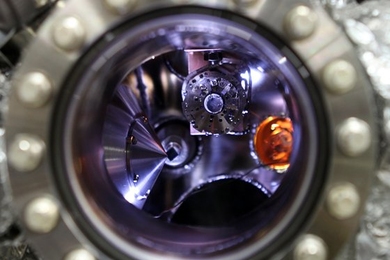
Fundamental reactions behind advanced battery technology, revealed in detail by advanced imaging method, could lead to improved materials.

MIT team finds way to manipulate and measure magnetic particles without contact, potentially enabling multiple medical tests on a tiny device.
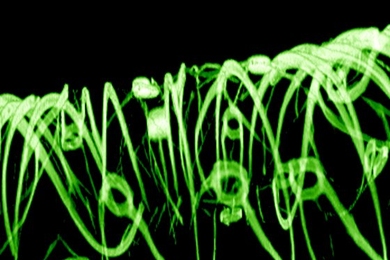
New tissue scaffold could be used for drug development and implantable therapeutic devices.
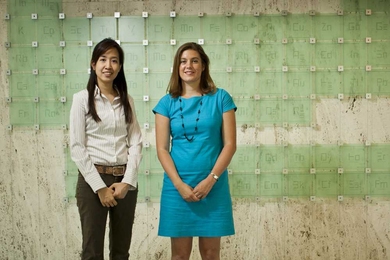
Method developed by MIT researchers could produce materials with exceptional strength and other properties.
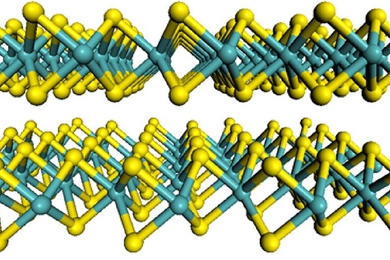
MIT researchers produce complex electronic circuits from molybdenum disulfide, a material that could have many more applications.
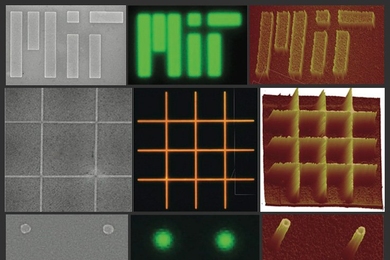
New process developed at MIT could enable better LED displays, solar cells and biosensors — and foster basic physics research.
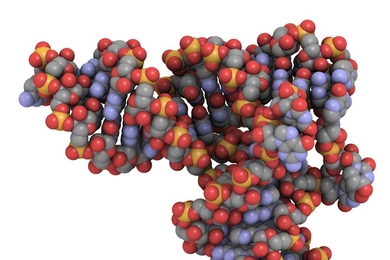
Particles that shut off cancer genes could also allow researchers to screen potential drug targets more rapidly.
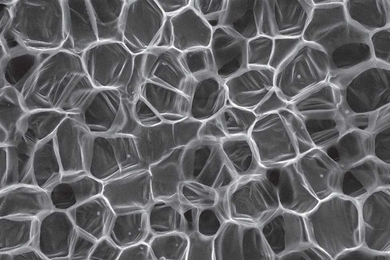
Biological structures may help engineers design new materials.

New findings show that the material beneath the thin carbon sheets determines how they react chemically and electrically.

Researchers find new method for making spherical particles, from nanoscale to pinhead-sized — including complex beach-ball-like shapes.

Tiny cylinders help reveal how natural-light-harvesting antennae collect light with exceptional efficiency.