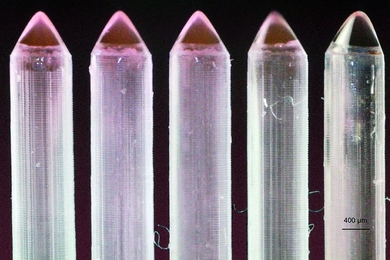
Nanodevices at one-hundredth the cost
New techniques for building microelectromechanical systems show promise.
New techniques for building microelectromechanical systems show promise.
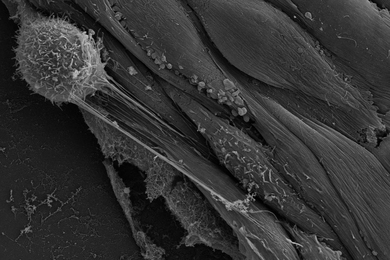
Study offers new targets for drugs that may prevent cancer from spreading.
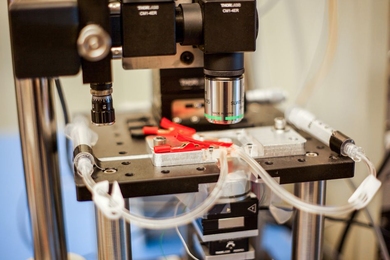
Instrument scans images 2,000 times faster than commercial models.

Workers at the MIT.nano site have reached the halfway point in the construction's excavation phase.

Scientists exploit gene therapy to shrink tumors in mice with an aggressive form of breast cancer.
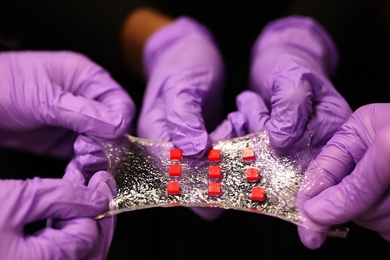
Water-based “Band-Aid” senses temperature, lights up, and delivers medicine to the skin.

Dialogue with defense secretary focuses on bolstering leading-edge manufacturing.

New formula identifies limits to nanoscale heat transfer, may help optimize devices that convert heat to electricity.

MIT researchers have found a phenomenon that might lead to more compact, tunable X-ray devices made of graphene.

Berggren, Bertschinger, Fink, and Zue are among those recognized for efforts toward advancing science.
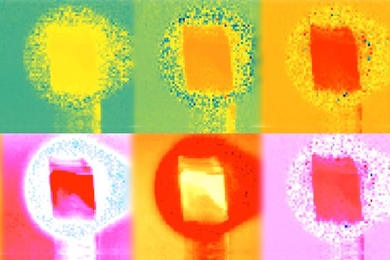
Mathematical modeling enables $100 depth sensor to approximate the measurements of a $100,000 piece of lab equipment.

New research shows concrete is a strong choice for the long-term confinement of nuclear waste.
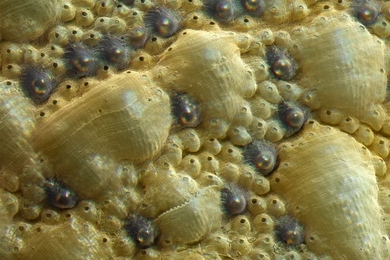
Tiny sea creatures feature transparent optical systems as tough as their shells.
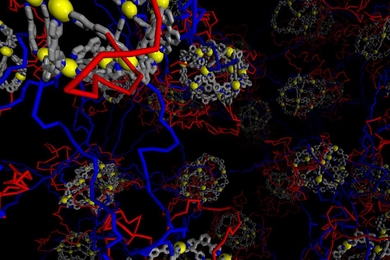
New materials could be tuned for applications including drug delivery and water filtration.