
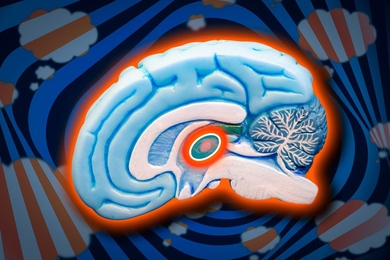
Study reveals a basis for attention deficits
New findings could help scientists develop treatments for ADHD and other disorders.
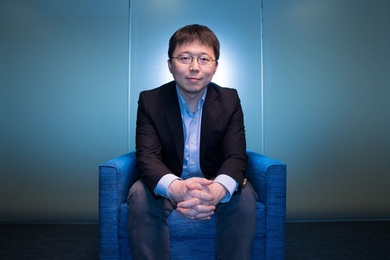
Feng Zhang receives 2016 Canada Gairdner International Award
Broad/MIT scientist among five honored as pioneers of CRISPR-Cas9 system.
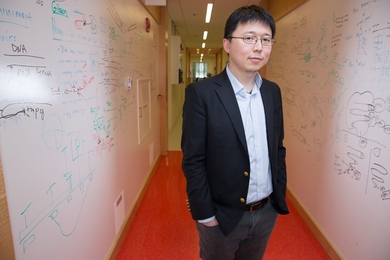
Toward a better understanding of the brain
Genome-editing pioneer Feng Zhang hopes his work will shed light on neurological disorders.
!["[W]e hope that our studies of vps-50 will provide insights into human neuropsychiatric disorders,” H. Robert Horvitz says.](/sites/default/files/styles/term_page__news_article/public/images/201603/MIT-BehavorialStates.jpg?itok=0Jejll8C)
Neuroscientists discover a gene that controls worms’ behavioral state
Gene required for the control of behavioral state is also found in humans, may be linked to autism.
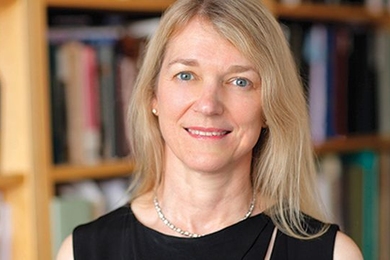
McGovern Institute for Brain Research awards Scolnick Prize to neurogeneticist Cori Bargmann
Bargmann honored for her work on the genetic and neural mechanisms that control behavior in the nematode C. elegans.
How severe maternal inflammation can lead to autism-like behavior
Immune molecules in infected mothers tied to brain and behavior abnormalities in offspring.
Edward Boyden wins BBVA Foundation Frontiers of Knowledge Award
Three neuroscientists share biomedicine prize for development of optogenetics

Diagnosing depression before it starts
Brain scans may identify children who are vulnerable to depression, before symptoms appear.

25 from MIT named to Forbes 30 Under 30 lists in 2016
Students, researchers, and alumni honored in the 2016 Forbes 30 Under 30 lists showcasing America’s most important young entrepreneurs, thinkers, and leaders.
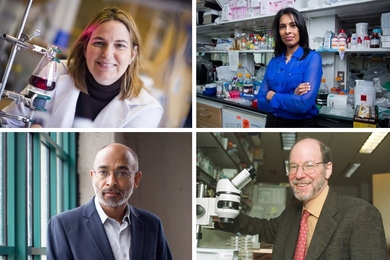
Four MIT faculty named 2015 fellows of the National Academy of Inventors
Belcher, Bhatia, Brown, and Horvitz recognized for demonstrating a prolific spirit of innovation and invention resulting in a tangible impact on society.
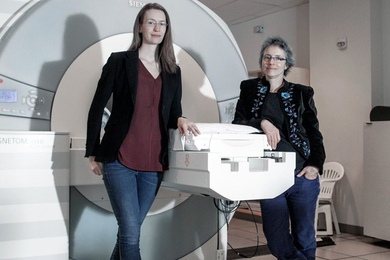
Study finds altered brain chemistry in people with autism
Neuroscientists link autism to reduced activity of key neurotransmitter in human brain.
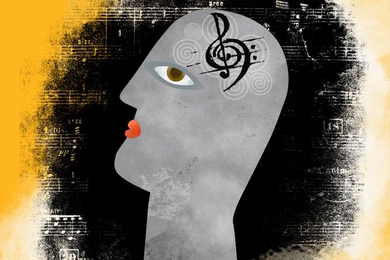
Music in the brain
For the first time, scientists identify a neural population highly selective for music.
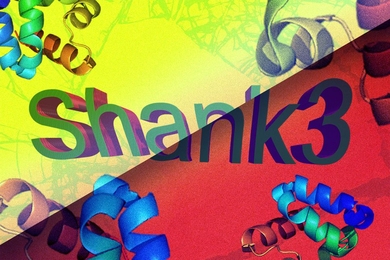
How one gene contributes to two diseases
Neuroscientists unravel Shank3 gene’s role in autism and schizophrenia.