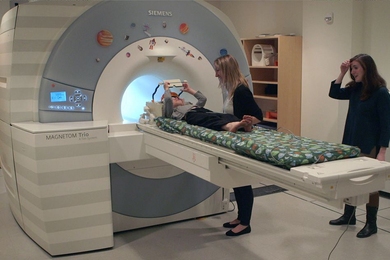
Study finds early signatures of the social brain
Children as young as 3 have brain network devoted to interpreting thoughts of other people.
Children as young as 3 have brain network devoted to interpreting thoughts of other people.

Reach Every Reader aims to end early literacy crisis.

Study finds engaging young children in conversation is more important for brain development than “dumping words” on them.


Ten-month-old infants determine the value of a goal from how hard someone works to achieve it.

For the first time, researchers have identified neural signatures of explicit and implicit learning.

Study finds infants try harder after seeing adults struggle to achieve a goal.

Dyslexic children from lower-income families benefit more from summer reading intervention.


MRI scans reveal surprising similarities in activity patterns of infant and adult visual cortex.

Study suggests reduced plasticity could account for reading difficulties.
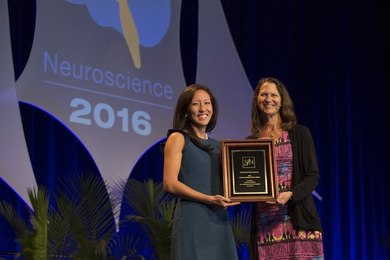
Picower Neuroscientist recognized for her work on emotional circuitry of the brain.
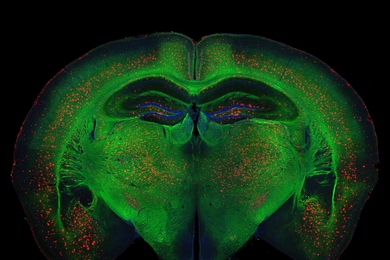
Study finds a complex series of molecular, cellular, circuit and network-level changes contribute to the progression of Alzheimer's.

Computer system could help identify subtle speech, language disorders in time for early intervention.