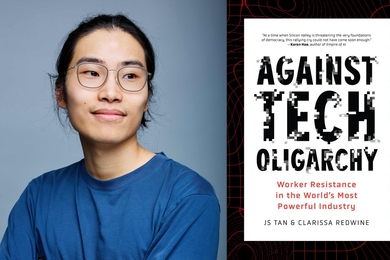
Documenting the tech worker movement
Writing as a participant and researcher, PhD student JS Tan SM ’22 has co-authored a new book about the rise of tech worker protests and the employer backlash that followed.
Writing as a participant and researcher, PhD student JS Tan SM ’22 has co-authored a new book about the rise of tech worker protests and the employer backlash that followed.
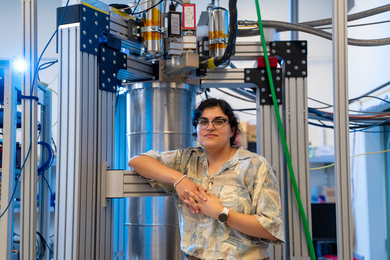
As she became integral to an international particle physics experiment, PhD student Faith Reyes found confidence in herself as a scientist.
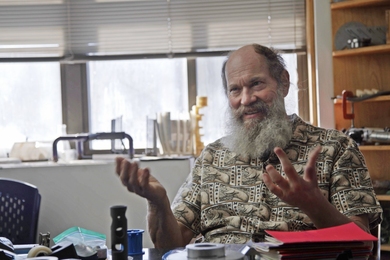
Precision, repeatability, and fun are the focus in mechanical engineering course 2.70 (Fundamentals of Precision Product Design).
Patricia and James Poitras ’63 provide fellowships for graduate students and postdocs who will shape the future of mental health research.
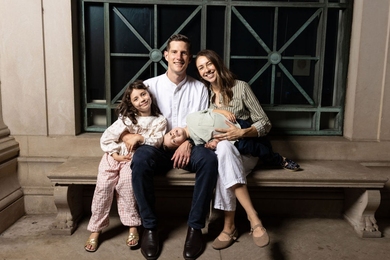
One graduate student family treasures the community they found alongside other MIT student parents.
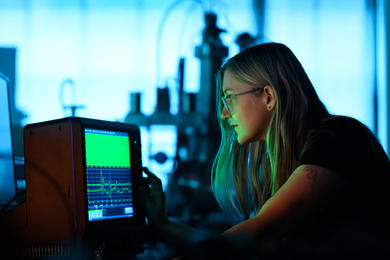
PhD candidate Lanie McKinney is building technology to convert the Red Planet’s atmosphere into propellant for bringing astronauts home.
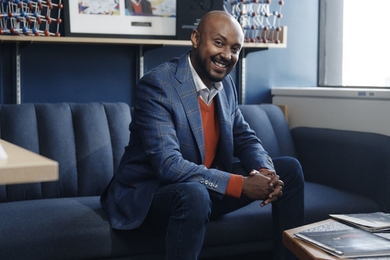
Assistant Professor Iwnetim Abate creates space for ambitious research and sustainable growth for his graduate students.
MIT affiliates engage with the MIT-IBM Computing Research Lab to bring rigorous theory to production systems.
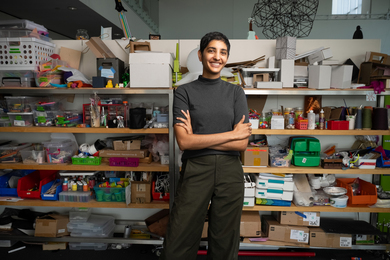
The PhD student works to give young people an active role in shaping digital technologies that can support their own well-being.
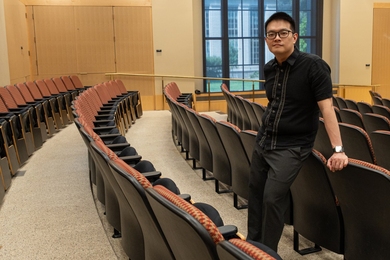
Graduate student Lyonel Tanganco investigates how to improve public policy interventions and address challenges in nutrition, climate, and development.
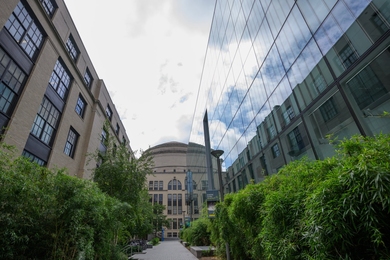
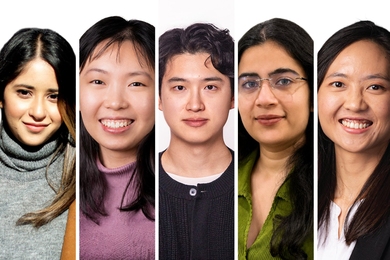
The Institute welcomes its first cohort of QMIT Fellows this fall to advance interdisciplinary quantum research.
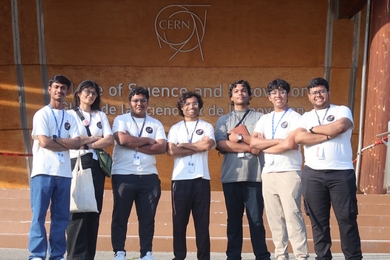
Physics PhD student Manu Srivastava helped high school students in India develop a test that could contribute to one of the world’s largest neutrino experiments.
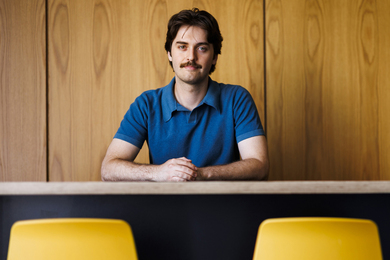
The PhD student’s research on how microorganisms digest compounds in their environment could enable advances in wastewater treatment.
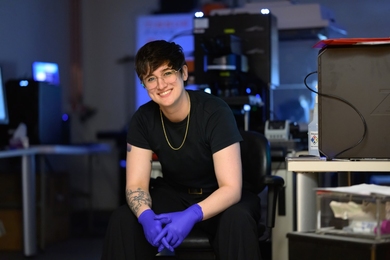
Shannon Knight, a brain and cognitive sciences PhD candidate and McGovern Institute researcher, focuses on developing a novel gene therapy.
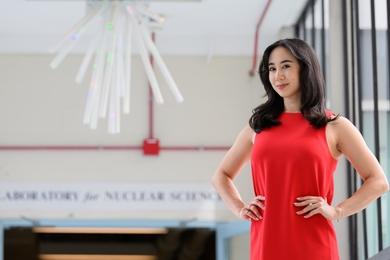
From Broadway to MIT’s Laboratory for Nuclear Science, PhD student Jessica Fry doesn’t do anything halfway. Now she’s hunting for the universe’s most elusive particle.