
3 Questions: Eric Klopfer on the meaning of masks
During a pandemic, the mask is a badge of honor, indicating the important role that individuals play in protecting the health of others during a crisis.
During a pandemic, the mask is a badge of honor, indicating the important role that individuals play in protecting the health of others during a crisis.

Despite being far from campus because of the pandemic, some students are engineering a creative way to stay connected.

MIT wins $5 million grant to develop a virtual lab that will prepare students for jobs in industry and government.

A new computational imaging method could change how we view hidden information in scenes.

Using deductive reasoning, the bot identifies friend or foe to ensure victory over humans in certain online games.

Five software and hardware projects will launch the MIT.nano Immersion Lab Gaming Program.

Revolutionizing video games with physics, Weaver has also influenced MIT students with lessons on design, virtual reality, storytelling, and games for social change.

A novel computational model that considers how users have been conditioned to think about race might facilitate training for teachers and students.

Video game developer NCSOFT joins with MIT.nano to apply the language of gaming to technology research and education.
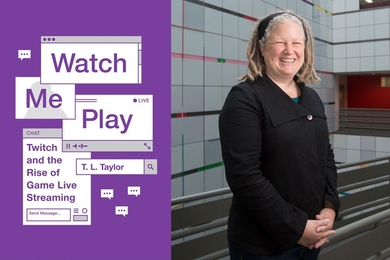
T.L. Taylor looks at how computer gaming and other forms of online broadcasting became big-time spectator sports.
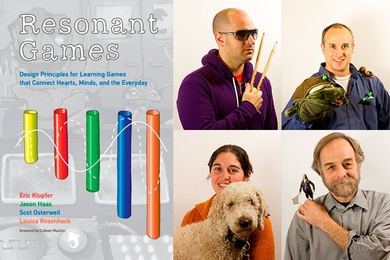
MIT designers explain their philosophy in a new book, “Resonant Games.”
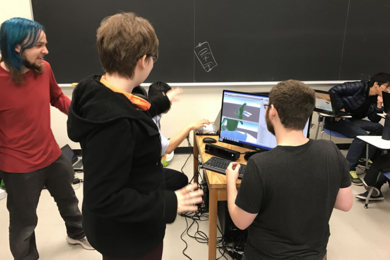
Students and staff combine workshopping and OpenCourseWare to demonstrate human-centered pedagogies in the context of modern topics and technologies.

In yearlong program, MIT students apply computer science to humanities, arts, and social science research.

Augmented-reality startup Escher Reality, which recently sold to Niantic, gives back to the program that helped it launch.

MIT sociologist’s “AnyKey” initiative aims to level the playing field of online sports.