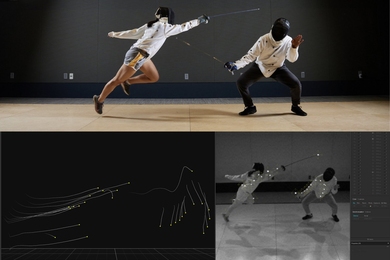
MIT.nano Immersion Lab Gaming Program awards third annual seed grants
The NCSOFT-sponsored program will advance cutting-edge technologies for gaming and data visualization.
The NCSOFT-sponsored program will advance cutting-edge technologies for gaming and data visualization.

MIT Center for International Studies and Security Studies Program offer new resources for modeling human behavior and decision-making in real-world scenarios.
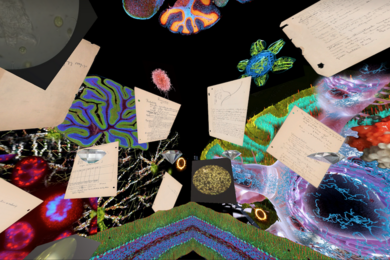
"A Lab of One’s Own" invites players to engage with archival materials in a virtual environment.

A new AI-powered, virtual platform uses real-world physics to simulate a rich and interactive audio-visual environment, enabling human and robotic learning, training, and experimental studies.

Humans find AI to be a frustrating teammate when playing a cooperative game together, posing challenges for "teaming intelligence," study shows.

Method builds on gaming techniques to help autonomous vehicles navigate in the real world, where signals may be imperfect.

2021 IAP offerings from the Department of Electrical Engineering and Computer Science ranged from the playful to the profound.
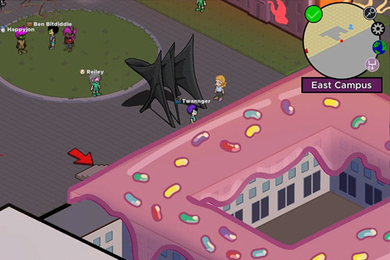
Held virtually for the first time due to the pandemic, this year’s MIT Mystery Hunt took the form of a puzzle-filled multiplayer game on an alternate-reality MIT campus.
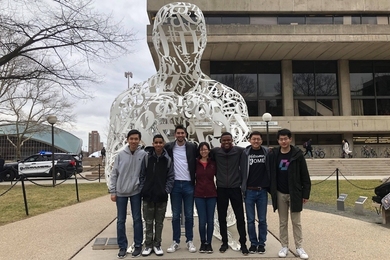
For decades, experts at the Institute have been shaping the future of the game.
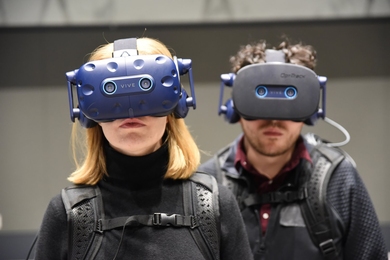
Facility within MIT.nano offers equipment and capabilities for visualizing data, creating immersive environments.
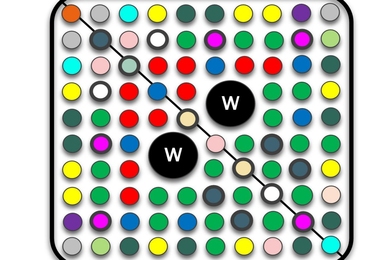
Researchers show that deep reinforcement learning can be used to design more efficient nuclear reactors.

Animators spend hours adding textures to objects. A new machine-learning system simplifies the process.

MIT Social Impact Interns partner with the Naval War College to develop an educational disaster response game.
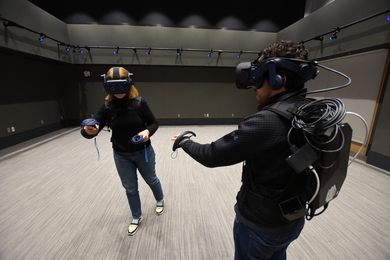
NCSOFT-sponsored grants to advance hardware and software for immersive experiences.
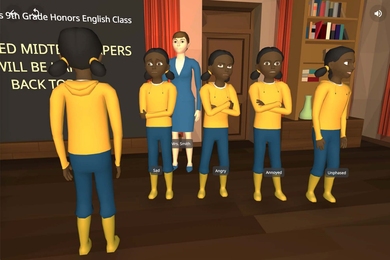
Computational model developed at MIT builds off of 2019 research examining colorblind racial attitudes through a video game.