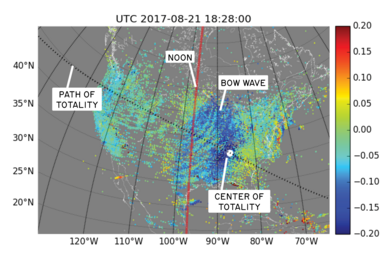
Solar eclipse caused bow waves in Earth's atmosphere
MIT Haystack Observatory researchers find that the moon's shadow created long-predicted ionospheric bow waves during the August eclipse.
Cleaner air, longer lives
Research shows the Clean Air Act was likely responsible for a dramatic decline in atmospheric organic aerosol.
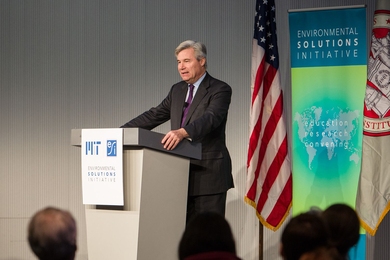
Addressing America’s climate future
At an Environmental Solutions Initiative event, U.S. Senator Sheldon Whitehouse speaks about defending science and moving forward on climate action.
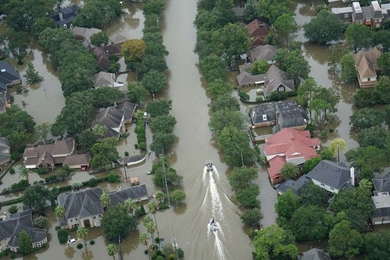
Texas’ odds of Harvey-scale rainfall to increase by end of century
Study finds state’s annual risk of extreme rainfall will rise from 1 to 18 percent.
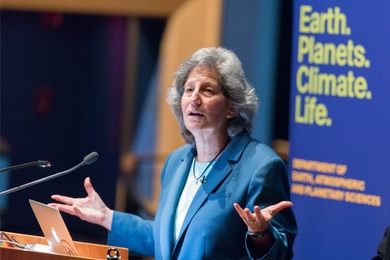
A brief history of environmental successes
Susan Solomon's John H. Carlson Lecture examines past environmental challenges in the context of today's fight against climate change.

Noelle Selin: Tracing toxins around the world
Atmospheric chemist takes on pollutants and the global treaties written to control them.
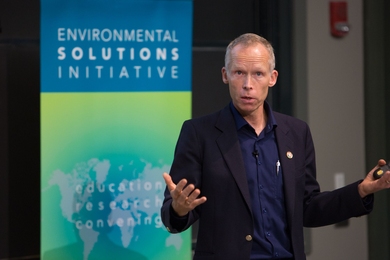
Johan Rockström: Presenting a framework for preserving Earth’s resilience
Stockholm Resilience Center executive director and Stockholm University professor speaks at the Environmental Solutions Initiative’s People and the Planet lecture series.
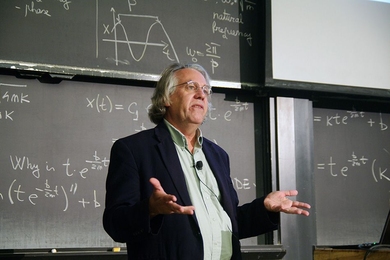
Kerry Emanuel: This year’s hurricanes are a taste of the future
Climate scientist describes physics behind expected increase in storm strength due to climate change.

Mathematics predicts a sixth mass extinction
By 2100, oceans may hold enough carbon to launch mass extermination of species in future millennia.
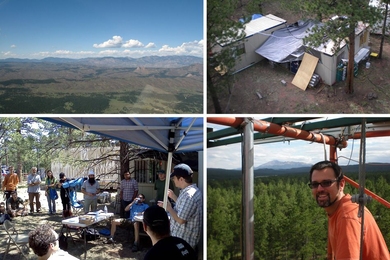
Team gathers unprecedented data on atmosphere’s organic chemistry
Colorado forest study provides clearest-ever picture of gases released into the atmosphere and how they change.

Strength of global stratospheric circulation measured for first time
Estimate will help gauge hang time of greenhouse gases, water vapor, and ozone in upper atmosphere.
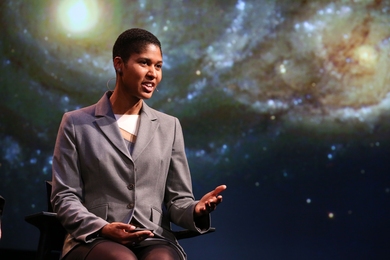
Danielle Wood joins Media Lab faculty
MIT alumna is establishing a new research group aimed at harnessing space engineering to improve life on Earth.
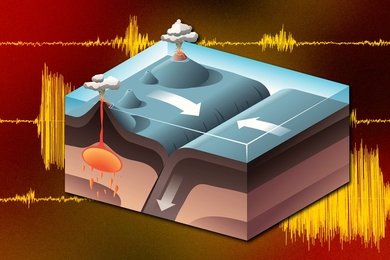
Ancient Earth’s hot interior created “graveyard” of continental slabs
Higher mantle temperatures caused subducting tectonic plates to sink much further than they do today.
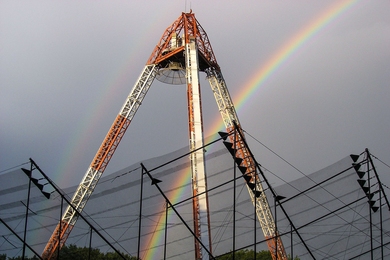
Investigating space weather effects of the 2017 solar eclipse
Atmospheric scientists at the MIT Haystack Observatory will study North American eclipse effects on space weather with radar and navigational satellites.