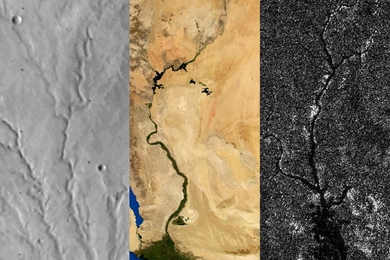
Rivers on three worlds tell different tales
Study finds history of Titan’s landscape resembles that of Mars, not Earth
Study finds history of Titan’s landscape resembles that of Mars, not Earth
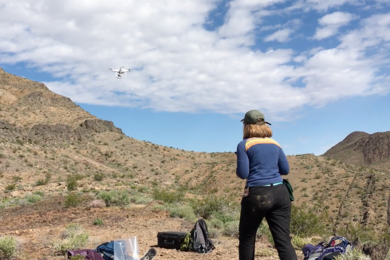
Professor Kristin Bergmann and her class used innovative technology to explore the sedimentary history of the Carrara Formation in California's Death Valley.
![“The observations are telling us there will be increases [in extreme rainfall] at almost all latitudes, but if you want to know what’s going to happen at the scale of a continent or smaller, it’s a much more difficult question,” Paul O’Gorman says.](/sites/default/files/styles/term_page__news_article/public/images/201705/mit-extreme-rain.jpg?itok=3RZFd0k3)
Intensification of extreme rainfall varies from region to region, study shows.
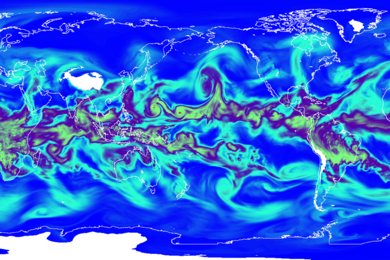
Associate Professor Paul O'Gorman describes three questions climate scientists recently suggested should frame the future of climate research.
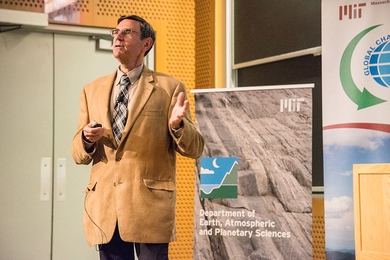
Climate data analyst Thomas Karl describes global temperature and precipitation measurement and interpretation in the 16th Henry W. Kendall Memorial Lecture.
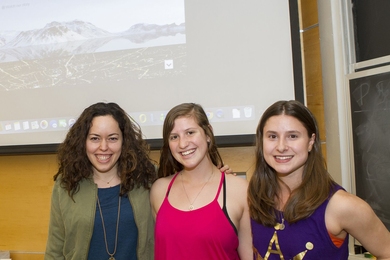
Fourth annual CEE Video Competition highlights global research and opportunities.
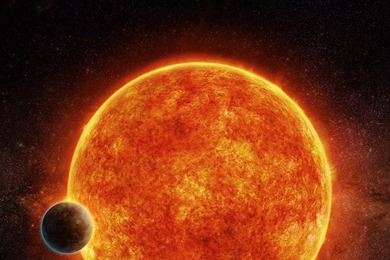
Some 40 light-years away, "super-Earth" identified as new target for atmospheric study.
Prestigious honor society announces 228 new members this year.
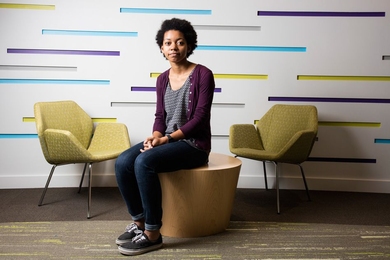
Senior Elizabeth Rider uses atmospheric chemistry research to create international connections.
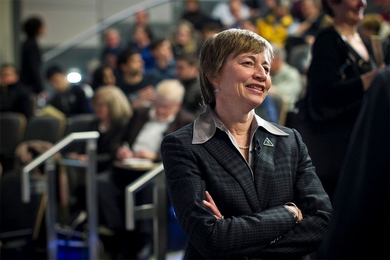
MIT vice president for research and chair of National Science Board testifies before Congress.
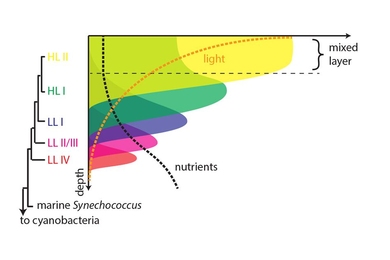
Ubiquitous marine organism has co-evolved with other microbes, promoting more complex ecosystems.
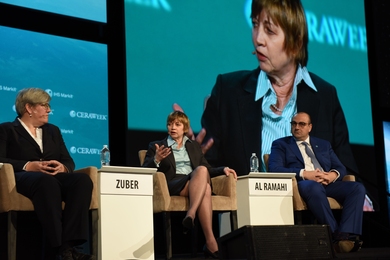
MIT energy and climate thought leaders play integral part in discussions at CERAWeek 2017.
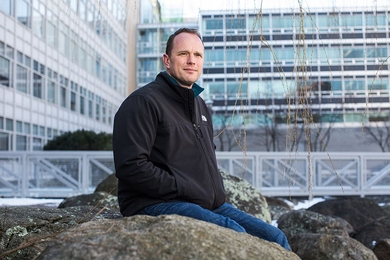
Geologist Oliver Jagoutz scales mountains to gain tectonic insights.
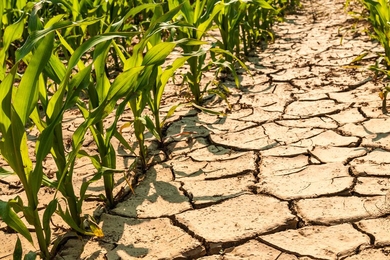
Over the next century, southern Africa will see widespread decreases in maize production.
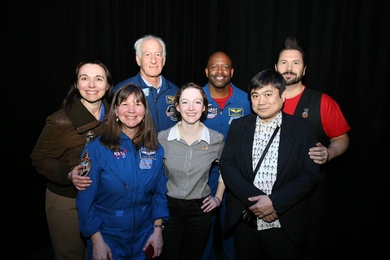
MIT Media Lab event, Beyond the Cradle, launches a new initiative to explore the final frontier.