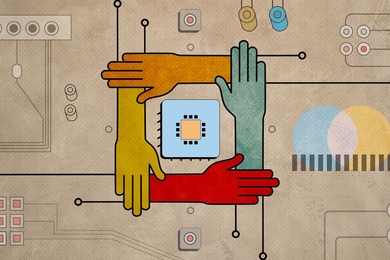
Ethics, computing, and AI: Perspectives from MIT
Faculty representing all five MIT schools offer views on the ethical and societal implications of new technologies.
Faculty representing all five MIT schools offer views on the ethical and societal implications of new technologies.

MIT researchers find a new way to make nanoscale measurements of fields in more than one dimension.
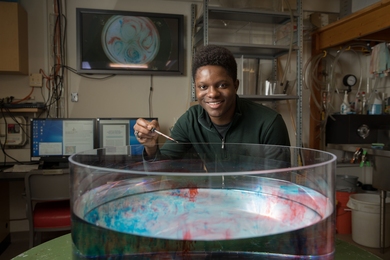
Jordan Benjamin, a double major in physics and atmospheric science, studies the weather inside and out of the classroom.
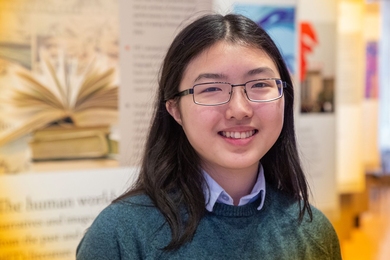
Junior Ivy Li, a literature and physics major, adapts a legendary work and innovates in an enduring literary tradition.

Optical effect could be harnessed for light displays, litmus tests, and makeup products.
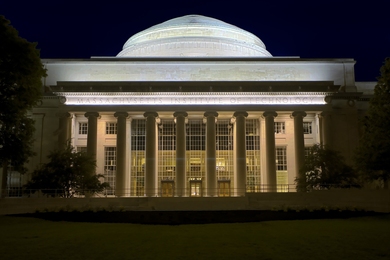
Institute ranks within the top 2 in 17 of 48 subject areas.
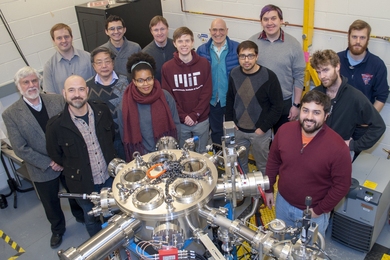
Award will support educational and research efforts in high-energy-density physics at MIT and four academic research partners.
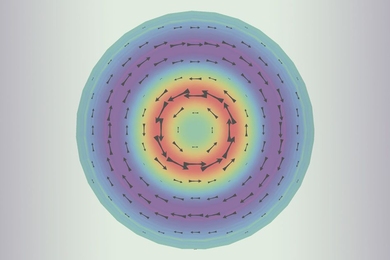
The particle’s core withstands pressures higher than those inside a neutron star, according to a new study.
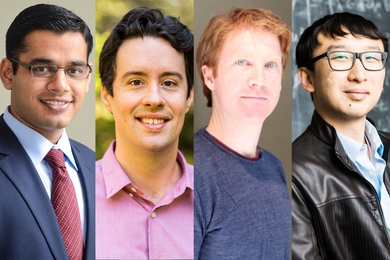
Nikhil Agarwal, Daniel Harlow, Andrew Lawrie, and Yufei Zhao receive early-career fellowships.
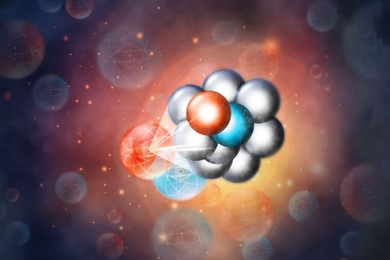
Number of proton-neutron pairs determine how fast the particles move, results suggest.
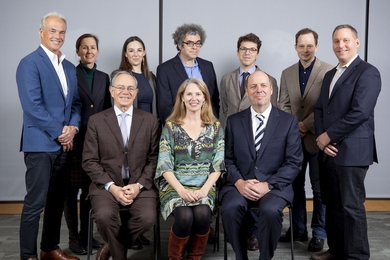
The prestigious awards are supporting five innovative projects that challenge established norms and have the potential to be world-changing.
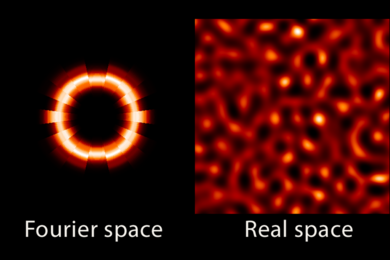
MIT researchers use resonant X-ray scattering measurements to reveal unexpected “Wigner glass” in desirable superconducting material.
Leading expert in acoustics, vibration, and machine dynamics served on the Department of Mechanical Engineering faculty for 32 years.
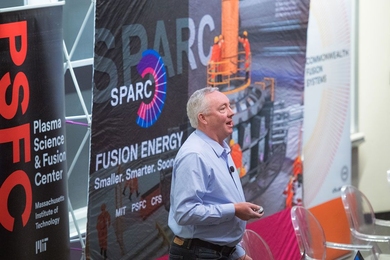
In series of talks, researchers describe major effort to address climate change through carbon-free power.
William Oliver says a lack of available quantum scientists and engineers may be an inhibitor of the technology’s growth.