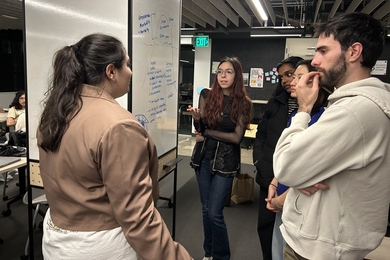
Empowering future innovators through a social impact lens
The IDEAS Social Innovation Challenge helps students hone their entrepreneurship skills to create viable ventures for public good.
The IDEAS Social Innovation Challenge helps students hone their entrepreneurship skills to create viable ventures for public good.
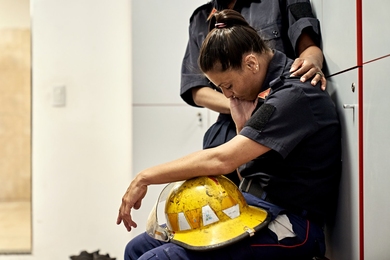
A study by MIT scientists supports “social good” as a cognitive approach to dealing with highly stressful events.

This new tool offers an easier way for people to analyze complex tabular data.

Drawing on evidence from neurobiology, cognitive science, and corpus linguistics, MIT researchers make the case that language is a tool for communication, not for thought.

Researchers and staff from MIT, including from the Simons Center for the Social Brain, collaborated with schoolchildren with special needs to create art, have fun, and learn from each other.
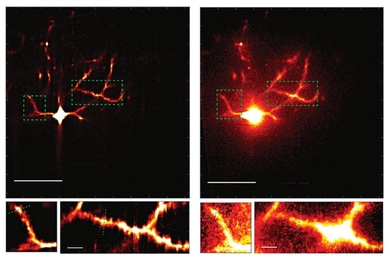
A newly described technology improves the clarity and speed of using two-photon microscopy to image synapses in the living brain.
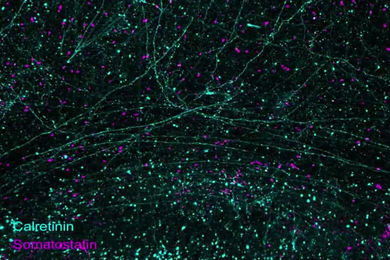
Three innovations by an MIT-based team enable high-resolution, high-throughput imaging of human brain tissue at a full range of scales, and mapping connectivity of neurons at single-cell resolution.
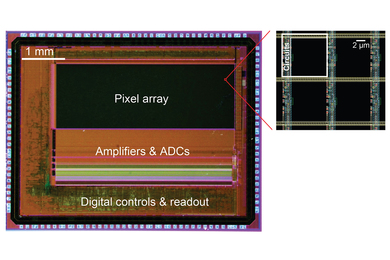
New camera chip design allows for optimizing each pixel’s timing to maximize signal-to-noise ratio when tracking real-time visual indicator of neural voltage.

Co-hosted by the McGovern Institute, MIT Open Learning, and others, the symposium stressed emerging technologies in advancing understanding of mental health and neurological conditions.

MIT neuroscientists have found that the brain uses the same cognitive representations whether navigating through space physically or mentally.
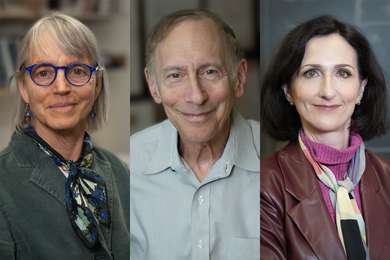
MIT scientists honored in each of the three Kavli Prize categories: neuroscience, nanoscience, and astrophysics, respectively.

New research addresses a gap in understanding how ketamine’s impact on individual neurons leads to pervasive and profound changes in brain network function.

The fellowships provide five years of funding to doctoral students in applied science, engineering, and mathematics who have “the extraordinary creativity and principled leadership necessary to tackle problems others can’t solve.”
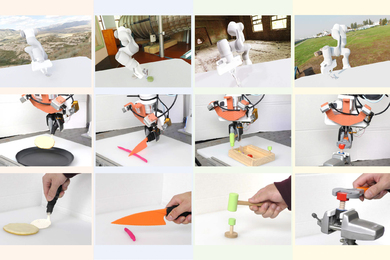
With generative AI models, researchers combined robotics data from different sources to help robots learn better.

With support from The Marcus Foundation, an MIT neuroscientist and a Harvard Medical School immunologist will study the “fever effect” in an effort to devise therapies that mimic its beneficial effects.