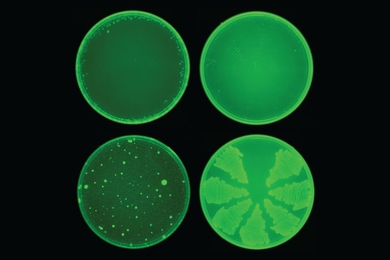
Artificial intelligence yields new antibiotic
A deep-learning model identifies a powerful new drug that can kill many species of antibiotic-resistant bacteria.
A deep-learning model identifies a powerful new drug that can kill many species of antibiotic-resistant bacteria.
Study suggests noninvasive spectroscopy could be used to monitor blood glucose levels.
Managing her own synthetic biology project helped graduate student Jesse Tordoff overcome imposter syndrome and hit her stride.
Voigt Lab's work could eventually replace cereal crops’ need for nitrogen from chemical fertilizers.
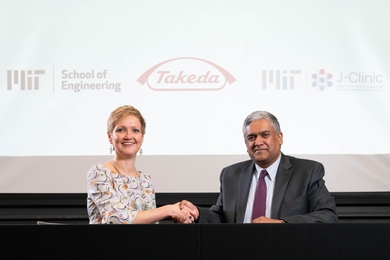
A key part of J-Clinic, the MIT-Takeda Program will create educational opportunities and support cutting-edge research to positively impact human health.
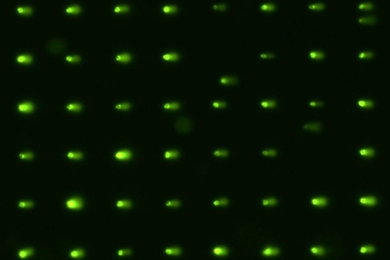
Using specialized liver cells, a new test can quickly detect potentially cancer-causing DNA damage.

Talya Klinger and Steven Truong will begin graduate studies in the UK next fall.
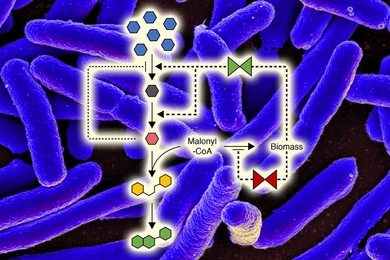
Chemical engineers program bacteria to switch between different metabolic pathways, boosting their yield of desirable products.
Faculty members recognized for excellence via a diverse array of honors, grants, and prizes over the last quarter.
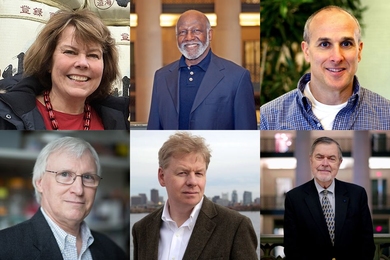
Baggeroer, Flynn, Harris, Klopfer, Lauffenburger, and Leonard are recognized for their efforts to advance science.
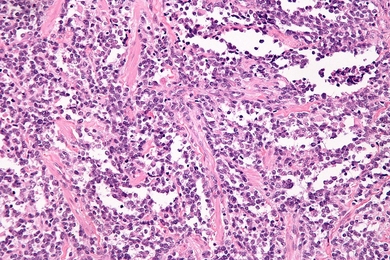
Team of researchers including MIT Professor Angela Koehler obtains $5.8 million grant to study fusion-positive alveolar rhabdomyosarcoma.
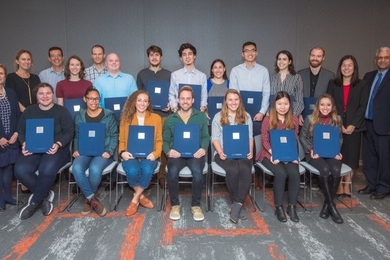
MIT students from the fields of bioengineering, business, computer science, and energy science receive the prestigious awards.
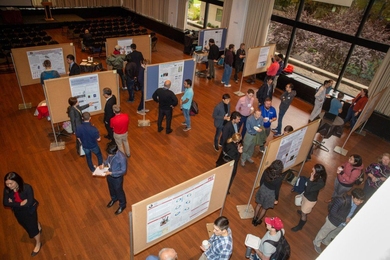
At the sixth annual Mechanical Engineering Research Exhibition, graduate students and postdocs sharpen their communication and presentation skills.
Award will support interdisciplinary research on the role of the human microbiome in health and disease.
James Collins, Pablo Jarillo-Herrero, and Richard Milner have won top prizes for their work.