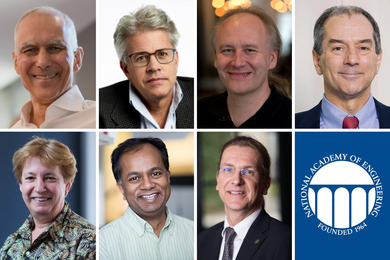
MIT community members elected to the National Academy of Engineering for 2026
Seven faculty members, along with 12 additional alumni, are honored for significant contributions to engineering research, practice, and education.
Seven faculty members, along with 12 additional alumni, are honored for significant contributions to engineering research, practice, and education.
Driven by overuse and misuse of antibiotics, drug-resistant infections are on the rise, while development of new antibacterial tools has slowed.
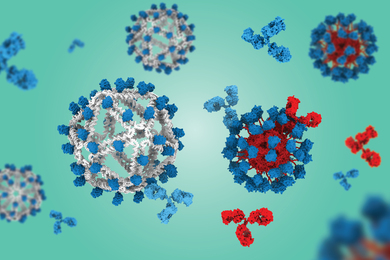
Based on a virus-like particle built with a DNA scaffold, the approach could generate broadly neutralizing antibody responses against HIV or influenza.
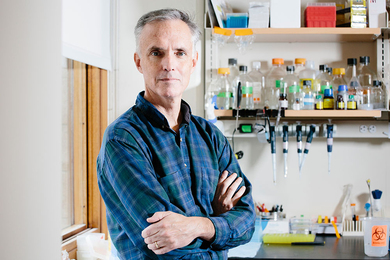
Professor James Collins discusses how collaboration has been central to his research into combining computational predictions with new experimental platforms.
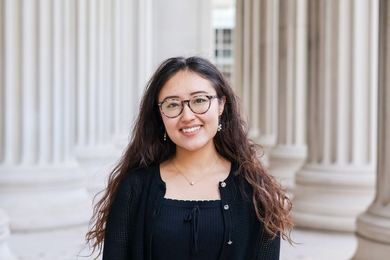
The MIT senior will pursue a master’s degree at Cambridge University in the U.K. this fall.
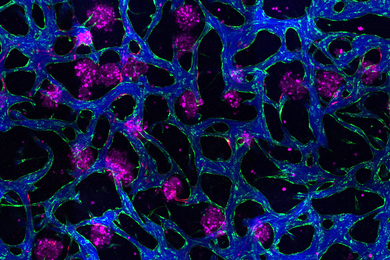
Two models more accurately replicate the physiology of the liver, offering a new way to test treatments for fat buildup.
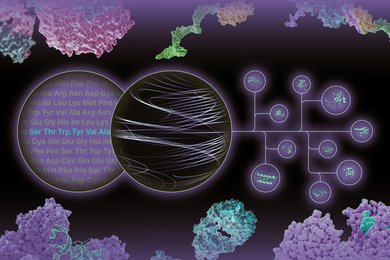
Founded by three MIT alumni, Gensaic uses AI-guided protein design to deliver RNA and other therapeutic molecules to specific cells or areas of the body.
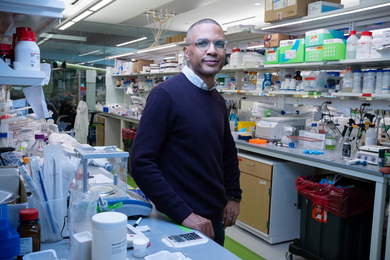
By analyzing how Myobacterium tuberculosis interacts with the immune system, the associate professor hopes to find new vaccine targets to help eliminate the disease.
The MIT senior will spend the 2026-27 year at Tsinghua University in Beijing, studying global affairs.
The program recognizes outstanding mentorship of graduate students.
The MIT senior helps design proteins that spur the immune system to fight cancer and other diseases.
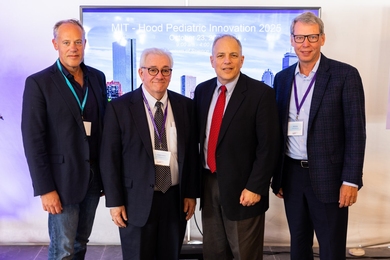
The Hood Pediatric Innovation Hub brings together clinicians, researchers, and industry to bridge the gap between discovery and care.
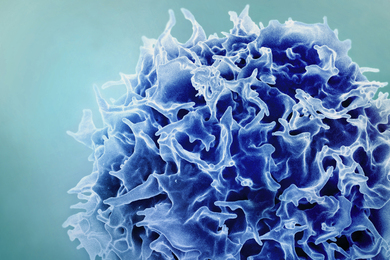
Stimulating the liver to produce some of the signals of the thymus can reverse age-related declines in T-cell populations and enhance response to vaccination.
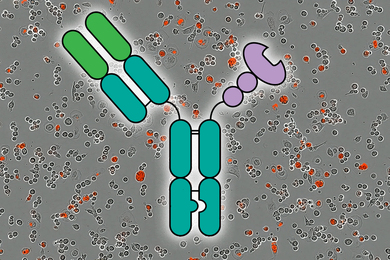
Using new molecules that block an immune checkpoint, researchers showed they could stimulate a strong anti-tumor immune response.

Angela Koehler, Iain Cheeseman, and Katharina Ribbeck are shaping the collaborative as a platform for transformative research, translation, and talent development across MIT.