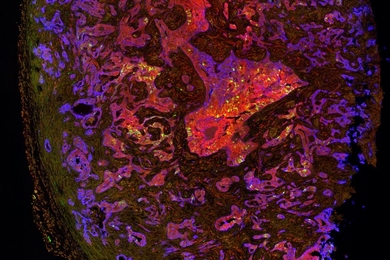
Biologists identify key step in lung cancer evolution
Blocking the transition to a more aggressive state could offer a new treatment strategy.
Blocking the transition to a more aggressive state could offer a new treatment strategy.

Bell, Bhatia, Cummins, Duflo, Jensen, and Mavalvala honored for research achievements.
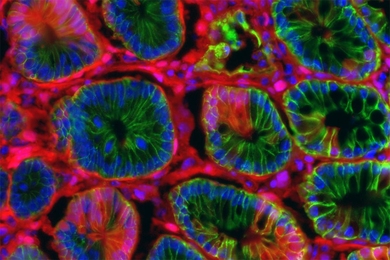
Introducing genetic mutations with CRISPR offers a fast and accurate way to simulate the disease.

Small sensors or drug delivery devices could reside in the GI tract indefinitely.

Prestigious honor society announces 228 new members this year.

Koch Institute director advocates support for biomedical research in testimony before the House Committee on Oversight and Government Reform.
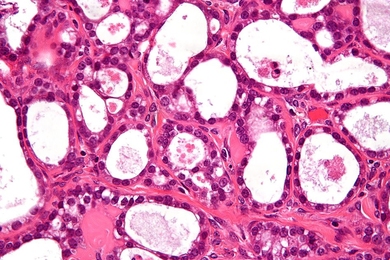
“Synthetic biomarkers” could be used to diagnose ovarian cancer months earlier than now possible.
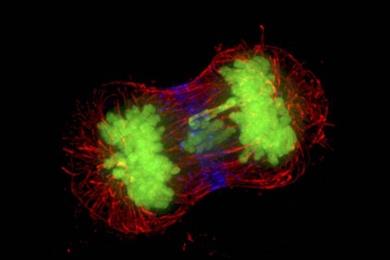
Differences in chromosome number may underlie variation among genetically identical individuals.
Researchers program RNA nanoparticles that could protect against the virus.
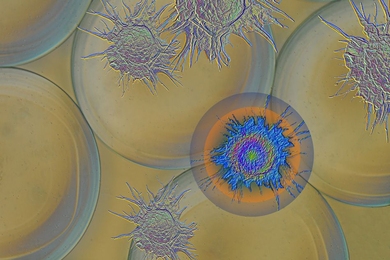
Selectively blocking immune cells can prevent formation of scar tissue around medical devices.
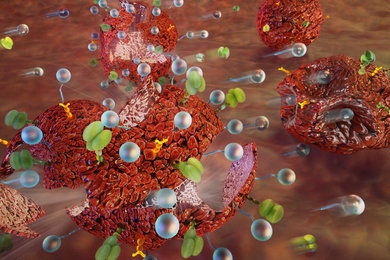
New strategy could improve performance of some immune-based drugs.
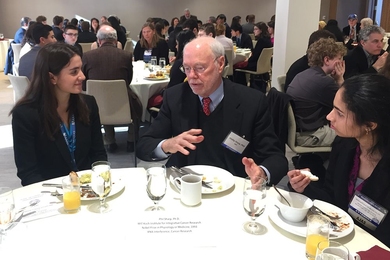
Talented high school researchers attending the annual AAAS/AJAS conference in Boston meet with MIT faculty.
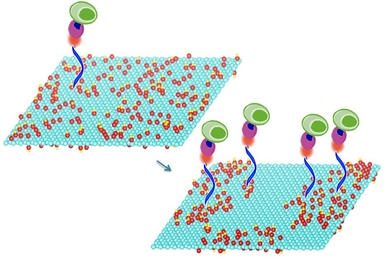
New method could enable pinpoint diagnostics on individual blood cells.

New sensor could reveal the neurotransmitter’s role in learning and habit formation.
MIT professor and NAS report committee co-chair Richard Hynes gives insight into the report’s recommendations.