Skip to content ↓

📬 Want a dose of MIT in your inbox? Subscribe to the MIT Daily and/or MIT Weekly newsletters.

Top News

Looking for audio? Listen to the MIT News podcast

Recent Highlights

More MIT News articles

In the Media

GBH

MIT President Sally Kornbluth joined Jim Braude and Margery Eagan live in studio for GBH’s Boston Public Radio to discuss MIT, the pressures facing America’s research enterprise, the importance of science and more. 

Forbes

Ahead of Superbowl Sunday, Forbes reporter Sandy Carter highlights a study by MIT researchers that identifies the factors needed to make an effective team. “What they found challenged many assumptions,” explains Carter. “First, team intelligence wasn’t about average IQ or brilliance of the smartest person in the room. It depended on three factors: How socially attuned the team members were to one another, whether conversations were shared rather than dominated by a few voices, and the presence of women in the group.”

Aunt Minnie

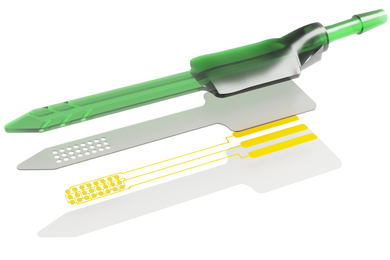
Researchers at MIT have developed a wearable breast cancer ultrasound device that could be used to detect breast cancer earlier, reports Amerigo Allegretto for AuntMinnie.com. “The device can image as deep as 15 cm into breast tissue and can image the entire breast from two or three locations,” explains Allegretto. “The team described the technology as an end-to-end system ultrasound architecture consisting of a novel sparse array geometry and a codesigned data acquisition system.” 

Forbes

Researchers at MIT have developed “a system of 3D-printed plastic trusses, made from recycled plastic,” reports Alex Knapp for Forbes. “Using an industrial 3D printer, they made four long trusses, then combined them to build a floor the way you would with the wood variety,” writes Knapp. “The result could support more than 4,000 pounds—exceeding typical building standards.” 

The Boston Globe

Prof. Marzyeh Ghassemi and Monica Agrawal PhD '23 speak with Boston Globe reporter Hiawatha Bray about the risks on relying solely on AI for medical information. “What I’m really, really worried about is economically disadvantaged communities,” says Ghassemi. “You might not have access to a health care professional who you can quickly call and say, ‘Hey… Should I listen to this?’”  

Forbes

Prof. Olivier de Weck speaks with Forbes reporter Alex Knapp about the challenges and opportunities posed by building data centers in space. Data centers are “physically secure from intrusion and environmentally friendly once operational,” says de Weck. “Essentially, the three primary resources required on Earth—land, power, and cooling—are available ‘for free’ in space after the initial launch and deployment costs are covered.”

Gizmodo

A new study by MIT physicists demonstrates that quark-gluon plasma behaves like a liquid, findings that could shed more light on the makeup of the early universe, reports Gayoung Lee for Gizmodo. “The researchers anticipate that the methods of the new study will greatly advance our understanding of matter in the early universe,” explains Lee. 

USA Today

Research Scientist Judah Cohen speaks with USA Today reporter Doyle Rice about how the polar vortex and cold Siberian air could impact weather across the U.S. in February. Cohen noted that some of the cold weather being felt on the East Coast of the U.S. is "coming from Siberia and that is contributing to the extremity of the cold since Siberia is the source of the coldest air of the Northern Hemisphere in winter.”

Gizmodo

Using the James Webb Telescope, postdoctoral associate Rohan Naidu and his colleagues have captured a glimpse of Galaxy MoM-z14, which existed 280 million years after the Big Bang, and could provide clues as to what the universe was like during its infancy and how it has evolved over time, reports Passant Rabbie for Gizmodo. “We can take a page from archeology and look at these ancient stars in our own galaxy like fossils from the early universe,” says Naidu. “Except in astronomy we are lucky enough to have Webb seeing so far that we also have direct information about galaxies during that time.” 

National Geographic

Postdoctoral Associate Fatima Husain speaks with National Geographic reporter Theo Nicitopoulos about the various theories used to explain how living creature survived the Cryogenian era. “These surface settings could have enabled a diverse assemblage of life to persist and continue to evolve throughout the glaciations,” says Husain. “We keep learning more about how extreme the Cryogenian was… and that makes life persisting and diversifying dramatically after that, all the more amazing.” 

Science

Prof. Giovanni Traverso and his colleagues developed a new technique that could one day be used to help protect cancer patients from the side effects of radiation therapy, reports Elie Dolgin for Science. The researchers found that providing brief pulses of a protein called “damage suppressor,” or Dsup could “shield injected tissues from radiation. They also found no evidence of acute toxicity with repeat doses, which bodes well for short-term use in clinical settings—for example, to protect nearby tissues during radiation treatment for a cancer,” Dolgin explains. 

Fox News

MIT researchers have developed a new smart pill that could be used to help doctors track treatment more accurately, and ensure patients stay on their medication schedule, reports Kurt Knutsson for Fox News. “If you or a loved one relies on critical medication, this kind of technology could add an extra layer of safety,” Knuttson explains. “It may reduce guesswork for doctors and ease pressure on patients who manage complex treatment plans.” 

CNBC

Prof. Lawrence Schmidt speaks with CNBC reporter Tom Huddleston Jr. about the influence of AI on the labor market. “It devalues existing expertise while simultaneously creating many new opportunities,” says Schmidt. “There's a sense in which AI may not be so distinct from past technologies.” 

Community Updates

Featured Multimedia

Video thumbnail

Professor Jonathan Gruber speaks to classical economics being built on one powerful explanatory insight: that free markets — networks of buyers and sellers, producers and consumers, weighing the trade-offs of different options and making self-interested choices based on supply and demand — do a better job of deciding how to allocate resources than can be achieved by a top-down, command-economy approach.

Video thumbnail

The Edward and Joyce Linde Music Building is the new home for MIT Music. Fully opened in February 2025, the building provides a centralized facility for music instruction and performance, with top-quality rehearsal spaces, recording studios, and new labs for music technology.

Video thumbnail

The MIT Human Insight Collaborative (MITHIC) is a presidential initiative with a mission of elevating human-centered research and teaching and connecting scholars in the humanities, arts, and social sciences with colleagues across the Institute.

Video thumbnail

Associate professor of mechanical engineering, Sili Deng, is driving research in sustainable and efficient combustion technologies. Her research group targets three areas: building up fundamental knowledge on combustion processes and emissions; developing alternative fuels and metal combustion to replace fossil fuels; and flame-based synthesis of cathode materials for lithium-ion batteries.

Video thumbnail

At MIT, our mission is to advance knowledge; to educate students in science, engineering, technology, humanities and social sciences; and to tackle the most pressing problems facing the world today. We are a community of hands-on problem-solvers in love with fundamental science and eager to make the world a better place.

More News