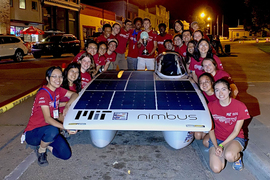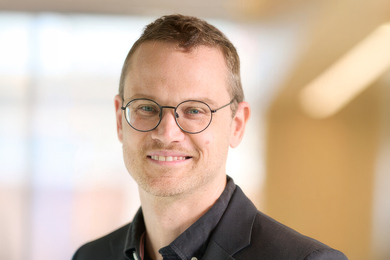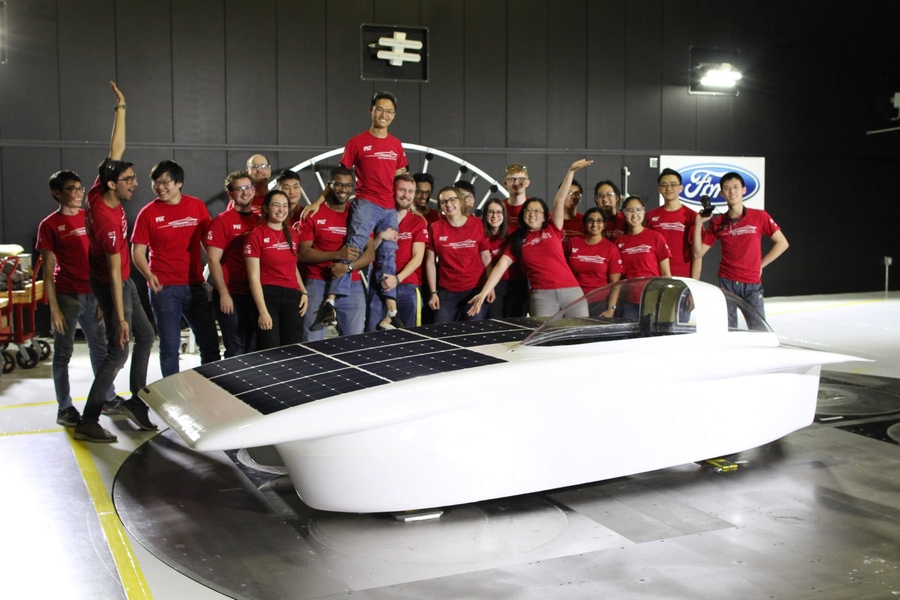
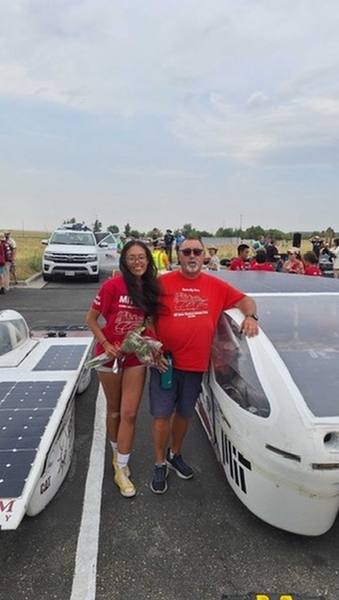
When Francis Wang ’21, MEng ’22 first joined the MIT Edgerton Center’s Solar Electric Vehicle Team (SEVT), his approach to engineering projects was “to focus my energy and attention on a tidy problem with neat boundaries that I could completely control.”
“But on Solar Car, I realized it takes a very different mindset to manage a substantial project with many moving pieces. It takes engineering leadership,” he recalls.
Wang was determined to strengthen his leadership skills. When he became Solar Car captain, he applied and was accepted into the Gordon Engineering Leadership (GEL) Program.
GEL’s courses and hands-on labs equip students with capabilities they need to lead and contribute to complex, real-world engineering challenges. The one- or two-year program for juniors and seniors complements MIT’s technical education, teaching teamwork, leadership, and communication skills in an engineering context. GEL students also benefit from personalized coaching, mentoring, industry networking, and career support throughout their professional lives.
“Before GEL, I saw the leadership parts of my role as a necessary evil to get to the actual interesting parts, which was the engineering,” says Wang. “The GEL Program gave me an understanding of how engineering leadership is crucial, because in the real world any project worth working on is larger than the scope of an individual engineer.”
In GEL he improved capabilities such as decision-making, taking initiative, and negotiating. He became a more effective SEVT team captain, able to navigate the challenges of taking an engineering project from concept to completion.
“It was often the case that the challenges I faced on Solar Car were not solely technical, involving aspects of communication, coordination, and negotiation. From GEL, I had the framework and the language to approach them,” says Wang.
Each year, 30-40 Edgerton students are accepted into the GEL Program. They come from a variety of teams and clubs including Arcturus, Assistive Technology Club, ChemE Club, Combat Robotics Club, Design Build Fly (DBF), Design for America, Electric Vehicle Team, Engineers Without Borders, First Nations Launch, MIT Electronics Research Society (MITERS), Motorsports, Robotics Team, Rocket Team, and Solar Electric Vehicle Team (SEVT).
“MIT’s best engineering students have GEL training and authentic project management experience with our competition teams,” says Professor J. Kim Vandiver, director of the Edgerton Center.
Edgerton project teams are entirely student-run organizations responsible for all levels of project and team management including fundraising, recruiting, designing, testing, risk mitigation, and project validation. The most successful teams have skilled leaders.
“Many of the excellent Edgerton project team students admitted to GEL are team or sub-team leaders who credit their GEL experience, particularly the experiential learning component, with improving their leadership skills,” says Leo McGonagle, executive director of GEL.
“It’s a win-win-win. GEL gets hard-working, motivated Edgerton Program students who are intent on self-development and improvement. Edgerton project teams often perform better with leaders who are GEL-trained. And the students gain leadership, teamwork, and communication abilities that they can use beyond their project team — in their capstones, course projects, internships, and jobs after MIT,” says McGonagle.
The overlapping connection between GEL and Edgerton truly becomes obvious when students begin to take ownership of project milestones.
“When you become the leader of a technical project, no one gives you a roadmap to team success,” says senior Hailey Polson, former captain of First Nations Launch team. “Technical expertise is not enough to leverage the talent and skills of an entire team or the ability to coordinate a multifaceted project; that’s where the tools, skills, and leadership theory I learned in GEL helped me bridge the gap between knowing how to accomplish our goals and actually leading my team successfully.”
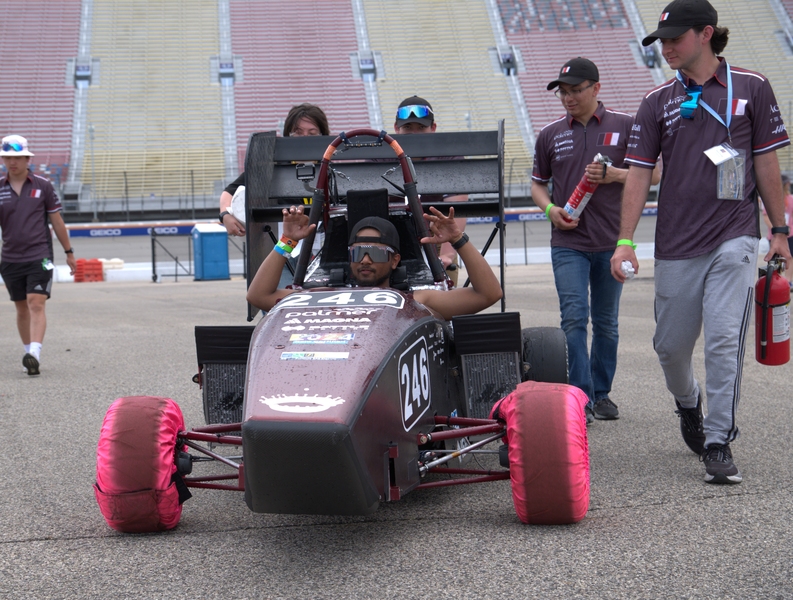
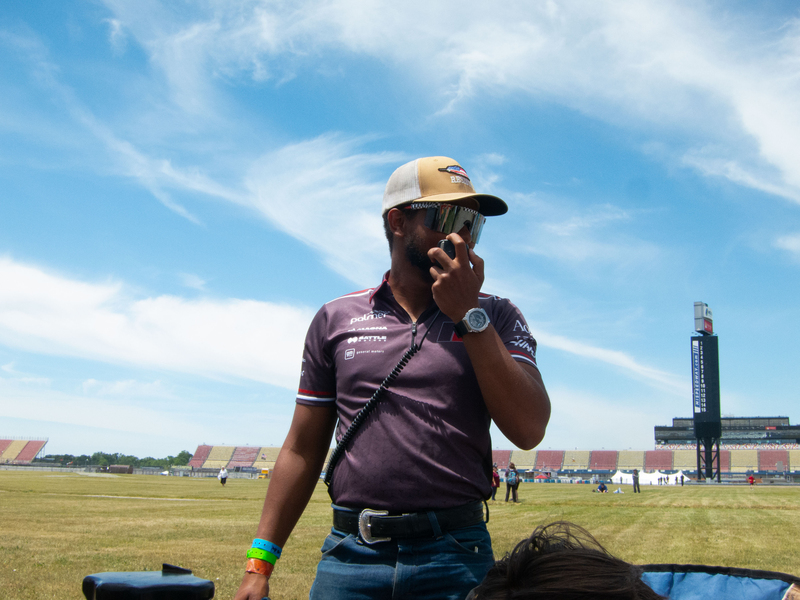
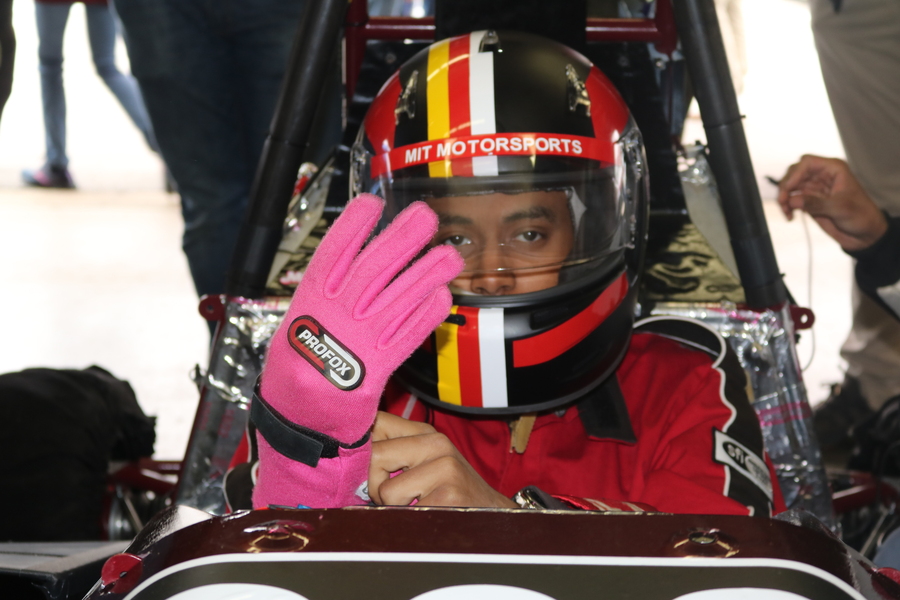
Faris Elnager ’25 served as testing lead on the Motorsports team, which designs, manufactures, and competes with a formula-style electric race car every year.
“Making tough decisions was something that I learned in GEL. On Motorsports, I had to make high-stakes decisions about testing time that affected how we performed at a competition,” he says.
He found that GEL’s weekly Engineering Leadership Labs were a way to test for himself specific leadership capabilities that he could use to improve his Motorsports team.
“One of the most useful skills from GEL was evaluating your stakeholders and learning how to balance their needs. I remember thinking, we’re doing this right now in the [GEL] lab, and then we’re going back to the [Edgerton] shop to do this for real!” says Elnager. “It’s like a positive feedback loop. GEL labs make you better on project teams, and project teams make you better in GEL.”
Now a startup co-founder, Elnager says that the communication skills that he learned through Motorsports and GEL have been critical to his company’s early success. “You can build the best tech in the world. If you can’t pitch it to people, you’re never going to raise any money. Being able to explain a technical project to anyone, whether they're an investor or someone in your industry, is something that’s incredibly valuable.”
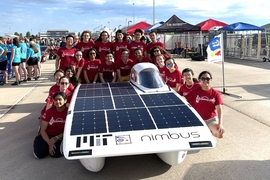
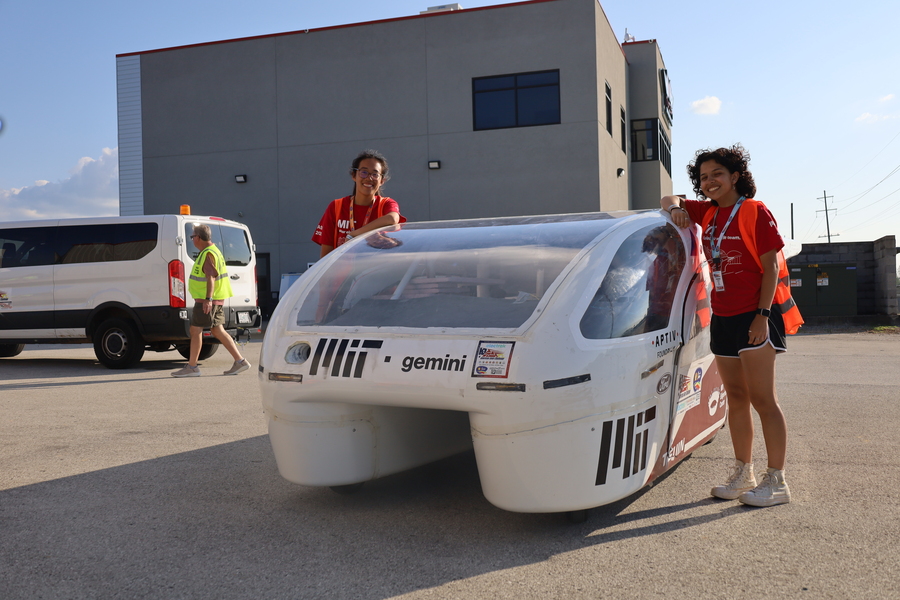
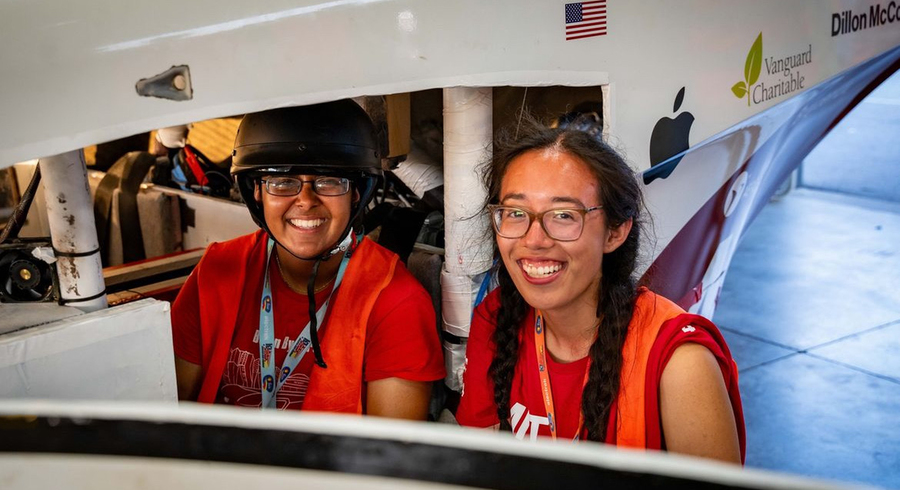
Adrienne Lai ’25 served as both mechanical lead and then captain of the Solar Electric Vehicle Team. She recalls how her GEL training would kick in on race day.
“It’s quite tricky to be captain of a build team, because there’s no adult to tell you what to do. You have to figure it all out for yourself. When you’re competing, it can be very chaotic. You are trying to maximize a score by driving more miles, but that comes with a trade-off of spending energy or ending the day in a more rural area, or with less sun, so there are a lot of trade-offs to consider. Sometimes someone just has to make a decision. I was very comfortable doing that because I had learned how to take initiative, which is one of the GEL capabilities,” she says.
Now a course assistant in GEL, Lai helps design scenarios that enable GEL students to become better and more resilient leaders. She particularly enjoys playing the role of an uncooperative supplier.
“We close our store randomly. We don’t have what they need. We won’t tell them what we have,” she laughs. “Students get very frustrated. They think that we’re just being mean. But from a real-world perspective, that is all very true. It simulates unpredictability, which is important not just in a job, but in life.”
The value of the engineering leadership skills learned in GEL and honed on Edgerton project teams carries forward into industry, graduate studies, and entrepreneurial ventures.
“GEL preparation, coupled with authentic project management on a competition team, prepares MIT students for great careers in industry,” says Vandiver.
Henry Smith ’25 says he still relies on skills such as negotiation, communication, and understanding stakeholder needs that he used when he was a Motorsports mechanical lead.
“I was doing high-level management, planning, and organization on the team. Being in the GEL Program really increased my value for the team and helped me be prepared to enter the job field. When I graduated, I wasn’t worried about being ready or not. It was a definite yes,” says Smith.
As project teams continue to address ambitious engineering challenges, the synergy between Edgerton and the Gordon Engineering Leadership (GEL) Program ensures that as students graduate, they’re prepared to not only become strong technical contributors, but confident leaders prepared to tackle complex engineering problems in the real world.