A "GPS for inside your body"
CSAIL wireless system suggests future where doctors could implant sensors to track tumors or even dispense drugs.
CSAIL wireless system suggests future where doctors could implant sensors to track tumors or even dispense drugs.
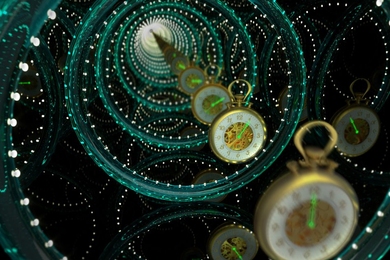
Technique can capture a scene at multiple depths with one shutter click — no zoom lens needed.
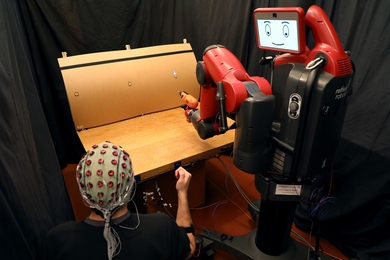
Computer Science and Artificial Intelligence Laboratory system enables people to correct robot mistakes on multiple-choice tasks.
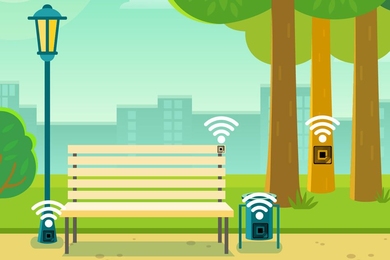
Platform may enable continuous, low-cost, reliable devices that detect chemicals in the environment.
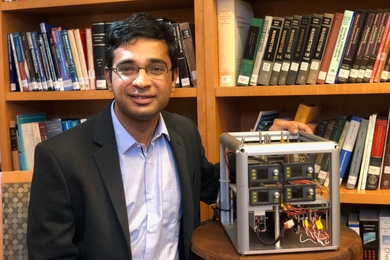
Using diamond dust and laser light to control atomic spin, Ashok Ajoy PhD ’16 pursues alternatives to costly conventional imaging technologies.
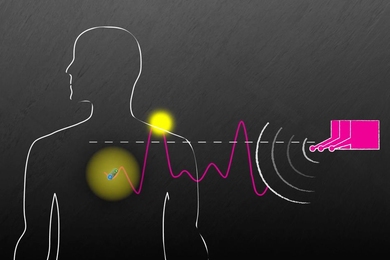
New technology could enable remote control of drug delivery, sensing, and other medical applications.

Eleven principal investigators from six MIT departments will receive grants totaling over $1.3 million, overhead free, for research on food and water challenges.
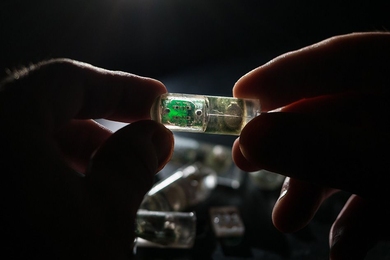
Ultra-low-power sensors carrying genetically engineered bacteria can detect gastric bleeding.
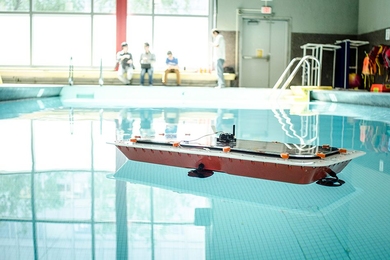
Researchers design 3-D-printed, driverless boats that can provide transport and self-assemble into other floating structures.
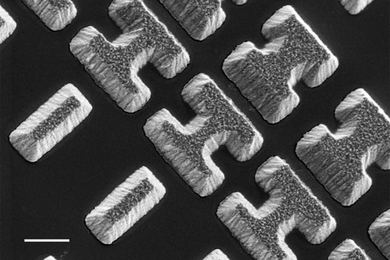
Artificial optical materials could allow cheaper, flatter, more efficient detectors for night vision and other uses.

Robust batteries, solar refrigeration, UV membrane cleaner, and smart factory technologies take home $140,000 in prize money.
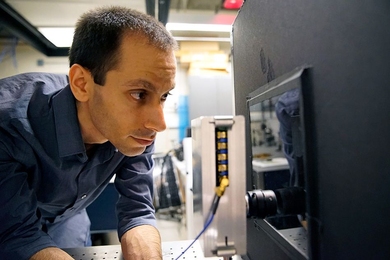
Computational photography could solve a problem that bedevils self-driving cars.

Platform connects individual pieces of lab equipment, compiles data in the cloud for speedier, more accurate research.
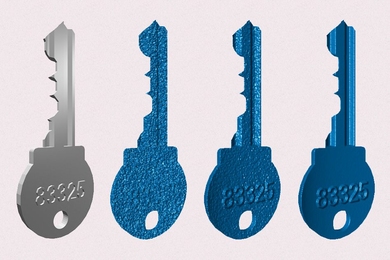
Computational method improves the resolution of time-of-flight depth sensors 1,000-fold.

Technologies named among the year's most significant innovations address health care, radar performance, aircraft collision avoidance, and 24-hour wide-area surveillance.