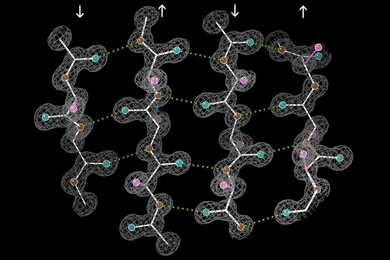
Analyzing protein structures in their native environment
Enhanced-sensitivity NMR could reveal new clues to how proteins fold.
Enhanced-sensitivity NMR could reveal new clues to how proteins fold.
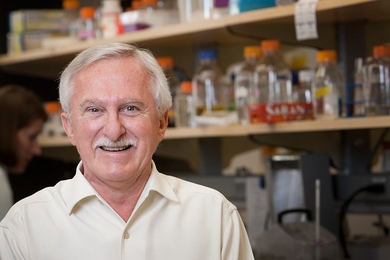
Biochemist who graduated from MIT in 1968 is honored for his work on DNA repair mechanisms.
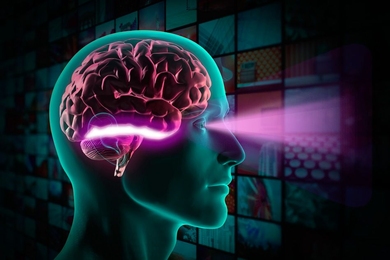
Neuroscientists find evidence that the brain’s inferotemporal cortex can identify objects.
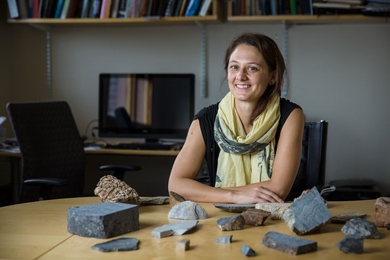
Tanja Bosak examines how life and the Earth evolved in tandem during their early history together.

Agreement will support a number of joint research projects, seminars, lectures, and other programming.
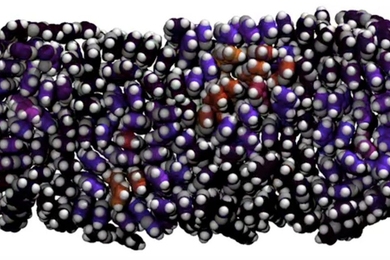
Modeling electron excitation in organic photovoltaic material could change the future of solar energy.

Giving machine-learning systems “partial credit” during training improves image classification.

Study: Manmade aerosols can alter rainfall in the world’s most populous region.

Mathematics professor honored for contributions to mathematical physics that lay the groundwork for new developments in the field.
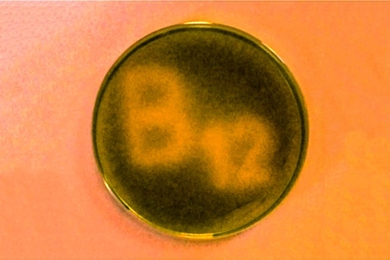
MIT scientists identify and map the protein behind a light-sensing mechanism.
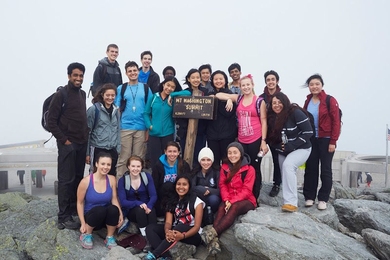
Freshmen discover the Department of Earth, Atmospheric and Planetary Sciences through weather and climate demonstrations and a trip to Mt. Washington.
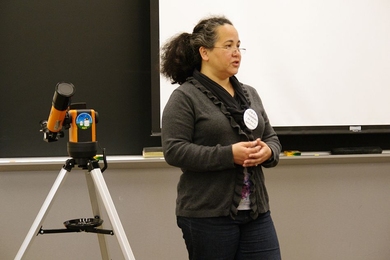
Astronomer and planetary scientist has been a steady source of inspiration for students and community members interested in observational astronomy.
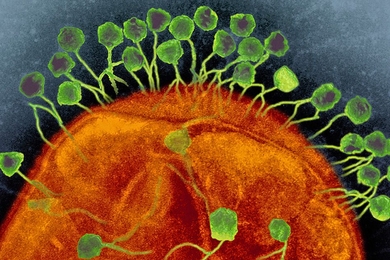
CRISPR-Cpf1 offers simpler approach to editing DNA; technology could disrupt scientific and commercial landscape.