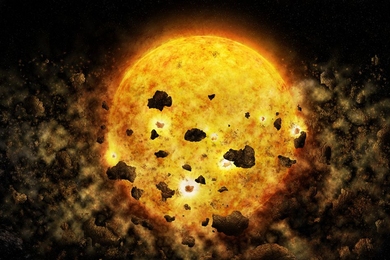
X-ray data may be first evidence of a star devouring a planet
New data may explain star’s mysterious dimming.
New data may explain star’s mysterious dimming.

Results may help identify ancient climates on Earth or other planets.
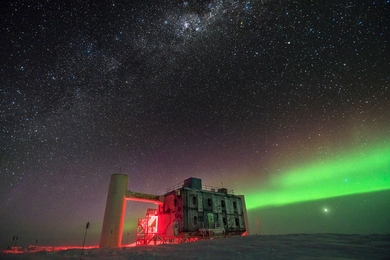
Most thorough test to date finds no Lorentz violation in high-energy neutrinos.

Study finds 1–2 percent of Earth’s oldest mantle rocks are made from diamond.
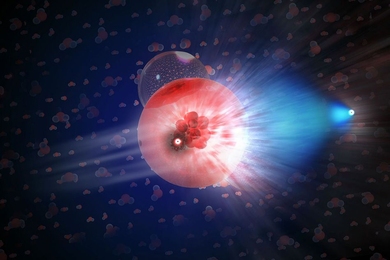
The “ghostly particle” is confirmed to have originated from a blazar, nearly 4 billion light years from Earth.
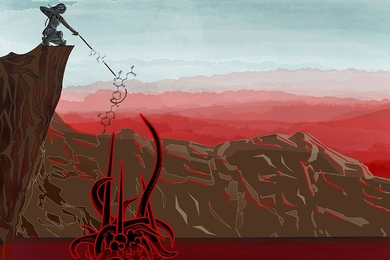
Whitehead team deploys CRISPR tools to better understand and uncover ways of improving methotrexate, a popular chemotherapy drug.
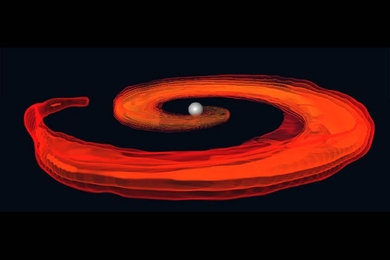
Signals from rare black hole-neutron star pairs could pinpoint rate at which universe is growing, researchers say.
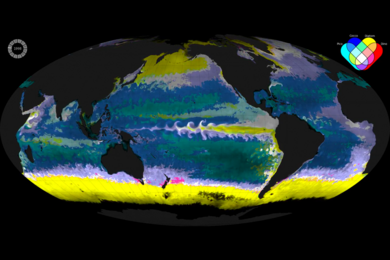
Simons Foundation-backed CBIOMES brings together researchers in oceanography, statistics, data science, ecology, biogeochemistry, and remote sensing.
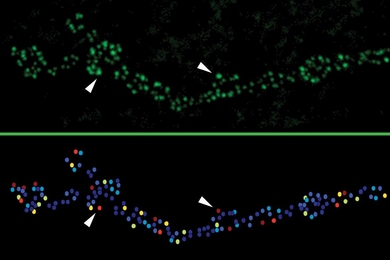
MIT study finds synapses develop strength with calcium, maturation.
Assistant professor honored for contributions to research in discrete mathematics, teaching, service, and outreach.
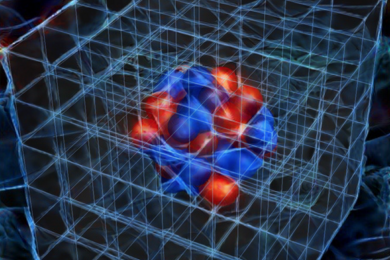
Laboratory for Nuclear Science project selected to explore machine learning for lattice quantum chromodynamics.
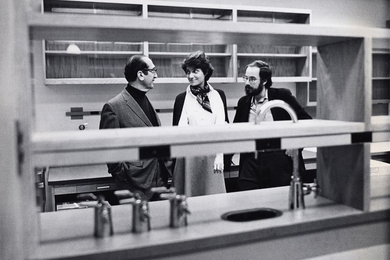
Initiative is building collections highlighting the contributions of female faculty.

Alumna-founded LiLu promises to make life as a new mom easier by making breast pumping more comfortable and more productive.
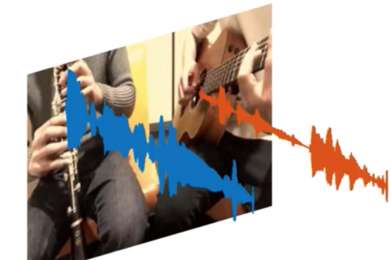
Given a video of a musical performance, CSAIL’s deep-learning system can make individual instruments louder or softer.
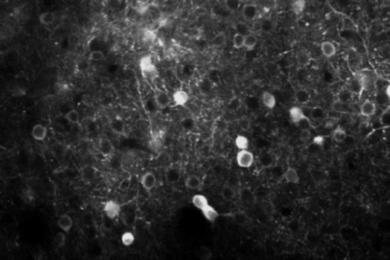
MIT neuroscientists find posterior parietal cortex region is crucial to connecting perception to action.