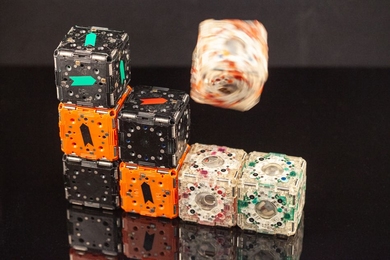
Self-transforming robot blocks jump, spin, flip, and identify each other
Developed at MIT’s Computer Science and Artificial Intelligence Laboratory, robots can self-assemble to form various structures with applications including inspection.
Developed at MIT’s Computer Science and Artificial Intelligence Laboratory, robots can self-assemble to form various structures with applications including inspection.
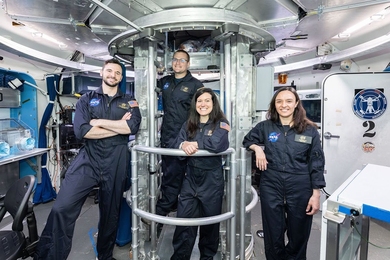
Barret Schlegelmilch ’18 takes part in simulated NASA mission to the Martian moon Phobos.
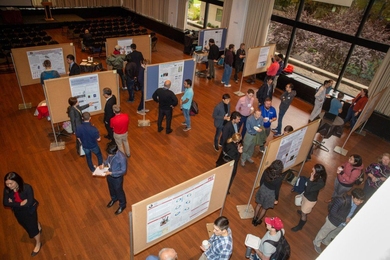
At the sixth annual Mechanical Engineering Research Exhibition, graduate students and postdocs sharpen their communication and presentation skills.
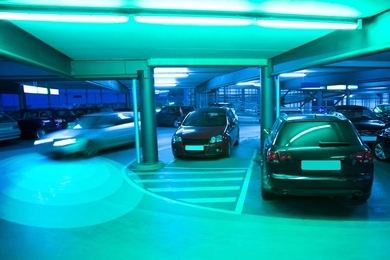
By sensing tiny changes in shadows, a new system identifies approaching objects that may cause a collision.
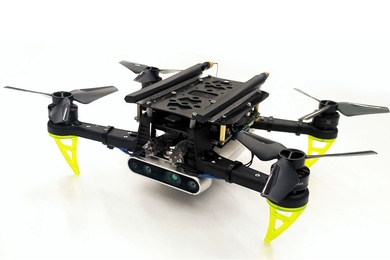
Drones can fly at high speeds to a destination while keeping safe “backup” plans if things go awry.
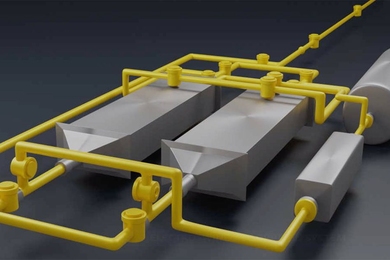
The process could work on the gas at any concentrations, from power plant emissions to open air.

Award will support interdisciplinary research on the role of the human microbiome in health and disease.
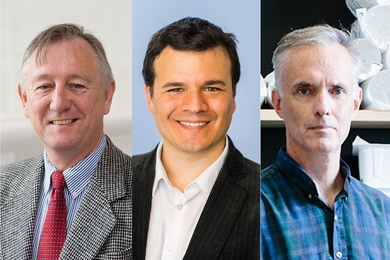
James Collins, Pablo Jarillo-Herrero, and Richard Milner have won top prizes for their work.
Revamped version of MITx MOOC includes new modules on nuclear security, nuclear proliferation, and quantum engineering.
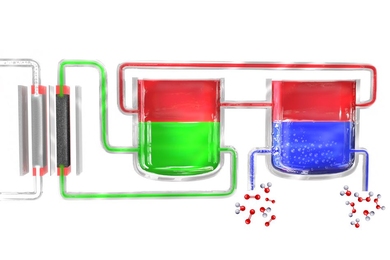
MIT-developed method may lead to portable devices for making the disinfectant on-site where it’s needed.
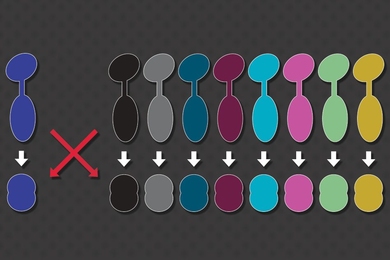
Engineered signaling pathways could offer a new way to build synthetic biology circuits.
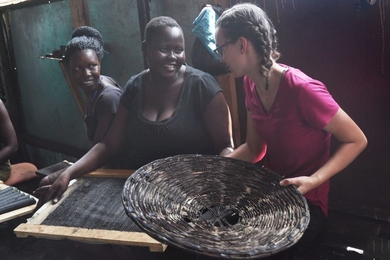
Mechanical engineering students in MIT D-Lab are working with collaborators in Uganda on a solution for the health hazards associated with wood-burning stoves.
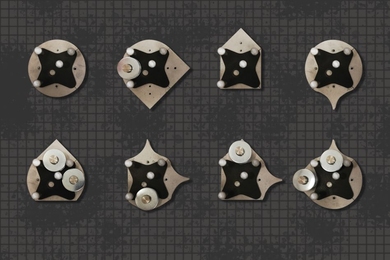
Systems “learn” from novel dataset that captures how pushed objects move, to improve their physical interactions with new objects.
Series featured five experts who played seminal roles in understanding the nanoscale.
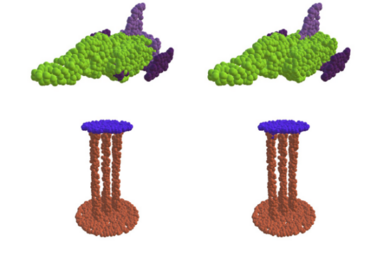
Research aims to make it easier for self-driving cars, robotics, and other applications to understand the 3D world.