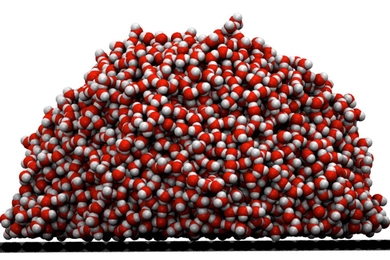
How ‘transparent’ is graphene?
MIT researchers find that adding a coating of graphene has little effect on how a surface interacts with liquids — except in extreme cases.
MIT researchers find that adding a coating of graphene has little effect on how a surface interacts with liquids — except in extreme cases.
Recognized by their peers for their efforts to advance science or its applications.

Empirically rich new study finds most people alter their risk-management approach depending on the type of financial decision.
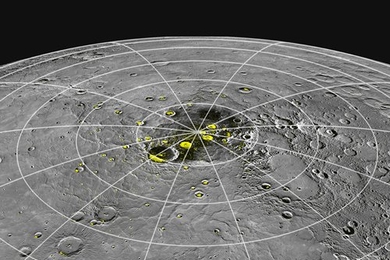
Ice and organic material may have been carried to the planet by passing comets.
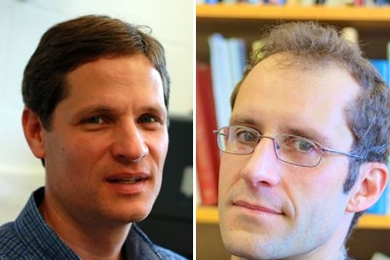
The researchers will investigate transient boiling heat transfer phenomena under rapidly escalating heat fluxes.

The fellowship provides tenured, mid-career faculty in the Department of Electrical Engineer and Computer Science with resources for up to three years to pursue new research and development paths.
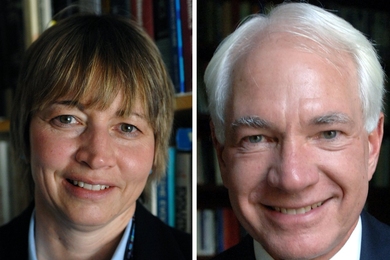
Claude Canizares will take a new role as a vice president with responsibility for international partnerships.
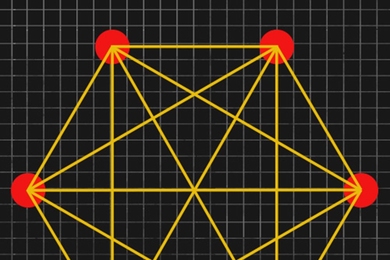
With a new contribution to probability theory, researchers show that relatively simple physical systems could yield powerful quantum computers.

New MRI technique could help doctors track how patients respond to treatment.
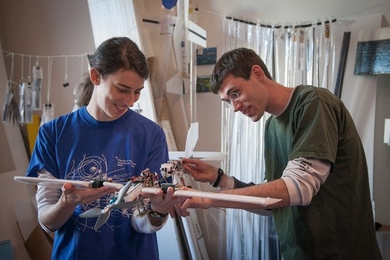
Siblings Andrew and Jennifer Barry have not only managed to maintain a close friendship into their adult years, but are also both studying robotics at CSAIL
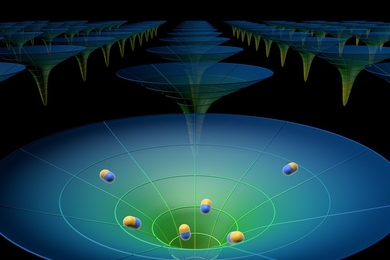
MIT engineers propose a new way of harnessing photons for electricity, with the potential for capturing a wider spectrum of solar energy.

Fluctuations in electrical activity may also allow the brain to form thoughts and memories.
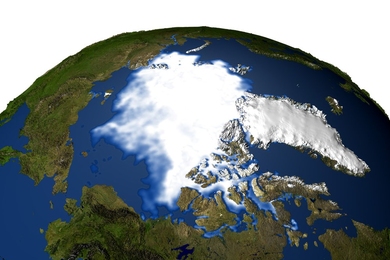
Discovery of feedback between sea ice and ocean improves Arctic ice extent forecast.

MIT Sloan’s Katherine Kellogg goes inside hospitals to study medical practices.
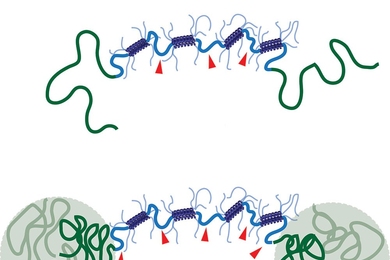
These more durable gels could find applications in drug delivery and tissue engineering.