Center for Environmental Health Sciences announces 2016 call for pilot project proposals
Proposals are invited for basic and translational environmental health sciences research.
Proposals are invited for basic and translational environmental health sciences research.
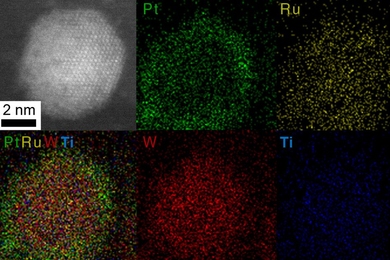
Process from MIT provides improved reactivity with much less platinum.

Study looks at why some states could be impacted more than others if a price is put on carbon.

Professor David Geltner is developing new real estate indices to quantify uncertainties in commercial property markets.
Principal investigators will receive grants of up to $100,000 per year for up to two years for innovative research on food and water challenges.
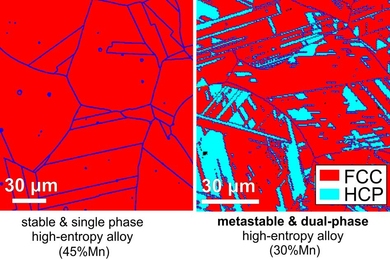
Promising new approach overturns widespead metallurgical assumption.
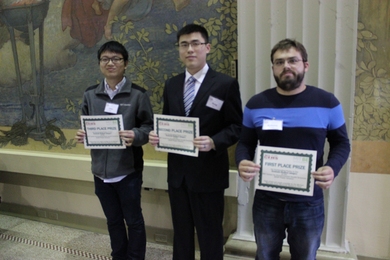
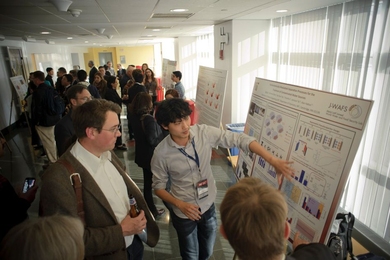
Annual poster session showcases recent work on biological effects of exposure to environmental agents.
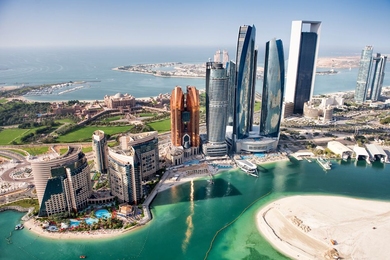
Tool will help urban planners reduce Abu Dhabi’s heat island and carbon footprint.
![“[W]hen you send location data as a secondary piece of information, it is extremely simple for people with very little technical knowledge to find out where you work or live,” Ilaria Liccardi says.](/sites/default/files/styles/term_page__news_article/public/images/201605/MIT-No-Privacy.jpg?itok=Tkm7jhKw)
From location data alone, even low-tech snoopers can identify Twitter users’ homes, workplaces.
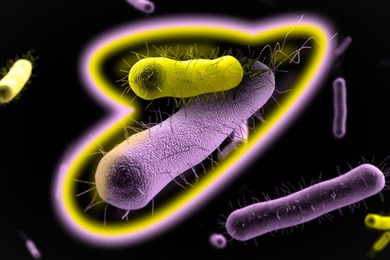
Strains of E. coli resistant to one antibiotic can protect other bacteria growing nearby.
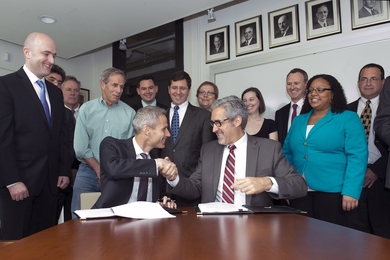
Initial focus will be on transformative technologies, autonomy, and robotics.
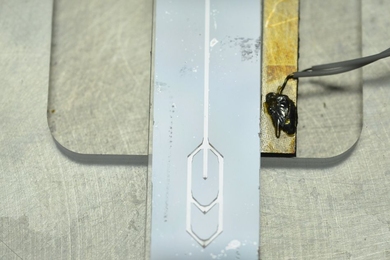
Microfluidic device distinguishes cells based on how they respond to acoustic vibrations.
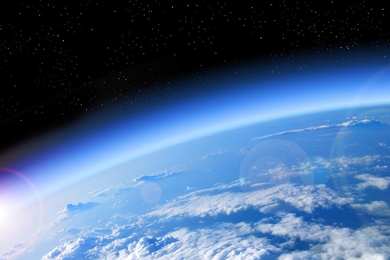
Beginning 2.33 billion years ago, atmospheric oxygen built up in just 10 million years.
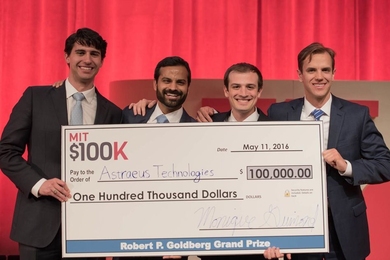
Team’s smartphone-connected device can detect lung cancer early from a single breath.