Energy-friendly chip can perform powerful artificial-intelligence tasks
Advance could enable mobile devices to implement “neural networks” modeled on the human brain.
Advance could enable mobile devices to implement “neural networks” modeled on the human brain.
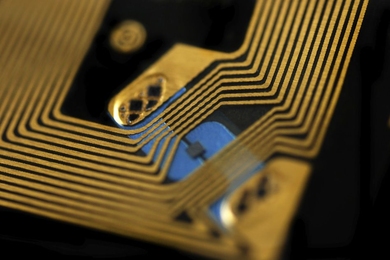
New technology could secure credit cards, key cards, and pallets of goods in warehouses.
MISTI program awards over $2 million to faculty across the Institute.

Award will support research on the South Sea Bubble crisis as an example of connections between scientific developments and their larger social consequences.

Low-power chip processes 3-D camera data, could enable wearable device to guide the visually impaired.
New initiatives aim to accelerate learning research and its applications.

Gabrieli, Belcher, Sarma leading new efforts to understand learning, improve it at all levels of education.
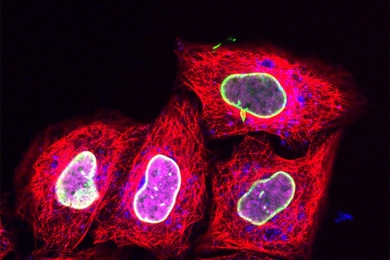
Compressing cells allows delivery of new fluorescent tags to track proteins in living cells.
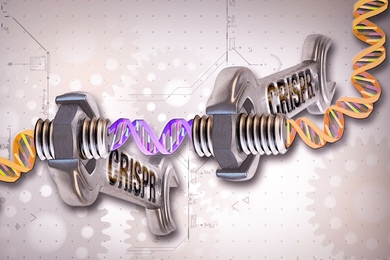
New delivery method boosts efficiency of CRISPR genome-editing system.
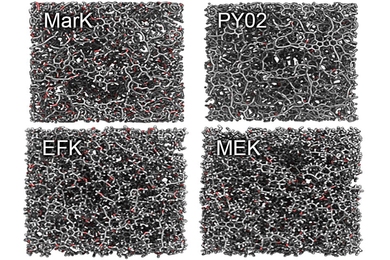
Nanopores may be trapping oil and gas in the ancient hydrocarbon instead of allowing them to flow.
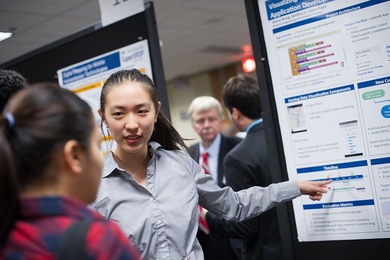
Hallmark program “SuperUROP” lets undergrad engineers dive into a year-long research experience.

Working with the Tata Center, two MIT economics students are testing projects to reduce industrial pollution in India.
Automatic bug-repair system fixes 10 times as many errors as its predecessors.
Immune molecules in infected mothers tied to brain and behavior abnormalities in offspring.

In Brazil, auditing voter rolls has shrunk the electorate — to the dismay of incumbents.