
3Q: US patent office’s ruling on CRISPR
Charles Jennings of MIT’s McGovern Institute discusses the intellectual property dispute over the gene-editing technique.
Charles Jennings of MIT’s McGovern Institute discusses the intellectual property dispute over the gene-editing technique.
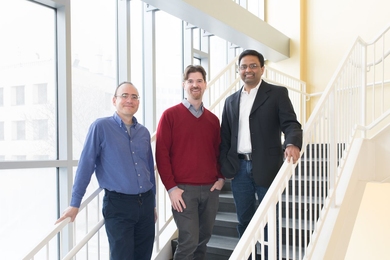
Bill and Melinda Gates Foundation awards MIT, University College London, and University of Kansas $17.6M for development and production of low-cost vaccines.

Three-in-one design allows genetic, chemical, optical, and electrical inputs and outputs.

Study: Silicon can reproduce physical phenomena exploited by high-end telecommunications devices.

PhD student Dean Knox studies social networks and how individuals use them to access government goods and services.
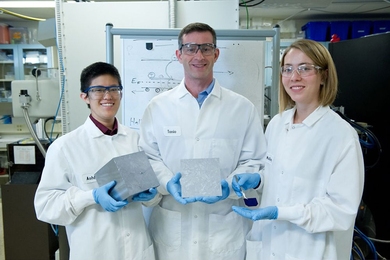
MIT mechanical engineers are leading an effort to detect defects that reduce efficiency.

TREX program from the Department of Civil and Environmental Engineering offers undergraduates the opportunity to get out in the field.

J-PAL North America releases new catalog of administrative data sets to give researchers a leg up in conducting rigorous evaluations of social programs.

The mix of products that countries export is a good predictor of income distribution, study finds.
Expert on long-lived rodents provides insights into research on longevity and cancer resistance.
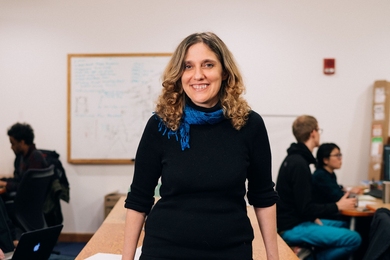
Computer scientist Regina Barzilay empowers cancer treatment with machine learning.

New toolset evaluates economic impacts of ozone reduction policies for nine income groups.
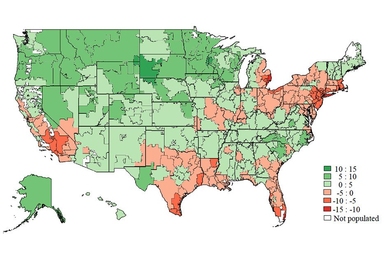
New study maps U.S. regions where patients appear more ill than they are
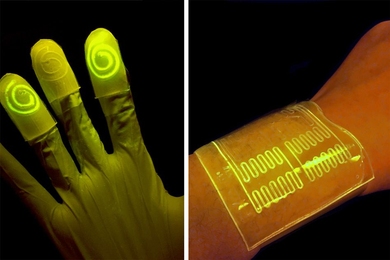
Cell-infused gloves and bandages light up when in contact with certain chemicals.

Itamar Kimchi studies the physics underlying unusual behavior of electrons in compounds such as transition metal oxides.