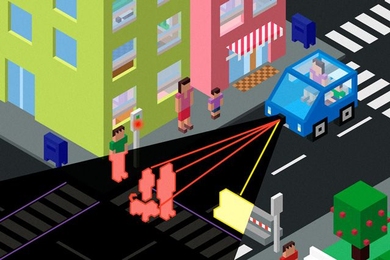
Driverless cars: Who gets protected?
Study shows inconsistent public opinion on safety of driverless cars.
Study shows inconsistent public opinion on safety of driverless cars.

Report calls for more integration of physical, life sciences for needed advances in biomedical research.
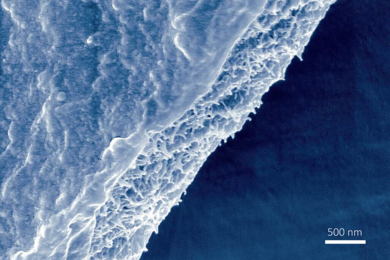
Engineers find nanosized building blocks of silk hold the secrets to improved filtration membranes.
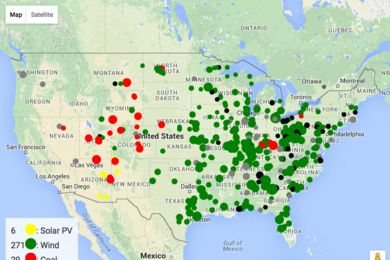
CoalMap online tool shows what policy regulations and technological advancements can do for the cost-competitiveness of solar and wind energy.
![“In about 30 seconds, we can scan a container and provide a three-dimensional map of [the materials inside the cargo]. This information clears the container or alerts you to a region that needs to be examined more carefully,” says William Bertozzi, MIT physics professor emeritus and co-founder of Passport Systems.](/sites/default/files/styles/term_page__news_article/public/images/201606/MIT-Passport-System.jpg?itok=M43U9LUQ)
Scanners more rapidly and accurately identify radioactive materials at U.S. borders, events.
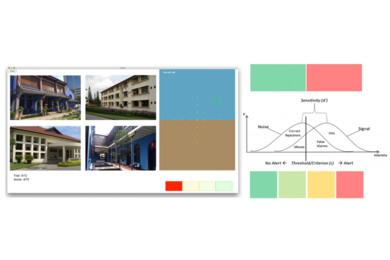
MIT-SUTD researchers are creating improved interfaces to help machines and humans work together to complete tasks.

Now open to the entire School of Engineering, SuperUROP is creating an interdisciplinary community of scholars.
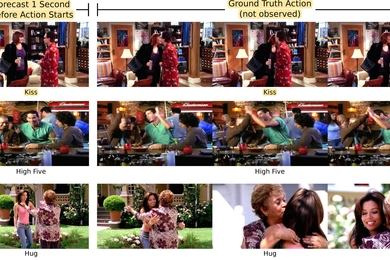
Deep-learning vision system from the Computer Science and Artificial Intelligence Lab anticipates human interactions using videos of TV shows.
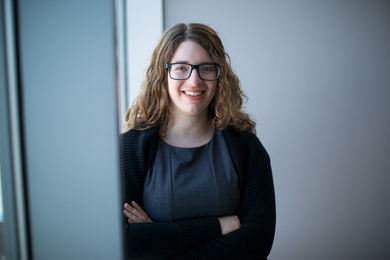
PhD student Elizabeth Setren brings data to bear on questions about local education policy.

New analog compiler could help enable simulation of whole organs and even organisms.

Selected state and local governments will receive support from J-PAL North America at MIT to improve the effectiveness of social programs.
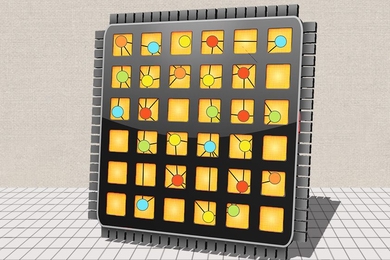
New chip design makes parallel programs run many times faster and requires one-tenth the code.
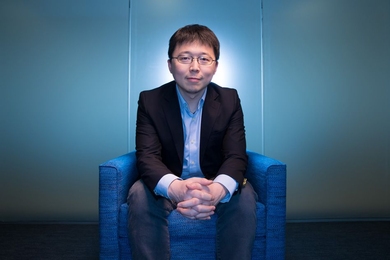
Broad Institute/MIT scientist among three honored for CRISPR contributions.
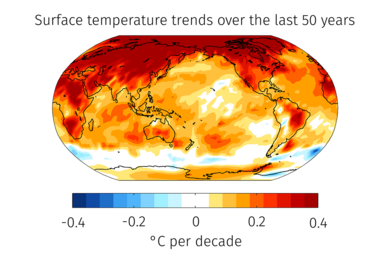
New research may explain why sea temperatures around Antarctica haven’t risen as much as surface temperatures around the globe.
![“It’s very inspiring to see how these [hair-like] structures occur in nature and how they can achieve different functions,” says Jifei Ou, a graduate student in media arts and sciences at MIT. “We’re just trying to think how can we fully utilize the potential of 3-D printing, and create new functional materials whose properties are easily tunable and controllable.” Pictured is an examp...](/sites/default/files/styles/term_page__news_article/public/images/201606/MIT-PrintingHair.jpg?itok=3T6UnWhD)
With fur, brushes, and bristles, Media Lab’s technique opens new frontier in 3-D printing.