
Foliage-penetrating ladar technology may improve border surveillance
Lincoln Laboratory’s imaging system can uncover what's under the trees.
Lincoln Laboratory’s imaging system can uncover what's under the trees.
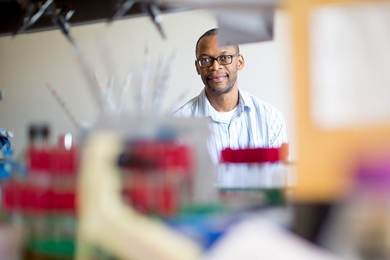
Measuring the parasite’s heme levels could help scientists develop better antimalarial drugs.
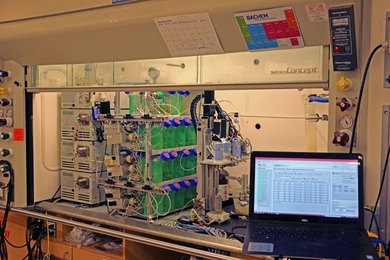
Automated manufacturing could make it easier to develop and test new peptide drugs.
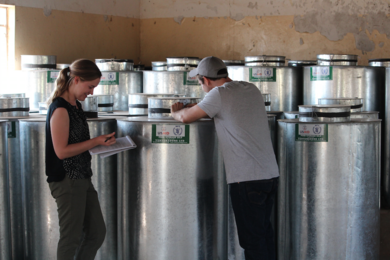
Study of post-harvest storage technology use in Uganda assesses potential for farmer adoption, identifies supply chain challenges and solutions.
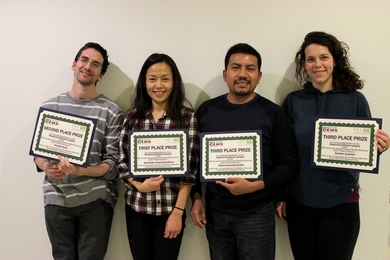
Annual poster session showcases recent work on biological effects of exposure to environmental agents.
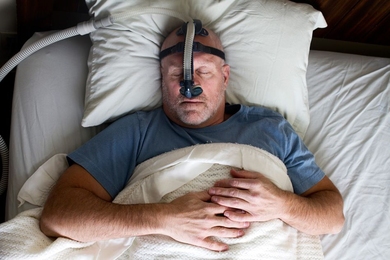
Dietary supplement derived from tree bark shows promise for treating the disorder.

Startup aims for wider U.S. solar adoption with photovoltaic panels that can display any image.

Planets may harbor conditions suitable for sustaining liquid water — and thus life.
Charles Jennings of MIT’s McGovern Institute discusses the intellectual property dispute over the gene-editing technique.
Bill and Melinda Gates Foundation awards MIT, University College London, and University of Kansas $17.6M for development and production of low-cost vaccines.

Three-in-one design allows genetic, chemical, optical, and electrical inputs and outputs.
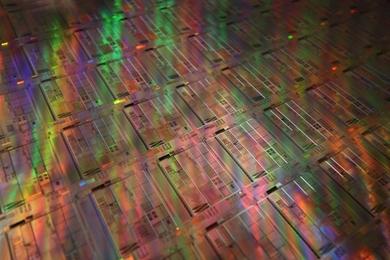
Study: Silicon can reproduce physical phenomena exploited by high-end telecommunications devices.
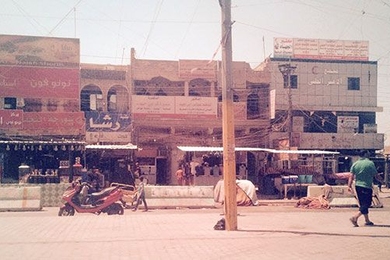
PhD student Dean Knox studies social networks and how individuals use them to access government goods and services.
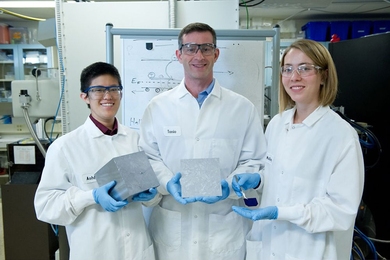
MIT mechanical engineers are leading an effort to detect defects that reduce efficiency.
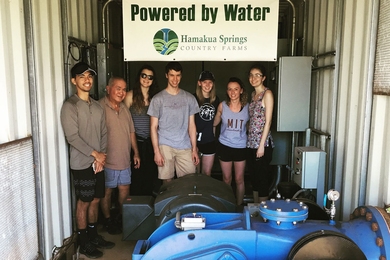
TREX program from the Department of Civil and Environmental Engineering offers undergraduates the opportunity to get out in the field.