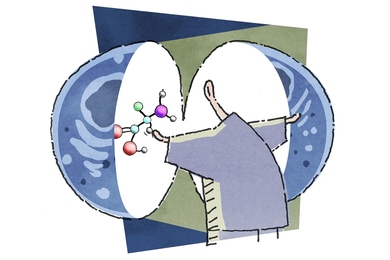
New player in cellular signaling
Researchers have identified a key nutrient sensor in the mTOR pathway that links nutrient availability to cell growth.
Researchers have identified a key nutrient sensor in the mTOR pathway that links nutrient availability to cell growth.
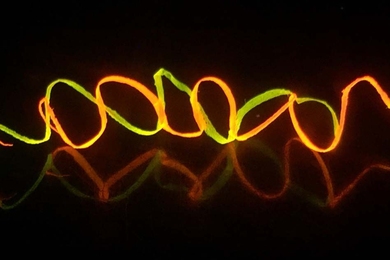
Reconstituted silk can be several times stronger than the natural fiber and made in different forms.

In his new book, political scientist Richard Nielsen proposes a “blocked ambition” hypothesis.

New framework guarantees stability of microgrids that supply local power in developing countries.

Electronic circuits reveal when a plant begins to experience drought conditions.
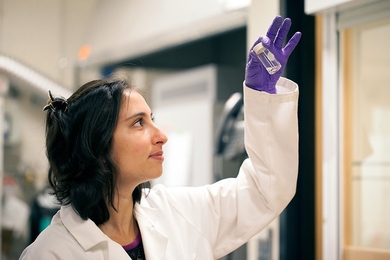
Condensation-based method developed at MIT could create stable nanoscale emulsions.

Light-based devices could be used as biomedical sensors or as flexible connectors for electronics.

Improved methods validate the use of blood samples for studying patients’ cancer genomes.

System could pore through millions of research papers to extract “recipes” for producing materials.
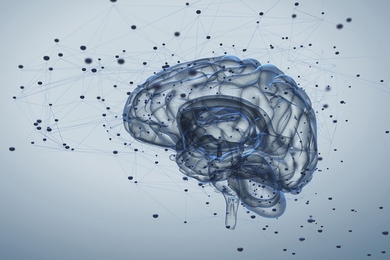
Studies in mice show improved social interaction and cognition from a potential therapeutic for a syndrome that often results in autism.

Study: Long-term states of mind can affect short-term financial decisions.

System for performing “tensor algebra” offers 100-fold speedups over previous software packages.

Studies by Richard Wurtman have led to development of nutrient mix shown to slow cognitive impairment in early stages of the disease.

Printed nozzle system could make uniform, versatile fibers at much lower cost.

Energy-efficient construction is key to lowering urban emissions, study finds.