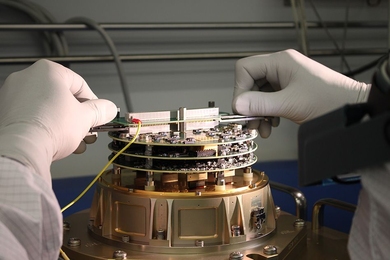
TESS readies for takeoff
Satellite developed by MIT aims to discover thousands of nearby exoplanets, including at least 50 Earth-sized ones.
Satellite developed by MIT aims to discover thousands of nearby exoplanets, including at least 50 Earth-sized ones.
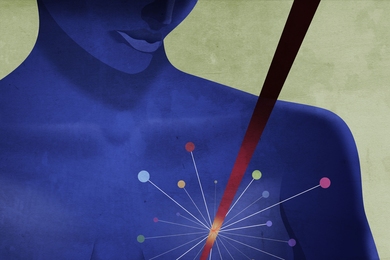
Mouse study links early metastasis to systemic inflammation caused by wound healing.
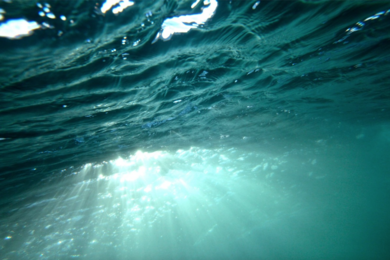
Interactions among microorganisms account for nitrite accumulation just below the sunlit zone, with implications for oceanic carbon and nitrogen cycling.
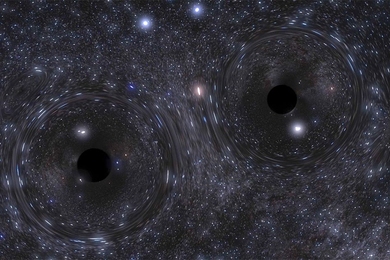
Black holes in these environments could combine repeatedly to form objects bigger than anything a single star could produce.
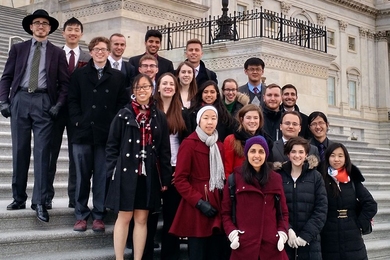
Members of MIT's Science Policy Initiative meet with members of Congress on Science-Engineering-Technology Congressional Visits Day 2018.
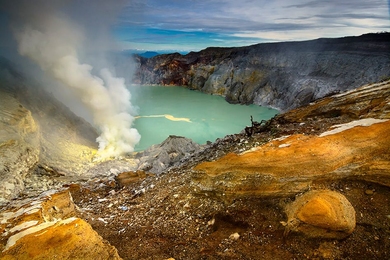
Large concentrations of sulfites and bisulfites in shallow lakes may have set the stage for Earth’s first biological molecules.
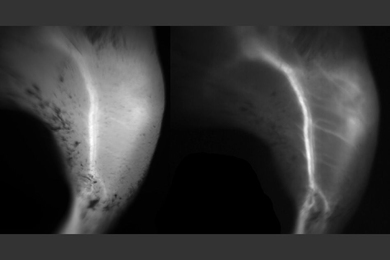
Technique could allow doctors and researchers to generate clearer images of blood vessels and other tissues.
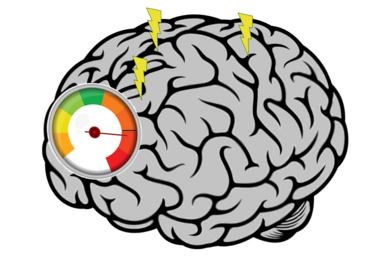
Picower Institute study explains what happens when working memory reaches its full capacity.
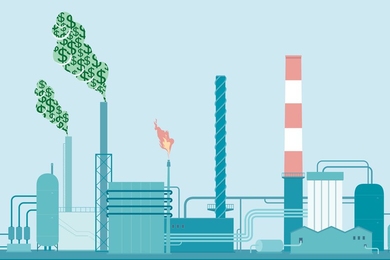
Several different carbon-pricing approaches would help reduce emissions, and some would be fair as well, researchers report.
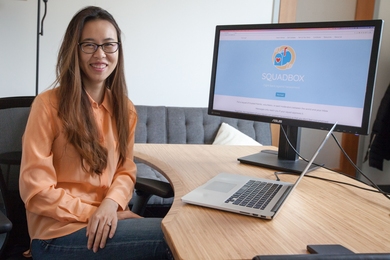
CSAIL’s “Squadbox” uses “friendsourcing” to better support targets of cyberbullying.
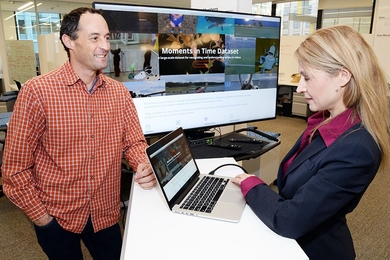
At the MIT-IBM Watson AI Lab, researchers are training computers to recognize dynamic events.
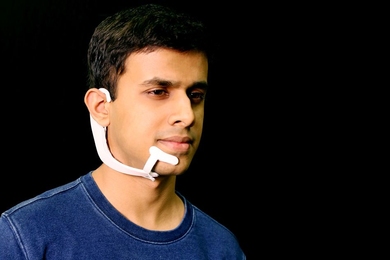
Electrodes on the face and jaw pick up otherwise undetectable neuromuscular signals triggered by internal verbalizations.

Scientists conclude methane-producing microbes date back 3.5 billion years, supporting the hypothesis that they could have contributed to early global warming.
Director of MIT Washington Office calls bill “very good news for science funding.”
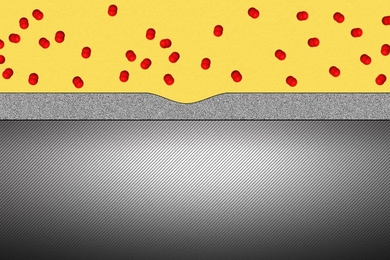
Researchers find an ultrathin layer of aluminum oxide, though solid, can flow like a liquid instead of cracking.