Helping companies prioritize their cybersecurity investments
By securely aggregating sensitive data from cyber-attacks, the SCRAM platform from MIT CSAIL can quantify an organization’s level of security and suggest what to prioritize.
By securely aggregating sensitive data from cyber-attacks, the SCRAM platform from MIT CSAIL can quantify an organization’s level of security and suggest what to prioritize.
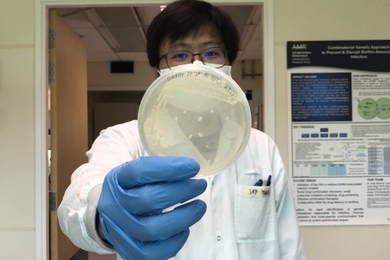
SMART researchers find exposing bacteria to hydrogen sulfide can increase antimicrobial sensitivity in bacteria that do not produce H2S.

Findings related to bacterial gene expression overturn fundamental assumptions about basic biological pathways.

A binary black hole merger likely produced gravitational waves equal to the energy of eight suns.

Researchers suggest a novel process to explain the collision of a large black hole and a much smaller one.

The company Health at Scale uses machine learning to improve outcomes for individual patients.
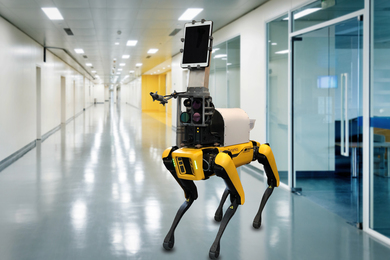
Mobile system could reduce health care workers’ exposure to Covid-19 virus.
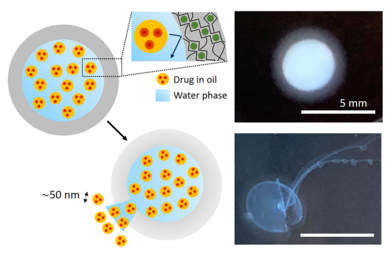
The novel approach, developed by MIT chemical engineers, could help create more efficient consumer products, including drugs, cosmetics, and food.
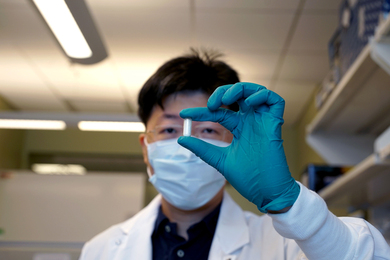
MIT engineers devise a temporary film that may help treat diabetes, infections, and other conditions.

Building quantum computers underground or designing radiation-proof qubits may be needed, researchers find.
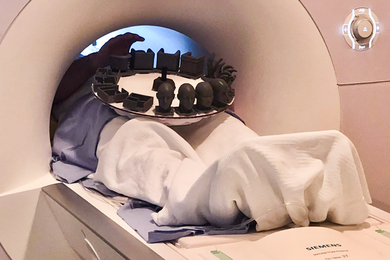
Study finds that the fusiform face area is active when blind people touch 3D models of faces.
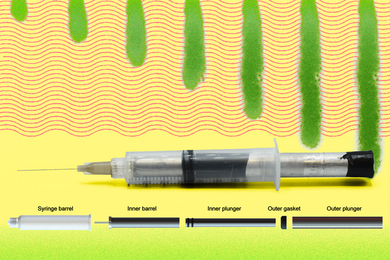
Researchers have designed a simple, low-cost device for subcutaneous injection of viscous formulations.

Everactive provides an industrial “internet of things” platform built on its battery-free sensors.

Despite the planet’s seeming standstill, graduate students continue to use LIGO to identify astrophysical events.
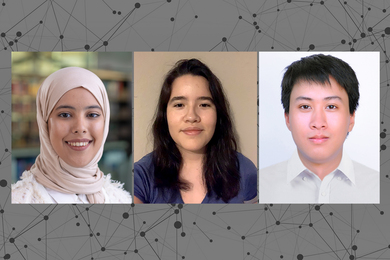
Undergraduates Aljazzy Alahmadi, Andrea Garcia, and Quynh Nguyen are sustaining the nuclear science and engineering research mission from around the world.