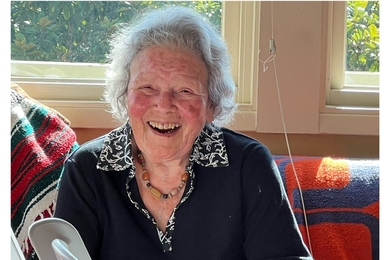
Remembering Professor Emerita Jeanne Shapiro Bamberger, a pioneer in music education
The former department chair was an early innovator in the use of artificial intelligence to both study and influence how children learn music.
The former department chair was an early innovator in the use of artificial intelligence to both study and influence how children learn music.

The longtime MIT professor and Nobel laureate was a globally respected researcher, academic leader, and science policy visionary who guided the careers of generations of scientists.
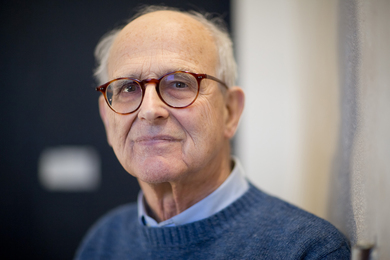
The longtime MIT professor shared a Nobel Prize for his role in developing the LIGO observatory and detecting gravitational waves.
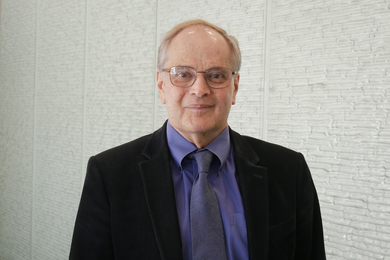
Over 50 years at MIT, the condensed-matter physicist led the development of photonic crystals, translating discoveries into wide-ranging applications in energy, medicine, and defense.
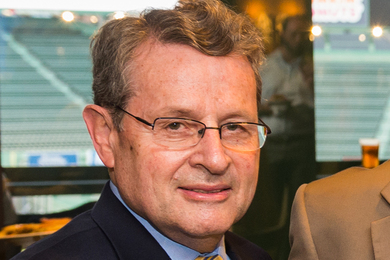
Bowen’s innovative work helped transform ceramics and manufacturing education at MIT and beyond.
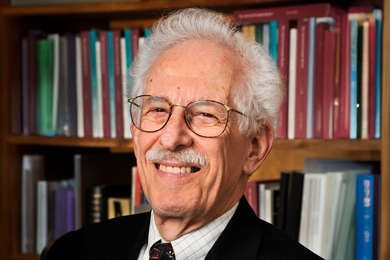
The longtime MIT scholar and former department head used the tools of economics to shed new light on historical events and their profound implications for today’s society.

Longtime MIT solid-state physicist brought theoretical insights to an experiment-driven discipline — and later, to film.

The pioneering journalist and author was a steadfast champion of science journalism and its global community of practitioners.
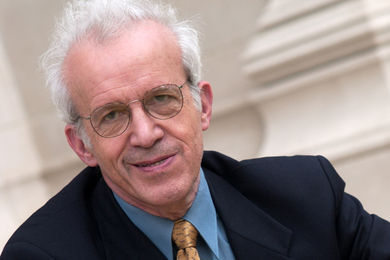
The “godfather of Bose-Einstein condensation” and MIT faculty member for 37 years led research into atomic, molecular, and optical physics that led to GPS and quantum computing.
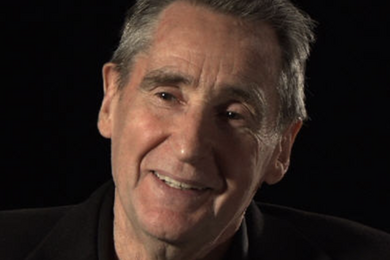
Widely known for his Synthetic Performer, Csound language, and work on the MPEG-4 audio standard, Vercoe positioned MIT as a hub for music technology through leadership roles with the Media Lab and Music and Theater Arts Section.
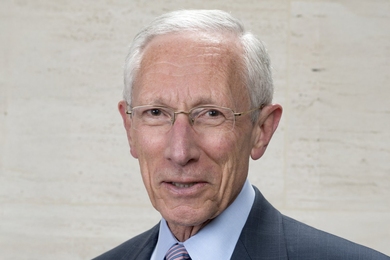
Influential MIT economist and former vice chair of the US Federal Reserve inspired generations of students and helped shape modern macroeconomics.

MIT Health mourns the loss of the student health plan research and resolution specialist.
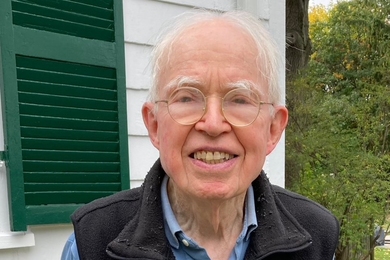
The physical organic chemist and MIT professor for over 40 years is celebrated for his lasting impact on generations of chemists.
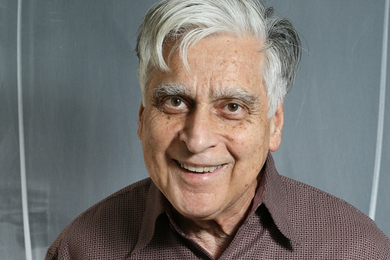
On the physics faculty for nearly 40 years and a member of the Center for Theoretical Physics, he focused on the interactions of hadrons and developed an R-matrix formulation of scattering theory.
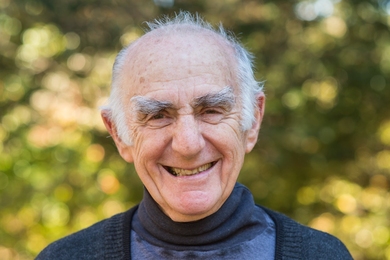
An MIT faculty member for 40 years, Grodzins performed groundbreaking studies of the weak interaction, led in detection technology, and co-founded the Union of Concerned Scientists.