New institute will accelerate innovations in fibers and fabrics
National public-private consortium led by MIT will involve manufacturers, universities, agencies, companies.
National public-private consortium led by MIT will involve manufacturers, universities, agencies, companies.
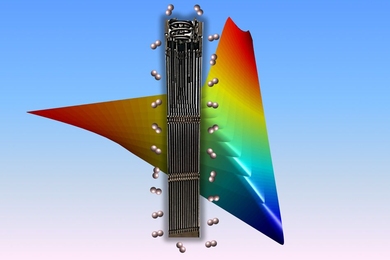
New approach to preventing embrittlement could be useful in nuclear reactors.
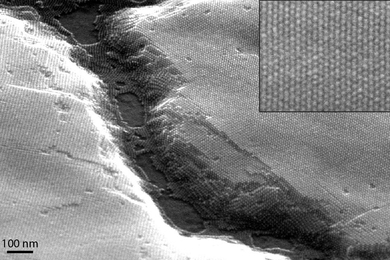
A new approach gives a real-time look at how the complex structures form.

Mapping whale calls, researchers find the predators feed in species-specific hotspots.
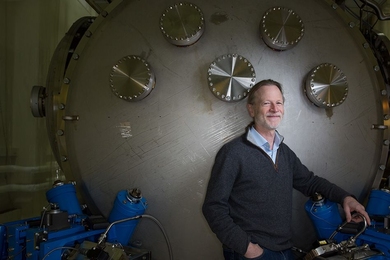
MIT’s David Shoemaker testifies before Congress on the significance of LIGO.

Ultrathin, flexible photovoltaic cells from MIT research could find many new uses.
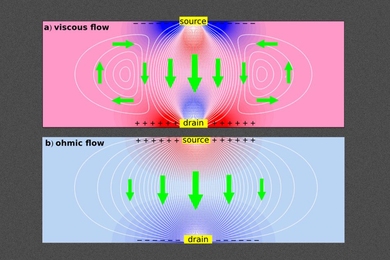
Analysis predicts exotic behaviors such as “negative resistance,” based on fluid-like effects.
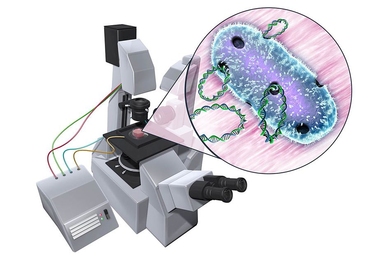
New microfluidic device may speed up DNA insertion in bacteria, the first step in genetic engineering.

Stalagmites reveal huge shift in ancient Madagascar’s plant life, unrelated to climate change.

MIT physicist developed the concept for LIGO as a teaching exercise.
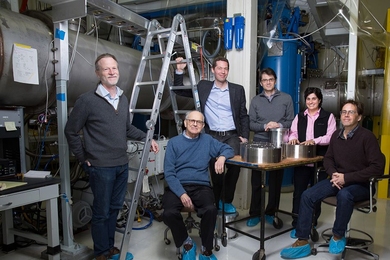
LIGO signal reveals first observation of two massive black holes colliding, proves Einstein right.

LIGO opens a new window on the universe with the observation of gravitational waves from colliding black holes.
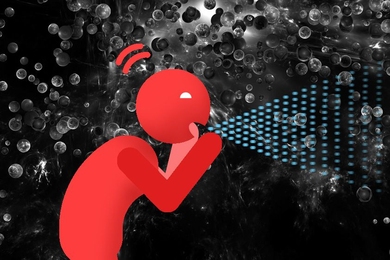
High-speed imaging shows how fluid breaks apart in air, may help identify super-spreaders.