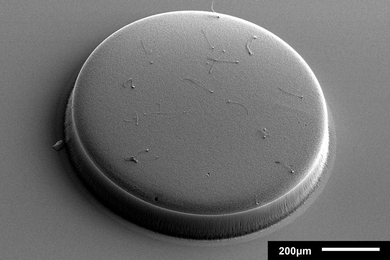
New device uses carbon nanotubes to snag molecules
Nanotube “forest” in a microfluidic channel may help detect rare proteins and viruses.
Nanotube “forest” in a microfluidic channel may help detect rare proteins and viruses.
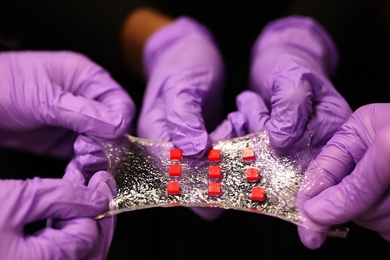
Water-based “Band-Aid” senses temperature, lights up, and delivers medicine to the skin.
Nonprofit provides hands-on experiments to students and teachers worldwide.

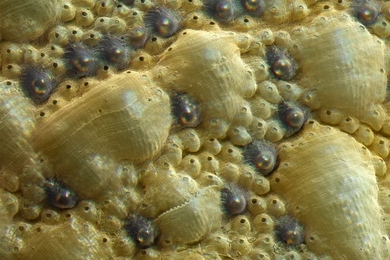
Tiny sea creatures feature transparent optical systems as tough as their shells.

Though likely uninhabitable, planet is rocky, Earth-sized, and near enough for study of its atmosphere.
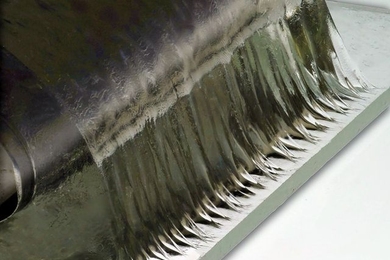
New “water adhesive” is tougher than natural adhesives employed by mussels and barnacles.

Quantum process increases the number of electrons produced when light strikes a metal-dielectric interface.
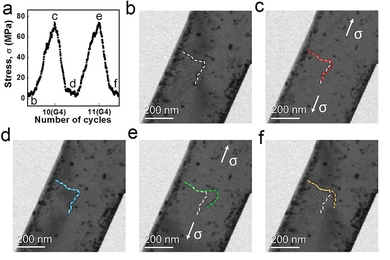
Finding shows small amounts of repeated stretching can eliminate crystal defects in nanoscale metal parts.

Study: Manmade aerosols can alter rainfall in the world’s most populous region.
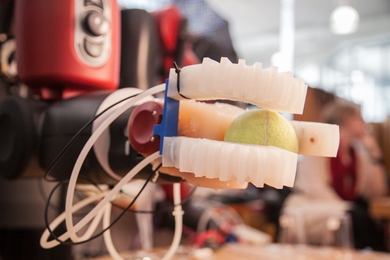
Team from Computer Science and Artificial Intelligence Lab develops silicone rubber gripper and advanced object-identification algorithms.

MIT-led team develops method for scaling up production of thin electronic material.

Eighth graders from Boston, Cambridge, and Lawrence, Massachusetts, learn from recent MIT graduates as part of STEM Summer Institute.

New study finds massive eruptions likely triggered mass extinction.

Researchers create exotic states that could lead to new kinds of sensors and optical devices.