
Wireless communication breaks through water-air barrier
In a novel system developed by MIT researchers, underwater sonar signals cause vibrations that can be decoded by an airborne receiver.
In a novel system developed by MIT researchers, underwater sonar signals cause vibrations that can be decoded by an airborne receiver.

Results are among the strongest evidence yet for “spooky action at a distance.”
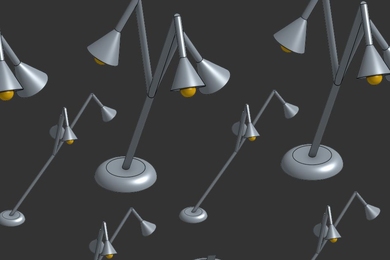
Users can quickly visualize designs that optimize multiple parameters at once.
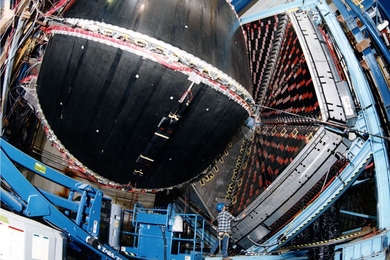
The positively charged particles may have an outsize influence on the properties of neutron stars and other neutron-rich objects.
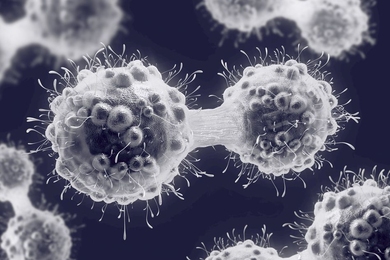
Hydrogen peroxide-sensing molecule reveals whether chemotherapy drugs are having their intended effects.
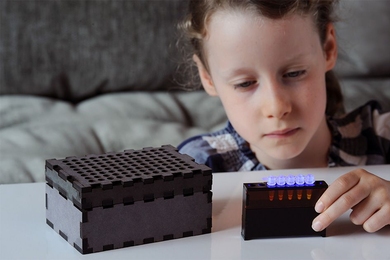
Using freeze-dried, shelf-stable cellular components, students can learn about key biological concepts.
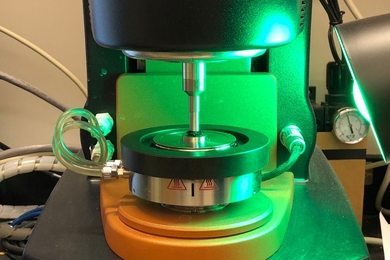
New material reversibly changes its structure in response to different wavelengths of light.

Most thorough test to date finds no Lorentz violation in high-energy neutrinos.

Study finds 1–2 percent of Earth’s oldest mantle rocks are made from diamond.
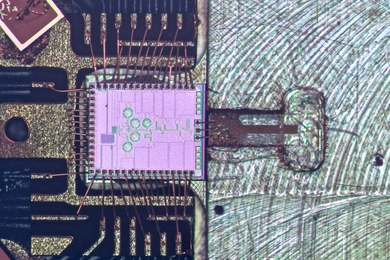
Novel chip keeps time using the constant, measurable rotation of molecules as a timing reference.

Signals from rare black hole-neutron star pairs could pinpoint rate at which universe is growing, researchers say.

Water-starved areas could find new sources by desalinating water that’s much less salty than seawater.

Lab assignments for MIT Materials Research Laboratory undergraduate researchers and teachers cut across disciplines.
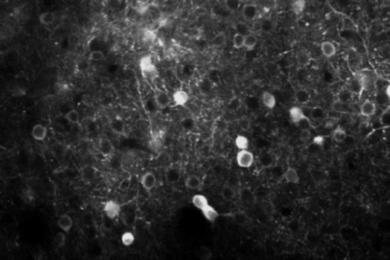
MIT neuroscientists find posterior parietal cortex region is crucial to connecting perception to action.

Study reveals atomic structure of tropoelastin, showing what goes wrong in some diseases.