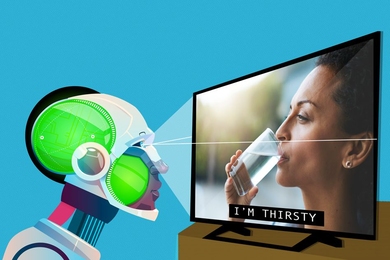
Machines that learn language more like kids do
Computer model could improve human-machine interaction, provide insight into how children learn language.
Computer model could improve human-machine interaction, provide insight into how children learn language.
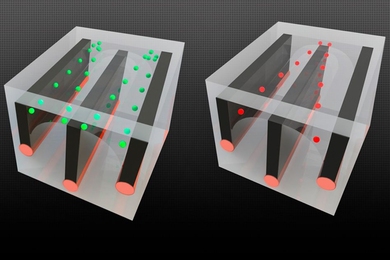
Fibers containing systems for mixing, separating, and testing fluids may open up new possibilities for medical screening.
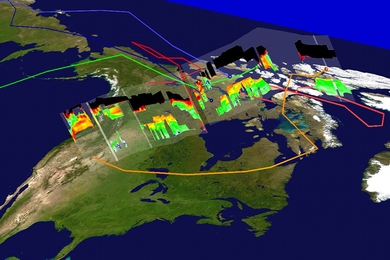
A faster, cheaper modeling method could improve our understanding of long-term atmospheric chemistry and provide a powerful tool for risk assessment.
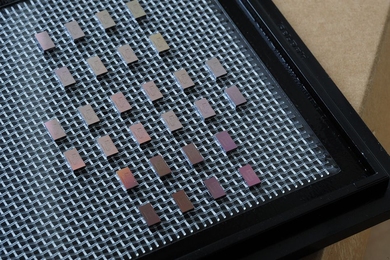
Tiny device could replace expensive lab-scale equipment for many applications.
![“Even if you look at a clean study, the [outcome] is usually a composite of multiple components, any one of which could be actually causing the effect,” says Associate Professor Teppei Yamamoto.](/sites/default/files/styles/term_page__news_article/public/images/201810/MIT-Yamamoto.jpg?itok=JQxqhoCS)
Teppei Yamamoto examines the methods of his discipline, to help scholars nail down cause and effect.

Long-term melting may lead to release of huge volumes of cold, fresh water into the North Atlantic, impacting global climate.
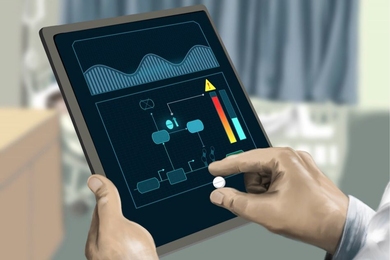
Biological engineers design RNA circuits that enable precise control over the dose of therapeutic protein a patient receives.
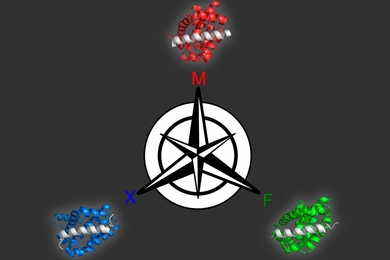
New approach generates a wider variety of protein sequences optimized to bind to drug targets.
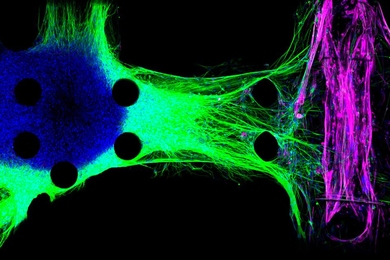
3-D tissue model replicates the motor neuron connections affected by amyotrophic lateral sclerosis.
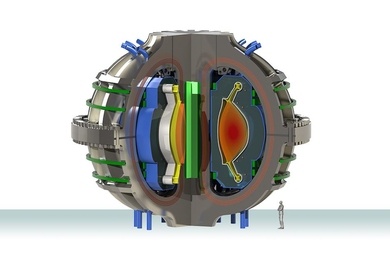
Novel design could help shed excess heat in next-generation fusion power plants.
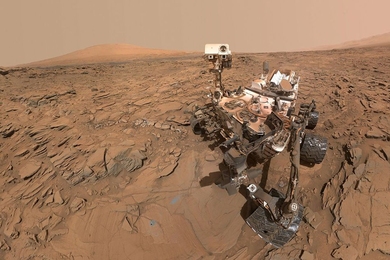
Program users can tinker with landing and path planning scenarios to identify optimal landing sites for Mars rovers.
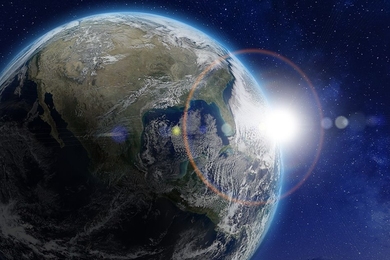
New insights into the role of water vapor may help researchers predict how the planet will respond to warming.

New MIT innovation hub helps take scientific discoveries from lab to marketplace and supports national innovation ecosystem.
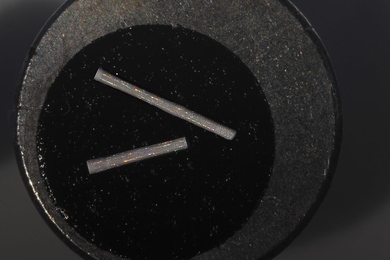
Technique could be used to scale-up self-assembled materials for use as optical sensors, color displays, and light-guided electronics.

Study finds lost revenue can be millions of dollars annually, suggests ways to quantify haze-related reductions in solar panel output.