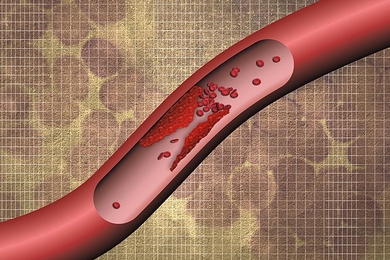
Finding blood clots before they wreak havoc
Simple urine test developed by MIT engineers uses nanotechnology to detect dangerous blood clotting.
Simple urine test developed by MIT engineers uses nanotechnology to detect dangerous blood clotting.
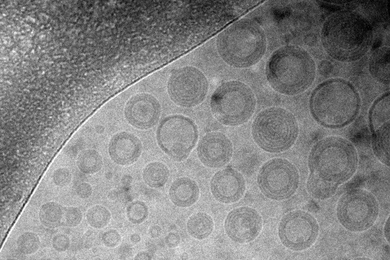
Particles that deliver vaccines directly to mucosal surfaces could defend against many infectious diseases.
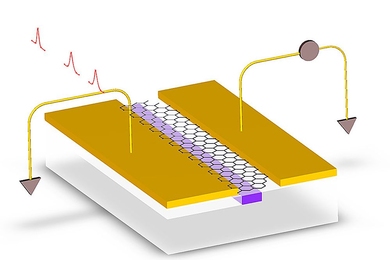
Researchers show that graphene — atom-thick sheets of carbon — could be used in photodetectors, devices that translate optical signals to electrical.
MIT doctoral candidate Sam Crawford has contributed to fundamental understanding of growth processes using metal seed particles.
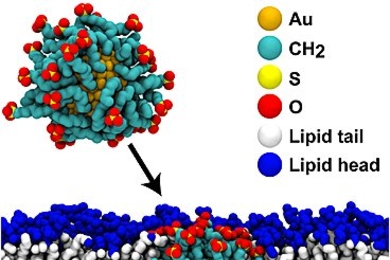
Gold nanoparticles with special coatings can deliver drugs or biosensors to a cell’s interior without damaging it.
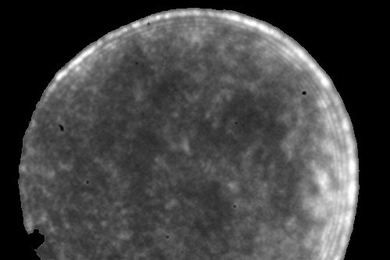
Chemical engineers find that arrays of carbon nanotubes can detect flaws in drugs and help improve production.
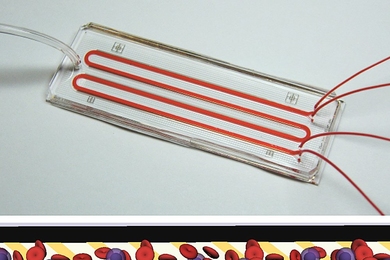
Device may be used to quickly detect signs of sepsis, other inflammatory diseases.

When Millie Dresselhaus won the prestigious Kavli Award last year, she put her money where her career has been.
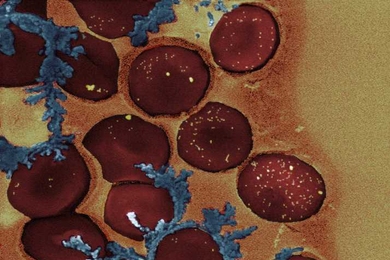
Engineers design nanoparticles that can turn the blood-clotting cascade on or off.
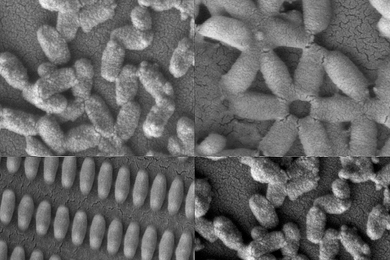
New research enables high-speed customization of novel nanoparticles for drug delivery and other uses.
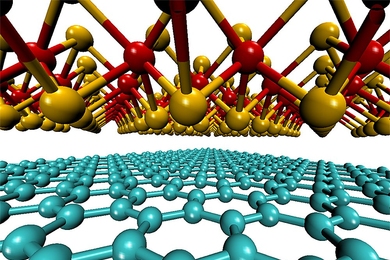
Atom-thick photovoltaic sheets could pack hundreds of times more power per weight than conventional solar cells.
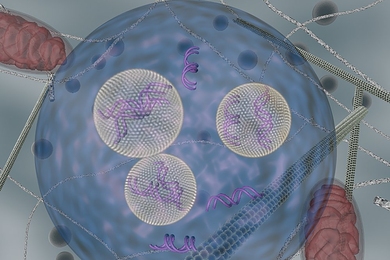
Helping RNA escape from cells’ recycling process could make it easier to shut off disease-causing genes.

New system uses two-dimensional structures to guide plasmonic waves at ultrashort wavelength, offering a new platform for memory and computer chips.

MIT researchers develop a new approach to controlling the motion of magnetic domains; work could lead to low-power computer memory.

New observations of material disprove leading theory about LED brightness, opening new avenues for research.