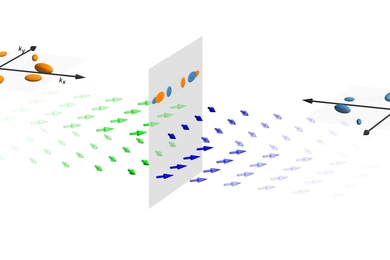
Approaching the magnetic singularity
MIT researchers discover a material that changes electrical resistance only when a magnetic field is applied at a narrowly confined angle.
MIT researchers discover a material that changes electrical resistance only when a magnetic field is applied at a narrowly confined angle.

New technique makes it possible to image the fouling of membranes in 3-D, could lead to better antifouling materials.
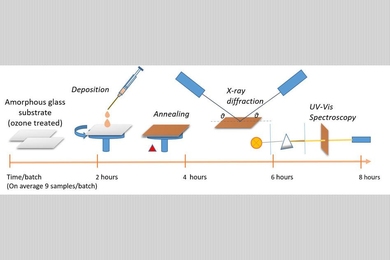
Streamlined system for creating and analyzing perovskite compounds may cut development time from 20 years to two.
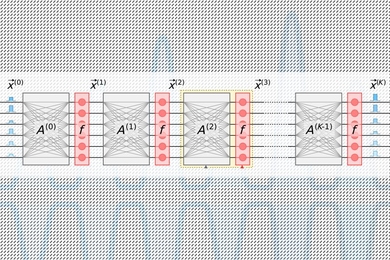
Simulations suggest photonic chip could run optical neural networks 10 million times more efficiently than its electrical counterparts.

Study finds baking soda, detergent, and table salt — all rich in sodium — are effective catalysts.
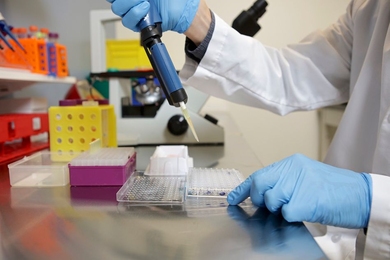
Selecta Bioscience’s ImmTOR platform could improve gene therapies and prevent some drug side effects.

“Metasurfaces” that manipulate light at tiny scales could find uses in cellphone lenses, smart-car sensors, and optical fibers.
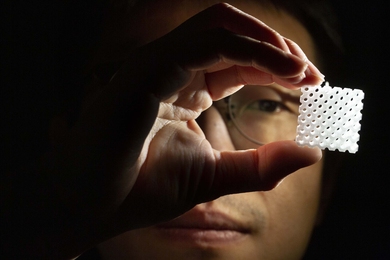
Mechanical engineering researchers are inventing game-changing technologies and developing a renaissance in 3-D printing.
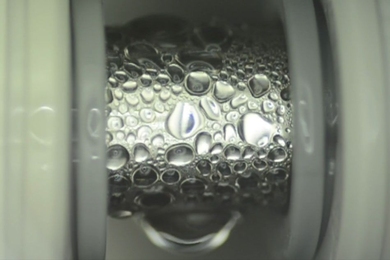
A slippery surface for liquids with very low surface tension promotes droplet formation, facilitating heat transfer.

Collaboration between MIT architect and chemical engineer could be at the center of new sustainable infrastructure for buildings.

Convergence research at MIT and beyond seeks new solutions for global challenges.

Researchers develop nanosized antibodies that home in on the meshwork of proteins surrounding cancer cells.

Pioneering materials science and engineering research enables better catalytic converters, miniature explosives detectors, and thin-film microbalances.
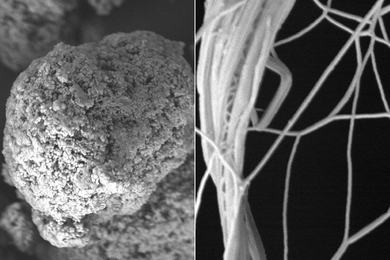
Material may replace many metals as lightweight, flexible heat dissipators in cars, refrigerators, and electronics.

Tiny robots powered by magnetic fields could help drug-delivery nanoparticles reach their targets.