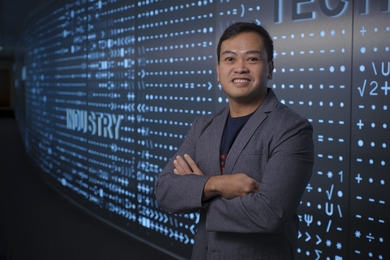
Democratizing artificial intelligence in health care
Hackathons promote doctor-data scientist collaboration and expanded access to electronic medical-records to improve patient care.
Hackathons promote doctor-data scientist collaboration and expanded access to electronic medical-records to improve patient care.

PhD student Marion Boulicault believes in an interdisciplinary path forward for science, feminism, and philosophy.
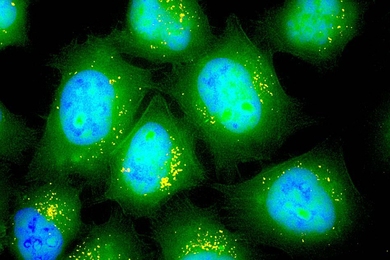
Patients with lung disease could find relief by breathing in messenger RNA molecules.
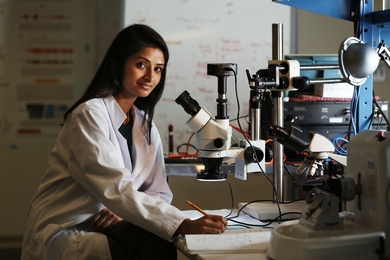
New optogenetic technique could help restore limb movement, treat muscle tremor.
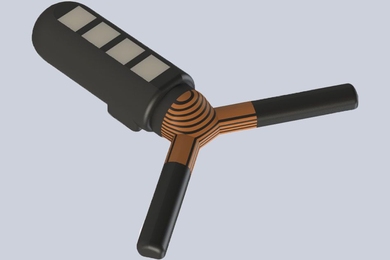
Electronic pill can relay diagnostic information or release drugs in response to smartphone commands.

Inexpensive 3-D-printed microfluidics device could be used to personalize cancer treatment.
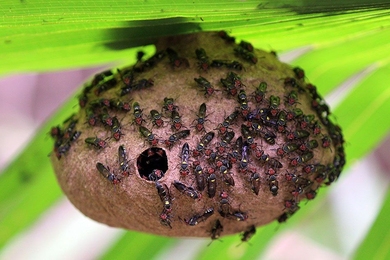
Altered peptides from a South American wasp’s venom can kill bacteria but are nontoxic to human cells.
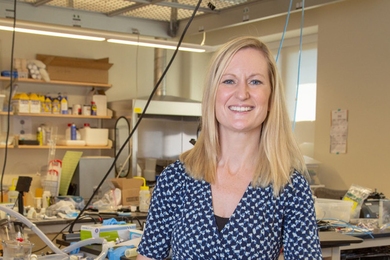
Assistant Professor Ellen Roche develops revolutionary medical devices through research at the crossroads of medical science and engineering.
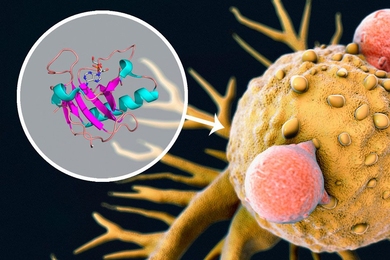
Chemists discover an unexpected synergy between two types of cancer drugs.
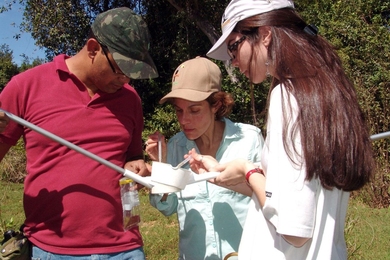
MIT spinoff is changing the way mosquito-borne illnesses are diagnosed and aims to influence how public health officials react to disease outbreaks.
Model predicts whether ER patients suffering from sepsis urgently need a change in therapy.
Simple method for linking molecules could help overcome drug resistant infections.
Startup SQZ Biotech aims to open a new path in immunotherapy with its cell-compressing technique.
Smartphone app developed by Emily Lindemer PhD '17 uses social contacts and location information to give gentle reminders for staying engaged with recovery.
Neural network that securely finds potential drugs could encourage large-scale pooling of sensitive data.