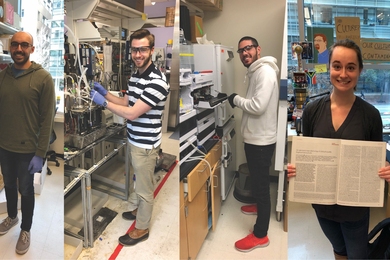
MIT’s Love Lab developing a Covid-19 vaccine to potentially reach billions
Manufacturability is key to producing a widely available, affordable vaccine.
Manufacturability is key to producing a widely available, affordable vaccine.
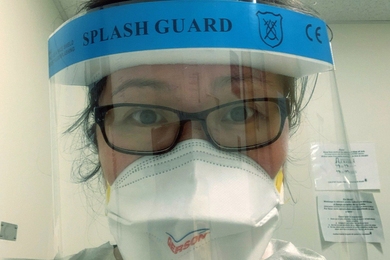
Neurologist and researcher Diane Chan pitches in to help New England get through tough times.
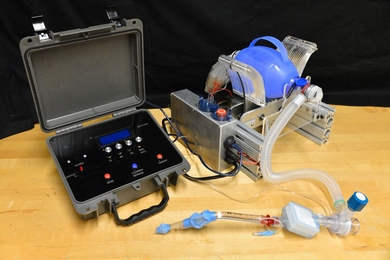
An ad hoc team of engineers and doctors has developed a low-cost, open-source alternative, now ready for rapid production.

Team designs antibody-like receptor proteins that can bind to cytokines, as possible strategy for treating coronavirus and other infections.
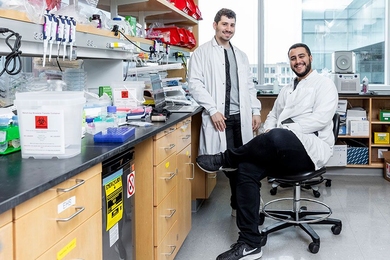
MIT scientists Omar Abudayyeh and Jonathan Gootenberg explain the current state of Covid-19 testing, and how a CRISPR tool may help solve the supply problem.
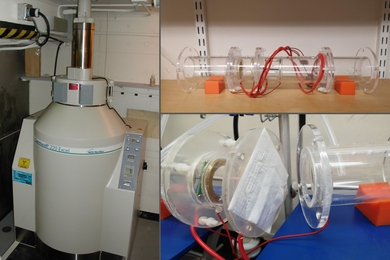
Nuclear scientists and biomedical researchers team up to investigate whether treatment with gamma radiation could make N95 masks more reusable.
!["Health care in [community health centers] has been turned upside down by the coronavirus pandemic," says Jeffrey Harris, physician and MIT economist. "Patients with chronic conditions are being dissuaded from coming in. Instead, telehealth service has become the new form of care."](/sites/default/files/styles/term_page__news_article/public/images/202004/Dr-Jeffrey-Harris-MIT.jpg?itok=FlFUHK4G)
Physician and MIT economist provides insights into health care during the pandemic, and how electronic or “telehealth” service has become the new form of care.

Life science companies use Paradigm4’s unique database management system to uncover new insights into human health.

Chemical engineers have developed a way to protect transplanted drug-producing cells from immune system rejection.
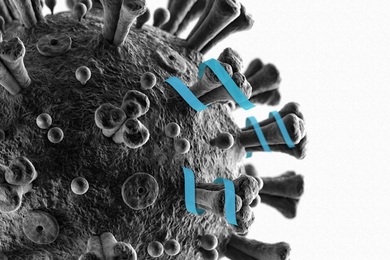
MIT chemists are testing a protein fragment that may inhibit coronaviruses’ ability to enter human lung cells.
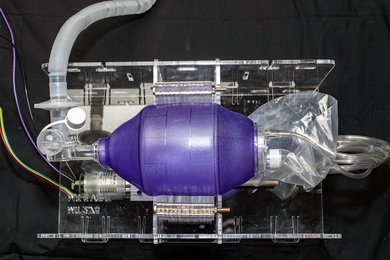
Clinical and design considerations will be published online; goal is to support rapid scale-up of device production to alleviate hospital shortages.

A variety of companies with MIT ties are working to address aspects of the Covid-19 pandemic.
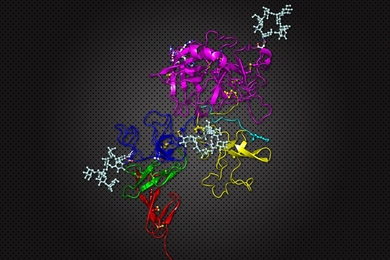
Repurposing a drug used for blood clots may help Covid-19 patients in danger of respiratory failure, researchers suggest.

An unusual synergy between cancer researchers, clinical centers, and industry leads to promising clinical trials for a new combination therapy for prostate cancer.
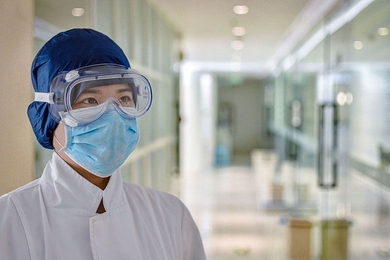
Area hospitals in need of PPE look to university labs and departments for donations.