Improving carbon nanotube consistency in the lab
Bench-top 'Robofurnace' automates chemical vapor deposition process.
Bench-top 'Robofurnace' automates chemical vapor deposition process.
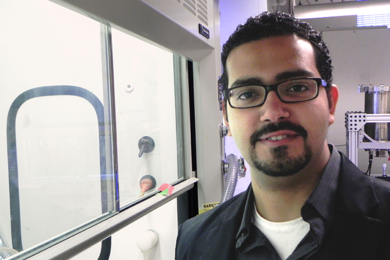
Postdoc Mostafa Bedewy shows complex competition between chemical activation and mechanical forces in growing CNT forests.

Mechanical engineering professor explores the science and technology of nano manufacturing.

Project provides a systematic way of exploring the vast realm of unfamiliar materials.
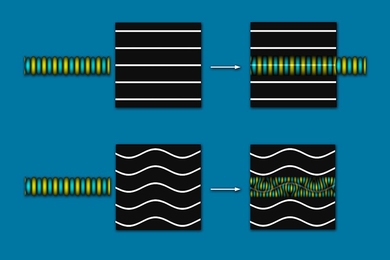
Flexible materials could provide ways to manipulate sound and light.

Marshall Scholar Colleen Loynachan tackles materials science problems with a photographer’s perspective.

Study reveals immune cells that are critical to combating the parasite in early stages of infection.

MIT researchers find that contrary to conventional wisdom, cathodes made of disordered lithium compounds can perform better than perfectly ordered ones.
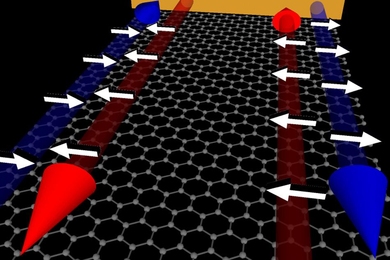
New approach to use of 2-D carbon material opens up unexpected properties, could unleash new uses.
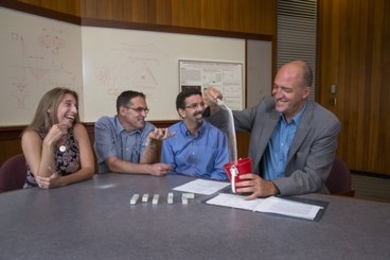
The MIT Concrete Sustainability Hub seeks to advance the scientific basis for evaluating the environmental impact of concrete.

MIT team develops simple, inexpensive method that could help realize material’s promise for electronics, solar power, and sensors.
Looking for better materials for solar cells, LEDs, and other technology, one molecule at a time.
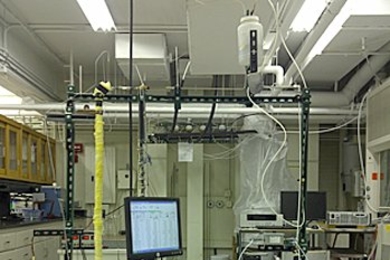
Particles suspended in cooling water could prevent hotspots in nuclear plant cooling systems and electronics.
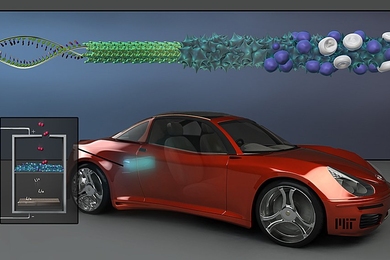
MIT researchers find a way to boost lithium-air battery performance, with the help of modified viruses.
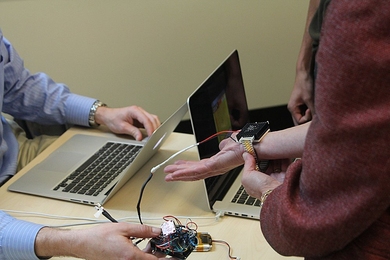
Thermoelectric bracelet that helps people maintain a comfortable body temperature takes home $10,000 from MIT’s annual materials-science design competition.