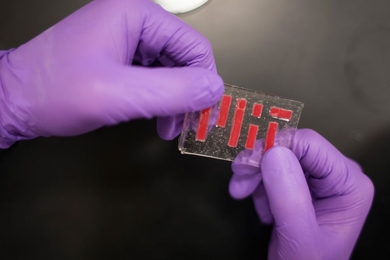
Tough new hydrogel hybrid doesn’t dry out
Water-based material could be used to make artificial skin, longer-lasting contact lenses.
Water-based material could be used to make artificial skin, longer-lasting contact lenses.

Engineers find nanosized building blocks of silk hold the secrets to improved filtration membranes.
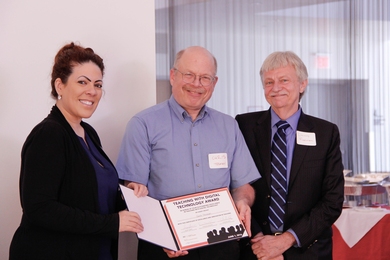
Awards honor faculty and instructors who have effectively leveraged digital technology to improve teaching and learning at MIT.
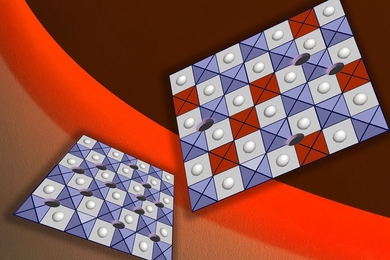
Surface treatment greatly reduces degradation of catalyst material.
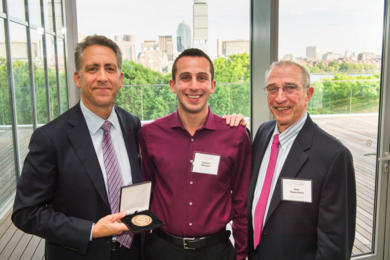
Awards were given to outstanding faculty, undergraduates, and graduate students.

Eleven students will challenge themselves at MIT in the MPC-CMSE Summer Scholars program.

Stretching process can produce nanoscale rods or strips made of many material combinations.
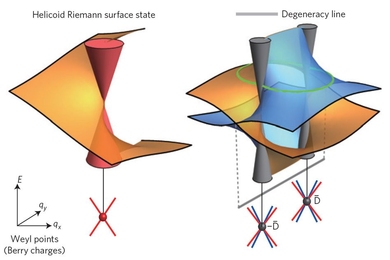
Better understanding of topological semimetals could help usher in future electronics.
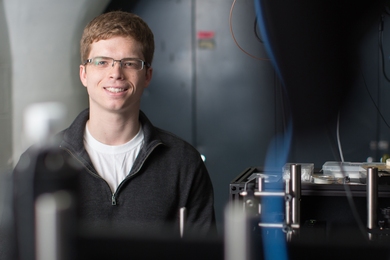
Nuclear science and engineering PhD student Cody Dennett simulates conditions inside reactors to measure microscopic defects in irradiated materials.

Honor recognizes individuals who have demonstrated ability and special aptitude for advanced training in science and engineering.
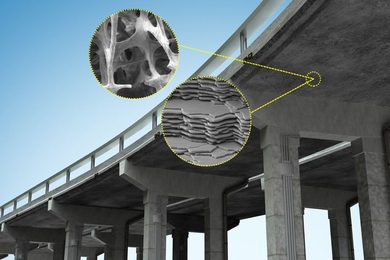
Researchers look to bones and shells as blueprints for stronger, more durable concrete.
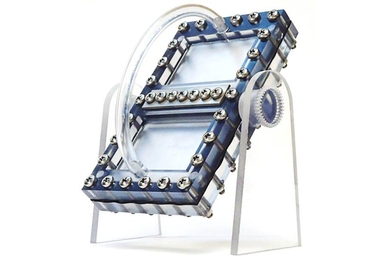
Pump-free design for flow battery could offer advantages in cost and simplicity.

Italian artist Lino Tagliapietra begins a new series of large-scale abstract glass vessels during a weeklong residency at the MIT Glass Lab.
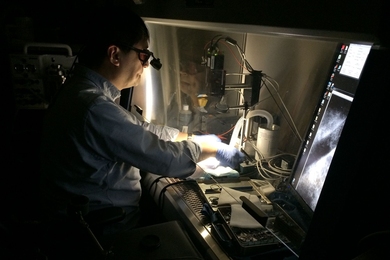
Mechanism developed at MIT and Massachusetts General Hospital shows promising results for improved ovarian cancer detection and removal.
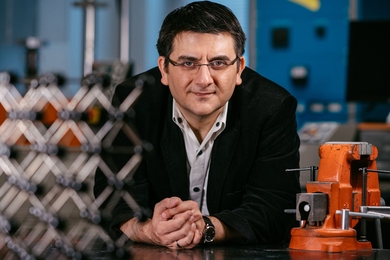
A new faculty member in materials science and engineering is creating healable metals.