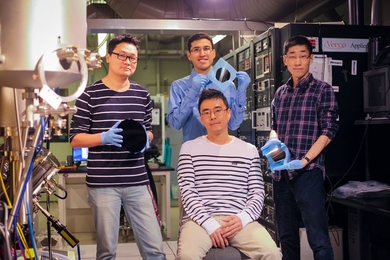
Not stuck on silicon
Engineers use graphene as a “copy machine” to produce cheaper semiconductor wafers.
Engineers use graphene as a “copy machine” to produce cheaper semiconductor wafers.
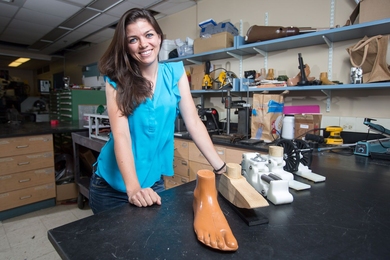
Students recognized for inventive solutions to challenges in health care, transportation, food and agriculture, and consumer devices.

ENN Group, one of China’s largest private energy companies, will join MITEI’s Center for Energy Storage Research.

Associate Professor Polina Anikeeva, in preparing for the Boston Marathon, shares her love of running.
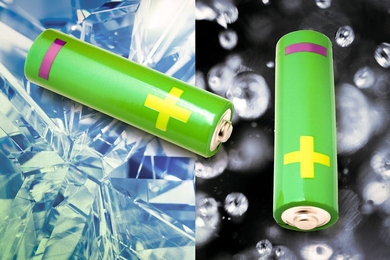
Brittle electrodes handle expansion by going glassy, study shows.
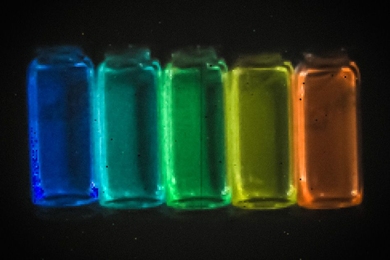
“Quantum dots” that emit infrared light enable highly detailed images of internal body structures.
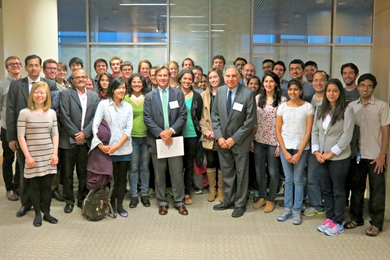
MIT principal investigators will apply cutting-edge research to the challenges of the developing world, seeking a large-scale impact.
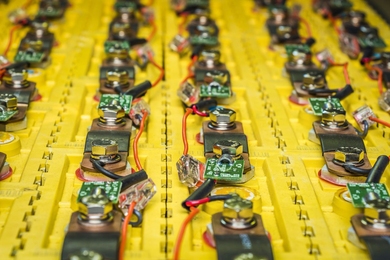
With support from the Toyota Research Institute, MIT faculty will focus on next-generation energy storage.
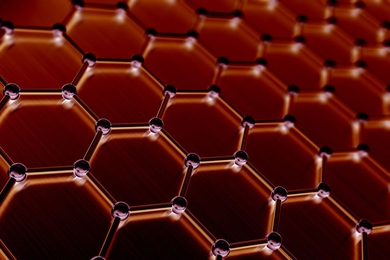
New technique produces highly conductive graphene wafers.
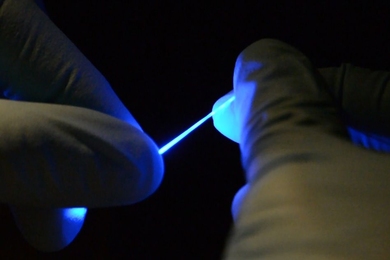
Rubbery, multifunctional fibers could be used to study spinal cord neurons and potentially restore function.
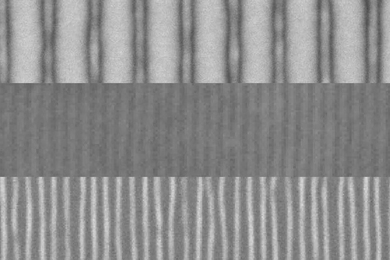
Self-assembly technique could lead to long-awaited, simple method for making smaller microchip patterns.
Nuclear Science and Engineering Expo provides an opportunity for prospective grad students and the MIT community to learn about department research.
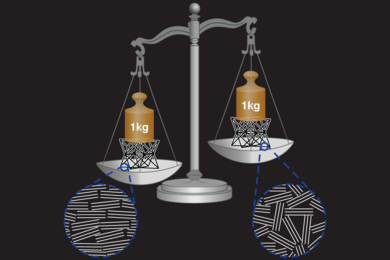
Graduate engineering and economics programs are No. 1 in the nation; MIT Sloan is No. 4.
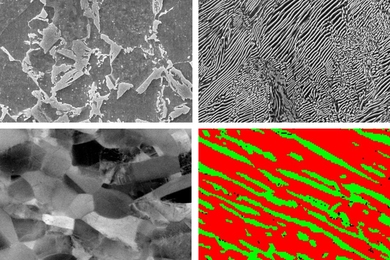
Novel laminated nanostructure gives steel bone-like resistance to fracturing under repeated stress.