
A global collaboration to move artificial intelligence principles to practice
Convened by the MIT Schwarzman College of Computing, the AI Policy Forum will develop frameworks and tools for governments and companies to implement concrete policies.
Convened by the MIT Schwarzman College of Computing, the AI Policy Forum will develop frameworks and tools for governments and companies to implement concrete policies.

Website, online tools will help MIT fulfill National Association of the Deaf lawsuit settlement terms.

Growing program provides free legal services to student entrepreneurs and researchers, while giving law students practical experience.
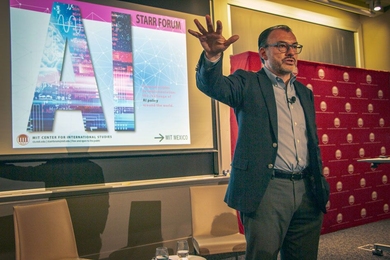
In a Starr Forum talk, Luis Videgaray, director of MIT’s AI Policy for the World Project, outlines key facets of regulating new technologies.

Susan Silbey, a pioneer in studying popular attitudes toward the legal system, discussed her research while giving MIT’s annual Killian Lecture.
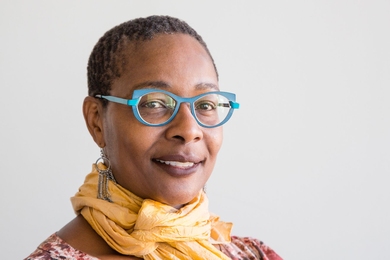
Mutongi discusses the connection between Kenyan widows and the #MeToo movement, myths of African entrepreneurship, and the wider implications of her research.

The political consequence of even short jail terms is disproportionately pushing African-American voters out of the electorate.

“Every building is ultimately a compromise” involving many stakeholders, says architectural historian Timothy Hyde.

Developed at MIT Lincoln Laboratory, IdPrism and its award-winning algorithms provide rapid analysis for complex forensic DNA samples.

Rahsaan Hall of the ACLU’s Massachusetts branch delivers keynote at annual MIT event.

CSAIL system encourages government transparency using cryptography on a public log of wiretap requests.
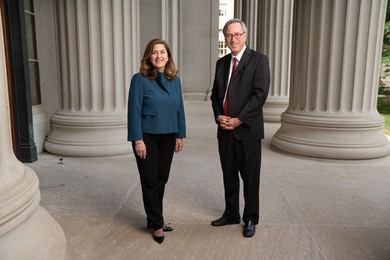
Suzanne Glassburn of MIT’s Office of the General Counsel will assume role.

Through transformative use of telemedicine, researcher and instructor Amar Gupta hopes to achieve better, quicker, and less expensive health care for all.

After more than five months in detention, Rodriguez now awaits asylum appeal.

Putting limits on foreign students or technical publications would be counterproductive, write Deutch and Condoleezza Rice.