
Study reveals mixed reactions about Covid-19 health disparities
Different social and racial groups have varying views of the problem’s urgency.
Different social and racial groups have varying views of the problem’s urgency.

On May 6 and 7, researchers from the AI Policy Forum will present their preliminary AI public policy proposals aimed at shaping specific and significant uses of AI in our lives.
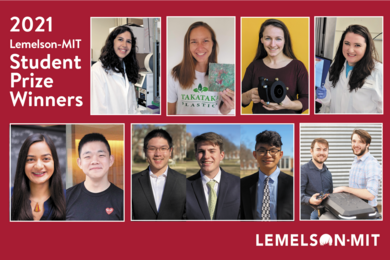
Student inventors recognized on World IP Day for groundbreaking, patentable solutions to issues related to maternal health, energy efficiency, and plastic waste.

Black women are more vulnerable than white men, illustrating how race and gender intersect to shape health outcomes.

MIT researchers have developed a publicly available model based on physics and data from past spreading events.
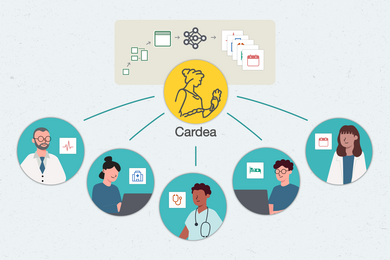
Cardea software system aims to bring the power of prediction to hospitals by streamlining complex machine learning processes.
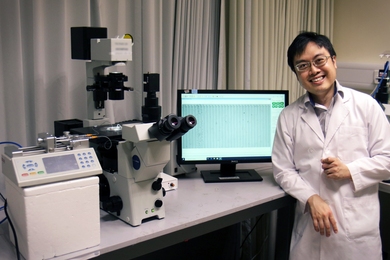
Deterministic lateral displacement assay can rapidly assess host inflammatory response, identifying a potentially life-threatening hyper-aggressive immune response.

Seven MIT researchers see lessons and opportunities for US health care.
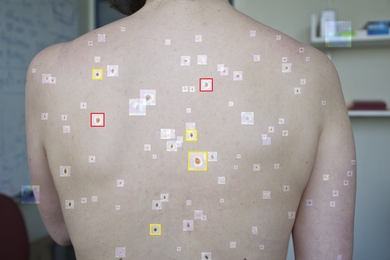
Using deep convolutional neural networks, researchers devise a system that quickly analyzes wide-field images of patients’ skin in order to more efficiently detect cancer.
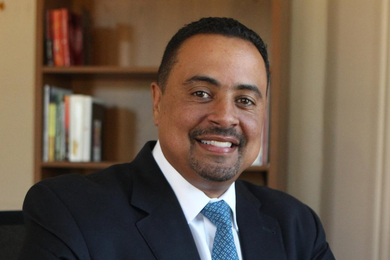
In a Q&A, Charles Senteio discusses Covid-19 vaccine hesitancy among Black Americans and the “tsunami of inequity” accelerated by the pandemic.

MIT research combines machine learning with nanoparticle design for personalized drug delivery.
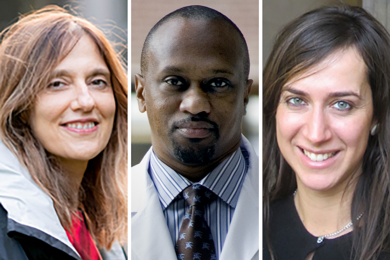
Regina Barzilay, Fotini Christia, and Collin Stultz describe how artificial intelligence and machine learning can support fairness, personalization, and inclusiveness in health care.

Wireless sensing technology could help improve patients’ technique with inhalers and insulin pens.
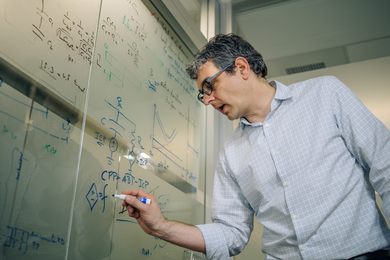
Associate Professor Thomas Heldt finds inspiration where fundamental physical principles intersect with human health.

At MIT Forefront, panelists explore ways to prepare workers and improve jobs.