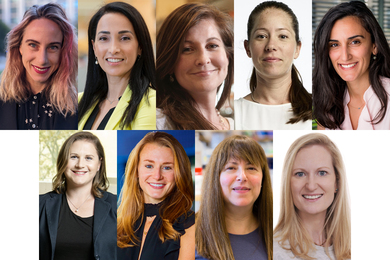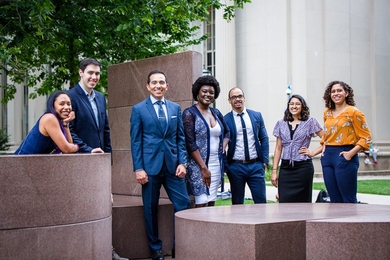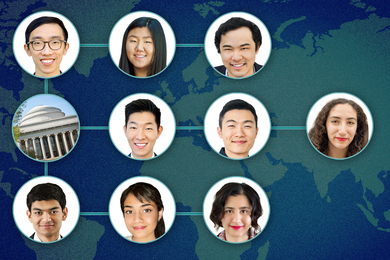
Helping underrepresented doctoral students of color thrive in the broader MIT community
For the past seven years, the MIT University Center for Exemplary Mentoring has created a robust infrastructure of resources, people, and support.
Download RSS feed: News Articles / In the Media / Audio
For the past seven years, the MIT University Center for Exemplary Mentoring has created a robust infrastructure of resources, people, and support.
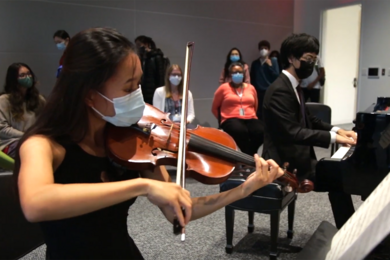
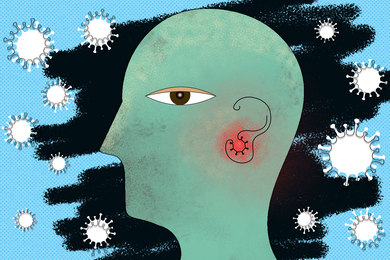
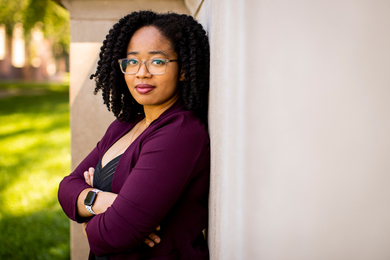
The PhD student uses machine learning as a tool for studying pain and consciousness — and as subject matter for her popular videos.
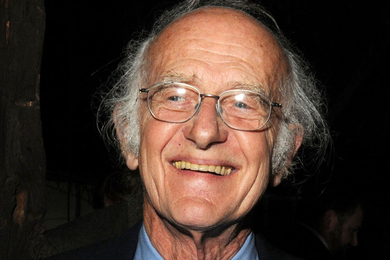
Longtime EECS faculty member was known for his work on the biophysics of auditory systems.
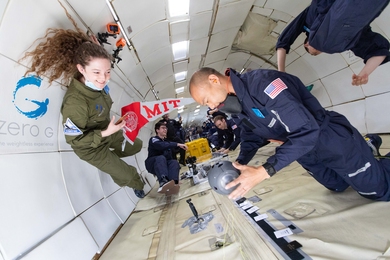
The Space Exploration Initiative supports research across and beyond MIT in two microgravity flights this spring.
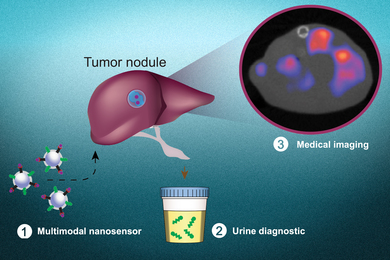
Diagnostic nanoparticles could be used to monitor tumor recurrence after treatment or to perform routine cancer screenings.
Former naval petty officer Manuel Morales now develops imaging applications to detect cardiac dysfunction in young patients.
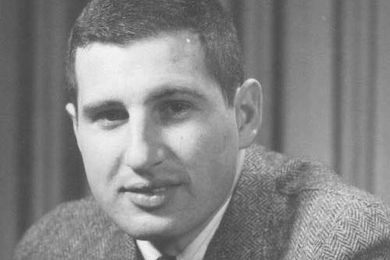
A leader in thermodynamics, heat transfer, cryopreservation of biomaterials, and energy conversion, Cravalho shaped thermodynamic and biomedical education at MIT.
Fellowship funds graduate studies for outstanding immigrants and children of immigrants.
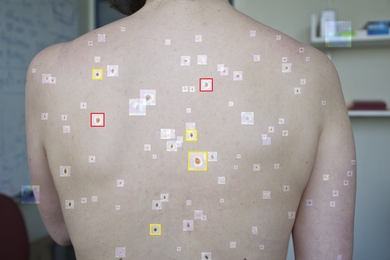
Using deep convolutional neural networks, researchers devise a system that quickly analyzes wide-field images of patients’ skin in order to more efficiently detect cancer.
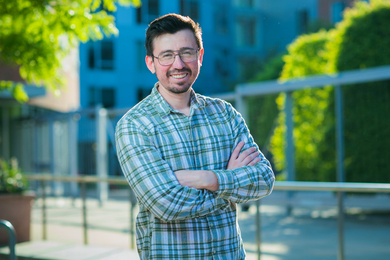
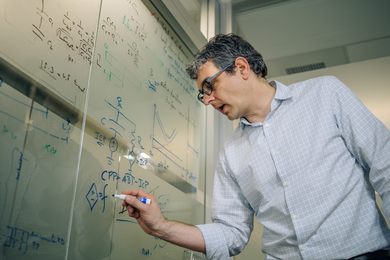
Associate Professor Thomas Heldt finds inspiration where fundamental physical principles intersect with human health.
Reconnecting muscle pairs during amputation gives patients more sensory feedback from the limb.
Visionary astronautics researcher, explorer, and expert on human adaptation to space will lead the Institute’s world-renowned research center.
By accounting for sweat physiology, method can make better use of electrodermal activity for tracking subconscious changes in physical or emotional state.
Boosting the efficiency of single-cell RNA-sequencing helps reveal subtle differences between healthy and dysfunctional cells.
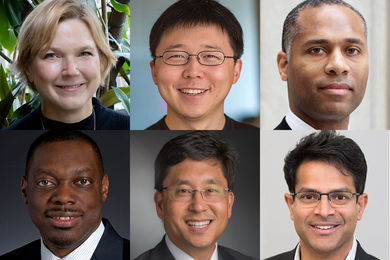
Michael Birnbaum, Anders Hansen, and Tami Lieberman receive NIH Director’s New Innovator Awards from the NIH Common Fund’s High-Risk, High-Reward Research program.