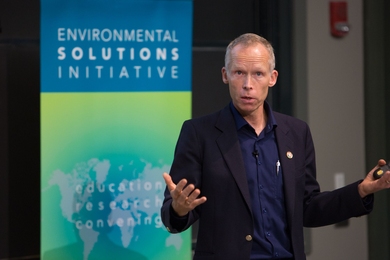
Johan Rockström: Presenting a framework for preserving Earth’s resilience
Stockholm Resilience Center executive director and Stockholm University professor speaks at the Environmental Solutions Initiative’s People and the Planet lecture series.
Stockholm Resilience Center executive director and Stockholm University professor speaks at the Environmental Solutions Initiative’s People and the Planet lecture series.
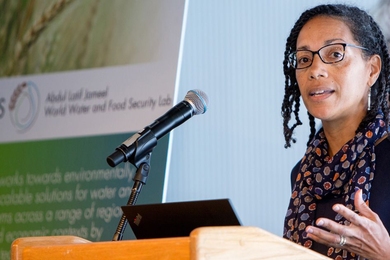
MIT researchers supported by J-WAFS present results of their work on food and water security.

By 2100, oceans may hold enough carbon to launch mass extermination of species in future millennia.

Harry Brekelmans says Shell has significant commitment to renewable energy, carbon pricing.

Successful programs aren’t limited to well-off towns with strong environmental movements.

MIT Green Labs’ first-ever Freezer Challenge encourages energy conservation through better freezer and sample storage practices.

Simons Foundation supports enhanced computer infrastructure for MIT's Darwin Project, which focuses on marine microbes and microbial communities.
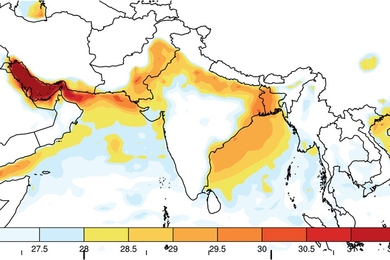
Without action, climate change could devastate a region home to one-fifth of humanity, study finds.

Study ties specific interval during an extended period of volcanism to Earth’s most severe mass extinction.

Smart, soil-free microgarden lets users optimize growing conditions while cutting water and resource use.

A 50-year dry spell has reversed, with more rain to come.
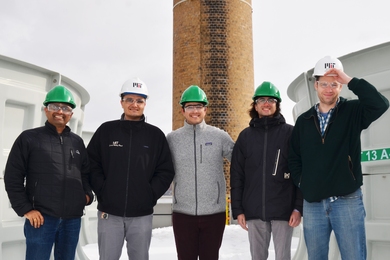
MIT Office of Sustainability announces awards to multi-departmental projects that test management, design, and operations solutions on campus.
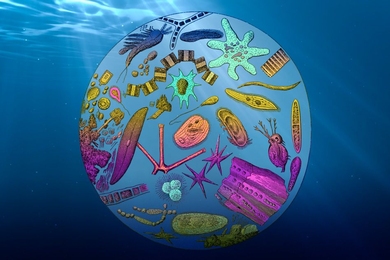
Study finds large amounts of carbon dioxide, equivalent to yearly U.K. emissions, remain in surface waters.

Analysis shows the design and framing of renewable energy policies can strengthen public support — or opposition.
Kenneth Strzepek applies models to help decision makers advance food security and sustainable development in a climate-compromised continent.