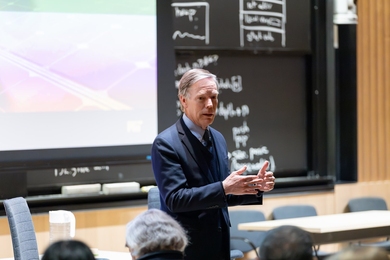
Sustaining diplomacy amid competition in US-China relations
At MIT, former U.S. ambassador to China Nicholas Burns highlights climate change as an area for diplomatic engagement, while exploring areas including China's emphasis on STEM education.
At MIT, former U.S. ambassador to China Nicholas Burns highlights climate change as an area for diplomatic engagement, while exploring areas including China's emphasis on STEM education.
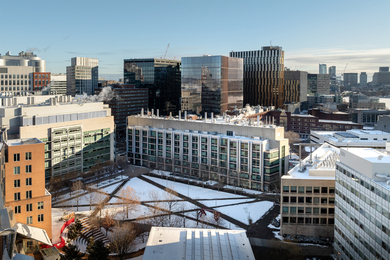
Offering substantial prize funding alongside workshops, classes, and mentorship, the initiative helps translate early-stage biotech research into venture-ready innovation.
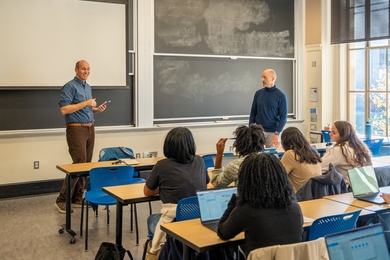
In STS.059 (The Bioeconomy and Society), students explore the social and political factors at work in the biology, biotech, and biological engineering sectors.
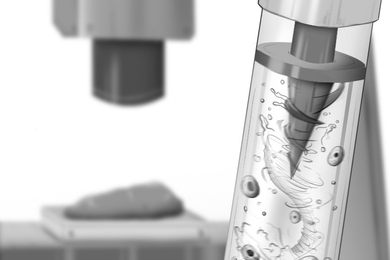
MagMix, an onboard mixing device, enables scalable manufacturing of 3D-printed tissues.
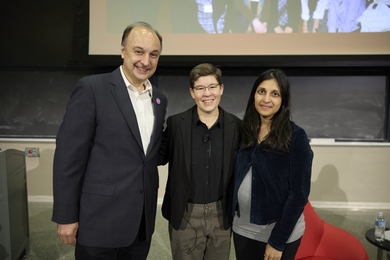
In the 2025 Dresselhaus Lecture, the materials scientist describes her work 3D printing soft materials ranging from robots to human tissues.
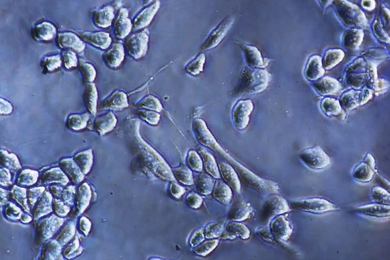
The approach could transform large-scale biomanufacturing by enabling automated and contamination-conscious workflows for cell therapies, tissue engineering, and regenerative medicine.
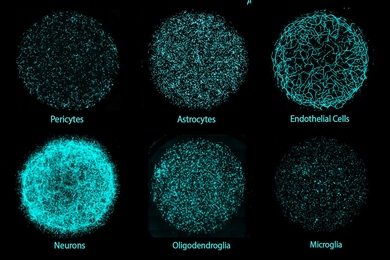
Cultured from induced pluripotent stem cells, “miBrains” integrate all major brain cell types and model brain structures, cellular interactions, activity, and pathological features.
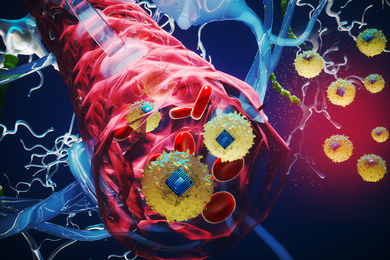
MIT researchers created microscopic wireless electronic devices that travel through blood and implant in target brain regions, where they provide electrical stimulation.
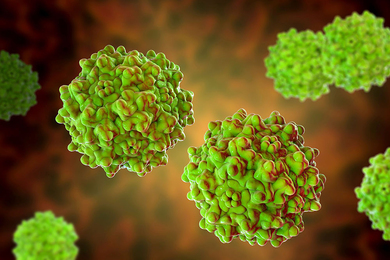
Selective crystallization can greatly improve the purity, selectivity, and active yield of viral vector-based gene therapy drugs, MIT study finds.
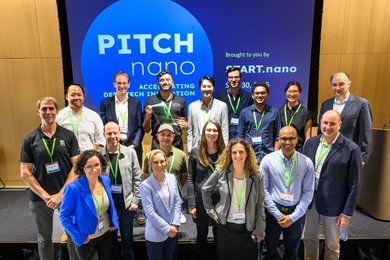
Twelve START.nano companies competed for the grand prize of nanoBucks to be used at MIT.nano’s facilities.
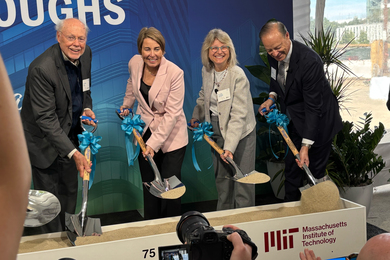
The gathering of Biogen and MIT employees, business leaders, and public officials celebrated the first building to be constructed at Kendall Common.

The method enhances 3D bioprinting capabilities, accelerating process optimization for real-world applications in tissue engineering.

MIT spinout Tissium recently secured FDA marketing authorization of a biopolymer platform for nerve repair.
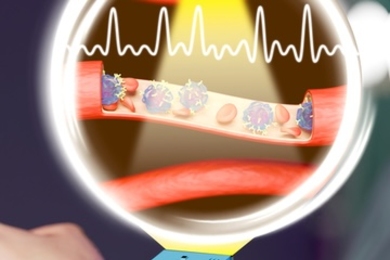
The technology, which achieves single-cell resolution, could help in continuous, noninvasive patient assessment to guide medical treatments.
MIT historian Robin Scheffler’s research shows how local regulations helped create certainty and safety principles that enabled an industry’s massive growth.