MIT announces Solve program activities
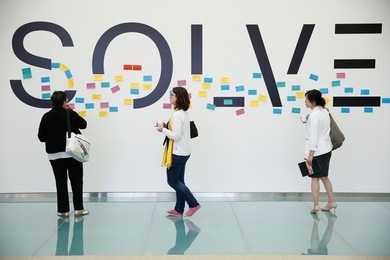
Addressing the world’s most pressing issues, second year of program will focus on in-person gatherings, solution proposals.
Addressing the world’s most pressing issues, second year of program will focus on in-person gatherings, solution proposals.
Associate Professor Ernest Fraenkel uses biological network modeling to identify new targets for disease.
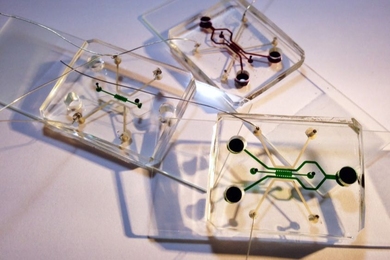
Low-intensity fields keep malignant cells from spreading, while preserving healthy cells.

Report calls for more integration of physical, life sciences for needed advances in biomedical research.
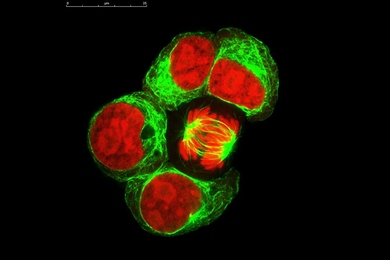
Technique combines analogue and digital processes in engineered cells.
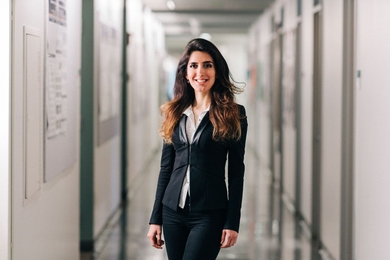
With support she received at the Institute, Leila Pirhaji wants to bring computational systems biology to the marketplace.
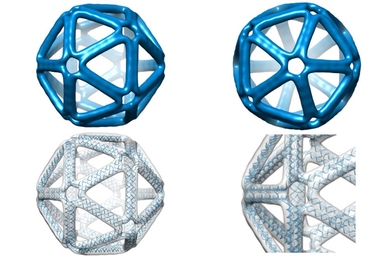
Like 3-D printing did for larger objects, method makes it easy to build nanoparticles out of DNA.
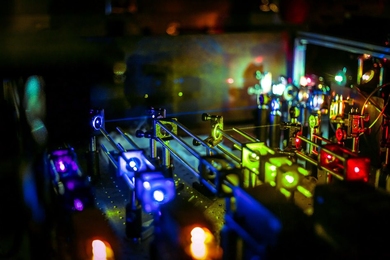
New super-resolution technique visualizes important role of short-lived enzyme clusters.

Katharina Ribbeck and Jesse Thaler named recipients of the Harold E. Edgerton Award.
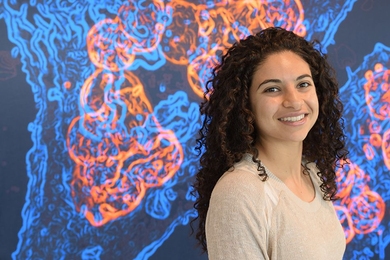
EECS senior Ava Soleimany talks about leadership, her research in synthetic biology, and her tenure as captain of the women’s tennis team.
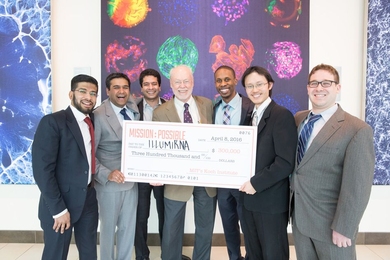
Team takes home grand prize from Koch Institute’s unique research-grant pitch competition.
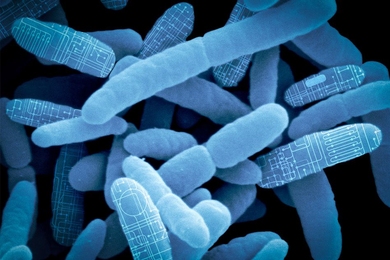
Daily doses of synthetic biotics developed by startup Synologic may sense, treat metabolic diseases.
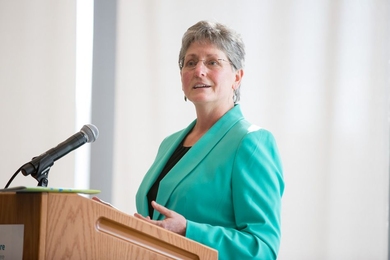
Speakers discuss how industry and academic partnerships are transforming MIT’s neighborhood.
Theoretical proof could lead to more reliable nanomachines.