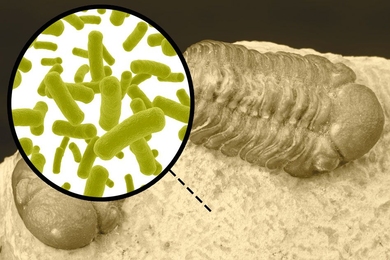
New technique pinpoints milestones in the evolution of bacteria
Results show bacterial genomes provide “shadow history” of animal evolution.
Results show bacterial genomes provide “shadow history” of animal evolution.
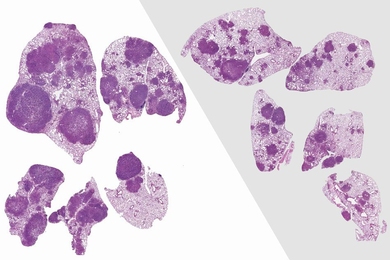
Antibiotics or anti-inflammatory drugs may help combat lung cancer.

Institute Professor honored for discovering Prochlorococcus, the most abundant photosynthesizing organism on Earth.
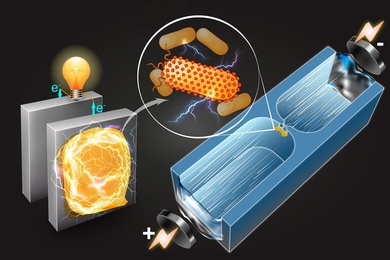
Microbes screened with a new microfluidic process might be used in power generation or environmental cleanup.
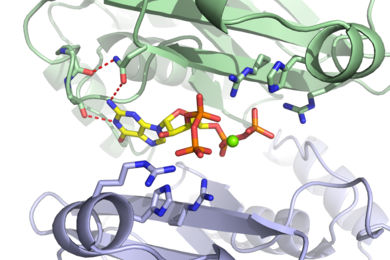
Researchers develop a method to investigate how bacteria respond to starvation and to identify which proteins bind to the “magic spot” — ppGpp.

New research finds a unique component of cell membranes in an archaea species conveys protection against acidic surroundings.
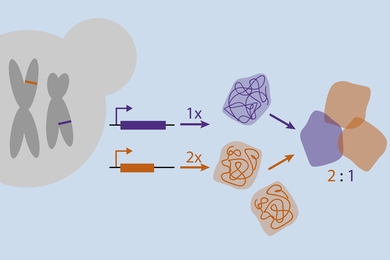
Researchers refine a method to quantify protein production, show that the precision with which bacteria and eukaryotes tune their gene expression is remarkably similar.
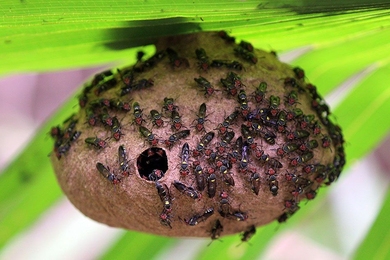
Altered peptides from a South American wasp’s venom can kill bacteria but are nontoxic to human cells.
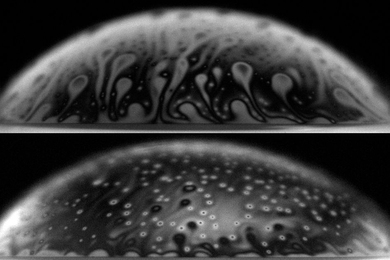
Study illuminates new mode of bacteria dispersal.
Simple method for linking molecules could help overcome drug resistant infections.

Global Microbiome Conservancy research reveals surprising new insights into human gut microbiomes.
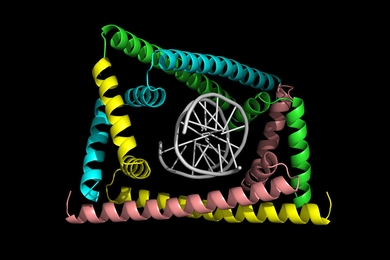
Researchers identify an essential protein that helps enzymes relax overtwisted DNA so each strand can be copied during cell division.
![“If you have a problem, and you look into the problem in nature and see how animals or plants deal with these kinds of problems and extract those design principles, you can try to replicate [them] using engineering approaches,” saysZijay Tang, a PhD candidate in MIT’s Department of Biological Engineering.](/sites/default/files/styles/term_page__news_article/public/images/201809/MIT-Tang-01.jpg?itok=cCVJRVTZ)
PhD student Zijay Tang is developing a living material that can sense and filter water contaminants.

Despite a single, unchanging food source in the form of a liquid meal replacement shake, bacteria in the gut are unpredictable, researchers find.
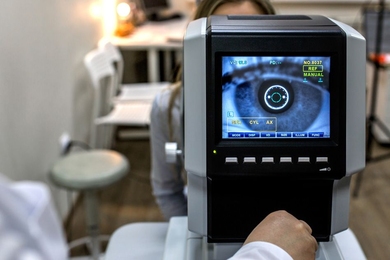
Unexpected findings show that the body’s own immune system destroys retinal cells.