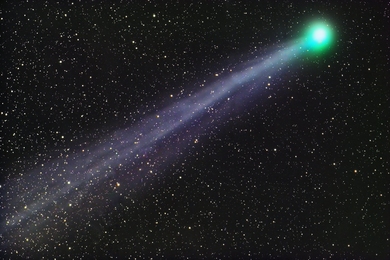
Why are comet heads green — but not their tails?
An accidental discovery and a love of spectroscopic perturbations leads to the solution of a 90-year-old puzzle.
An accidental discovery and a love of spectroscopic perturbations leads to the solution of a 90-year-old puzzle.

“There need to be more building blocks than the ones we know about,” says the particle physicist.
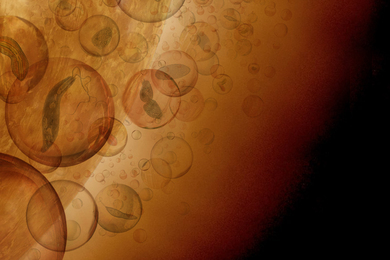
A new study shows it’s theoretically possible. The hypothesis could be tested soon with proposed Venus-bound missions.
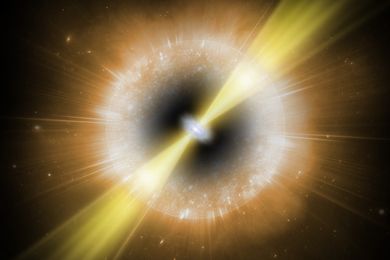
The discovery, based on an unusual event dubbed “the Cow,” may offer astronomers a new way to spot infant compact objects.
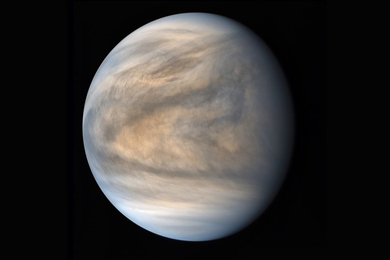
Report led by MIT scientists details a suite of privately-funded missions to hunt for life on Earth's sibling planet.
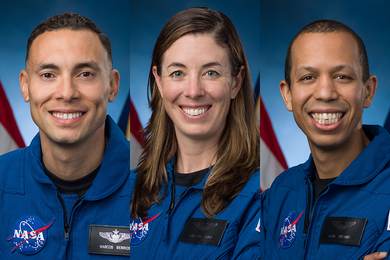
Marcos Berríos ’06, Christina Birch PhD ’15, and Christopher Williams PhD ’12 make up a third of the 2021 NASA astronaut candidate class.
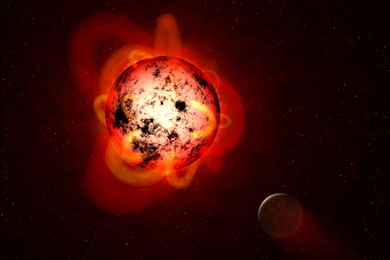
The boiling new world, which zips around its star at ultraclose range, is among the lightest exoplanets found to date.
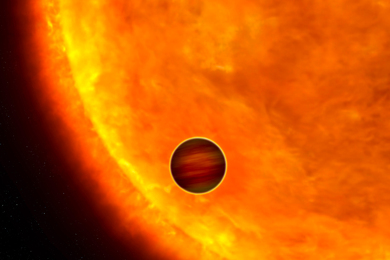
A newly discovered “ultrahot Jupiter” has the shortest orbit of any known gas giant.
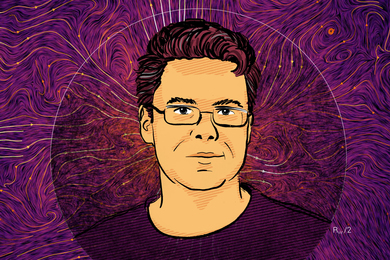
“In astrophysics, we have only this one universe which we can observe,” the physics professor says. “With a computer, we can create different universes, which we can check.”
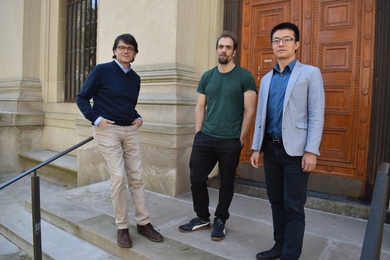
A National Science Foundation-funded team will use artificial intelligence to speed up discoveries in physics, astronomy, and neuroscience.
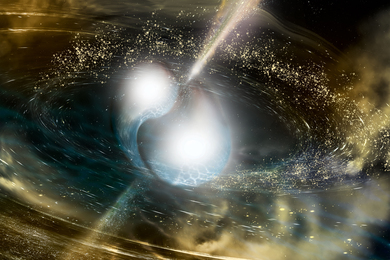
Mergers between two neutron stars have produced more heavy elements in last 2.5 billion years than mergers between neutron stars and black holes.
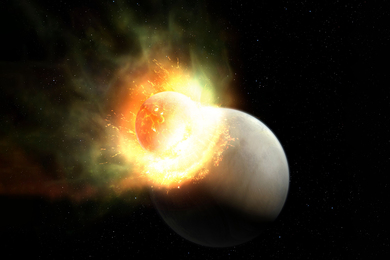
Such planetary smashups are likely common in young solar systems, but they haven’t been directly observed.
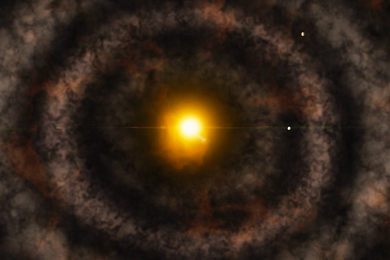
The cosmic boundary, perhaps caused by a young Jupiter or an emerging wind, likely shaped the composition of infant planets.

Probstein’s research had diverse applications in fields including aeronautics, energy, desalination, and soil decontamination.
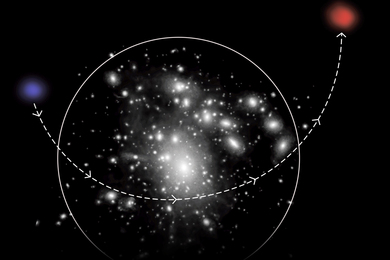
The results provide a blueprint for finding such systems in the universe’s quieter, emptier regions.